
Learning
Designer.

What is Learning Desing?
Learning design refers to creating effective and engaging learning experiences for students. It involves planning, organizing, and structuring educational content to achieve specific learning objectives.
-
A well-designed learning experience considers various learning styles and preferences, catering to diverse learners and improving overall outcomes.
-
Thoughtful learning design incorporates interactive and engaging elements, which can help maintain students' interest and motivation throughout the learning process.
-
Learning design ensures educational activities, assessments, and resources align with the intended learning objectives, promoting a coherent and focused educational experience.
-
Effective learning design allows for flexibility and adaptability, accommodating different learners and providing opportunities for personalized learning experiences.
-
A well-designed learning experience can optimize the use of time and resources, making the learning process more efficient and effective.
Contents
Ch. 1
Philosophies
-
Culturally responsive classrooms demand educators acknowledge and celebrate increasing student diversity. In the 21st Century, educators must guide students in self-reflecting on various aspects of their identity, fostering a more inclusive and understanding learning environment.
-
I became an educator due to the importance of representation, recognizing challenges in our educational system for individuals like myself. In smaller districts with limited resources, I experienced a lack of curriculum support, prompting me to create my own student-centered materials that empower teachers to modify and adapt content.
Ch. 2
SBAC Alignment
-
The Smarter Balanced Assessment Consortium (SBAC), is an assessment given to Oregon students each year. One of the major problems with it is that the state, school districts, and teachers interpret the State Common Core Standards differently—creating unequal teaching and learning for students in Oregon.
-
I advocate leveraging knowledge and skills in instructional design, curricular design, cross-curricular design, and materials development to create culturally responsive and inclusive assignments and lessons that familiarize students with SBAC-like questions. Despite the initial investment of time and effort required, the author reassures teachers that support in the form of SBAC Teacher Guides is being developed to facilitate the process and emphasizes the importance of adapting teaching approaches to accommodate the growth and learning pace of new students each year.
Ch. 3
Materials Development
-
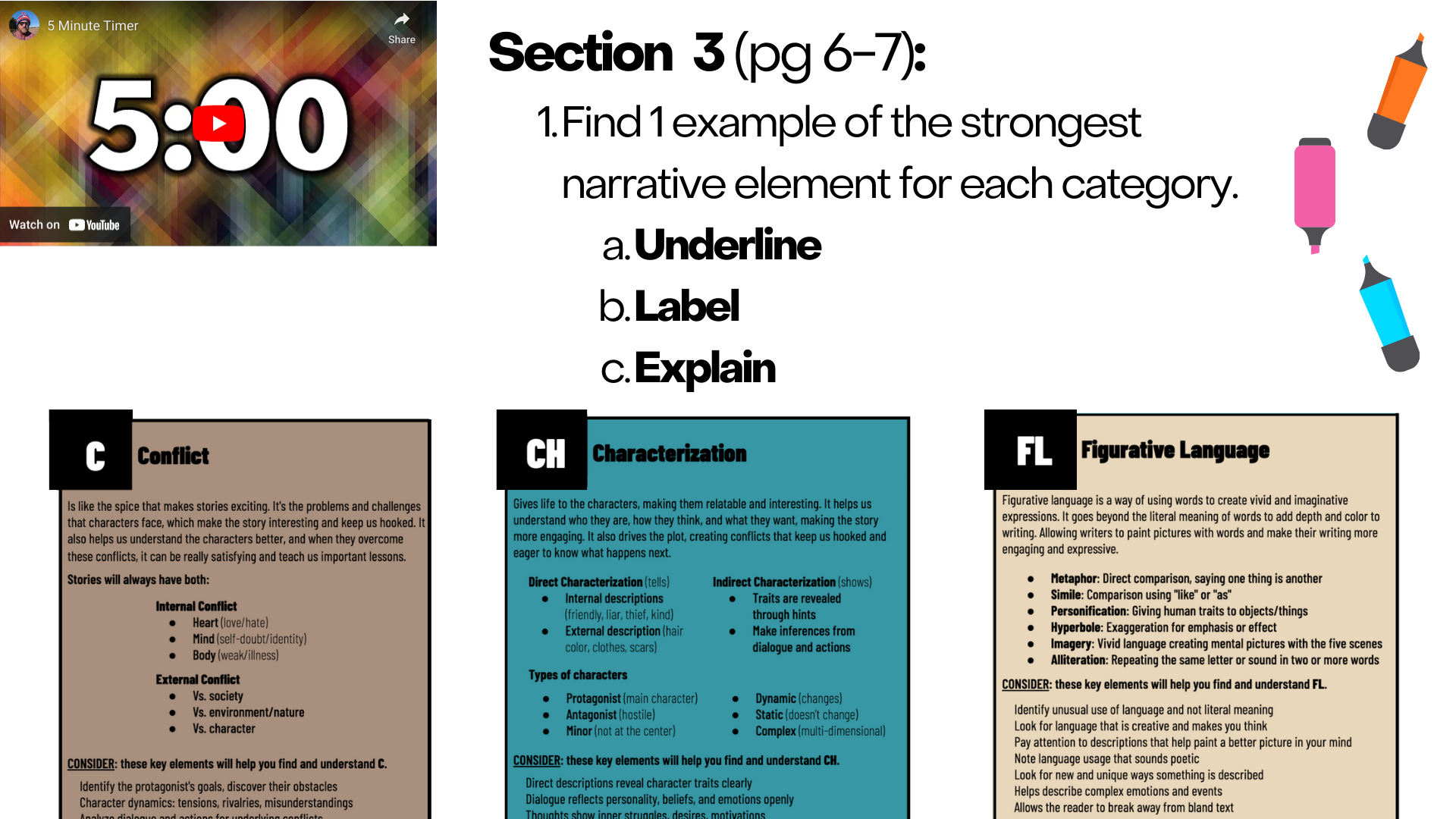
This unit centers around teaching students the fundamental skills they will need for the rest of the school year. For example:
identifying narrative elements in short stories
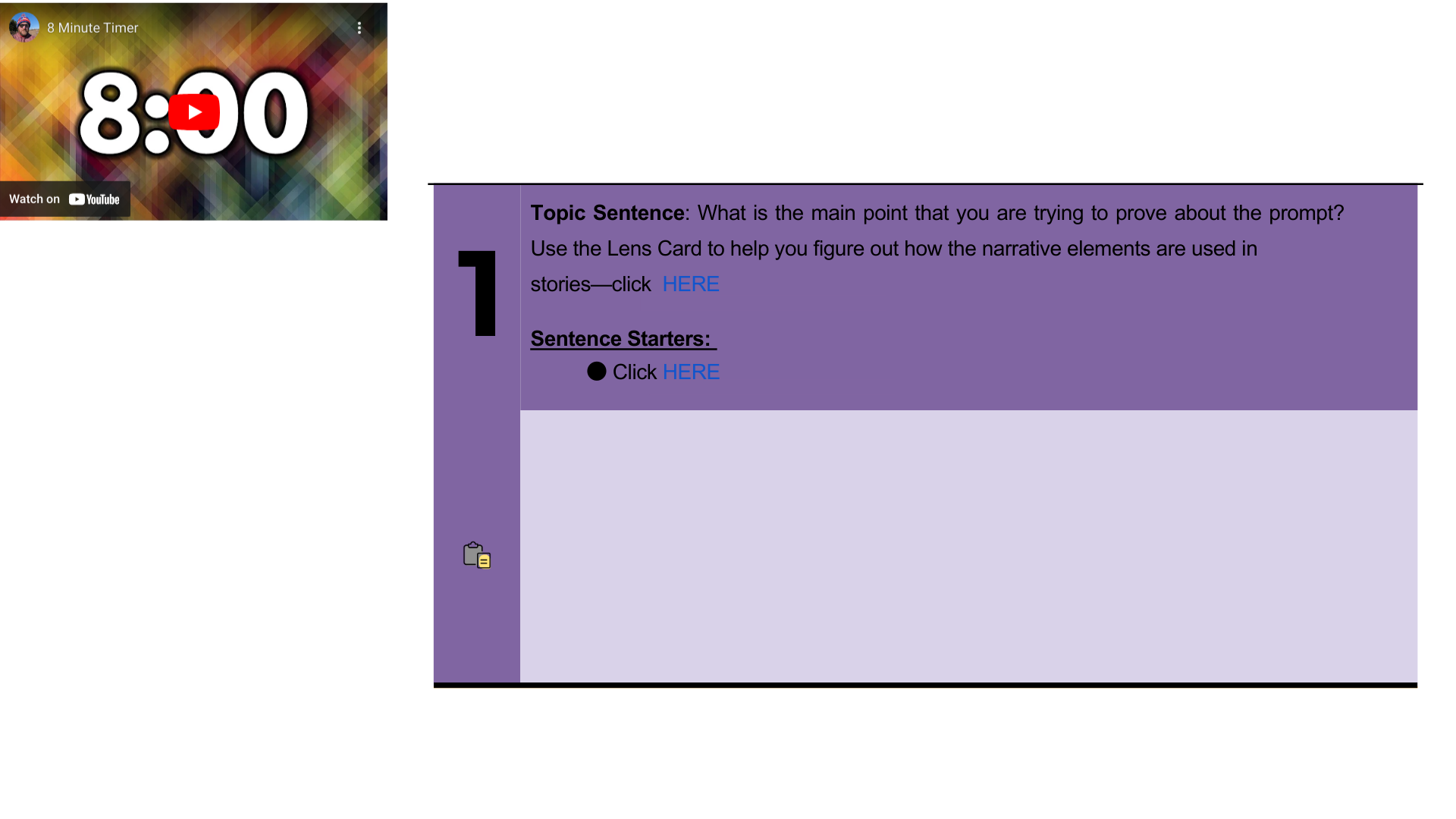
write a strong body paragraph
reading critically
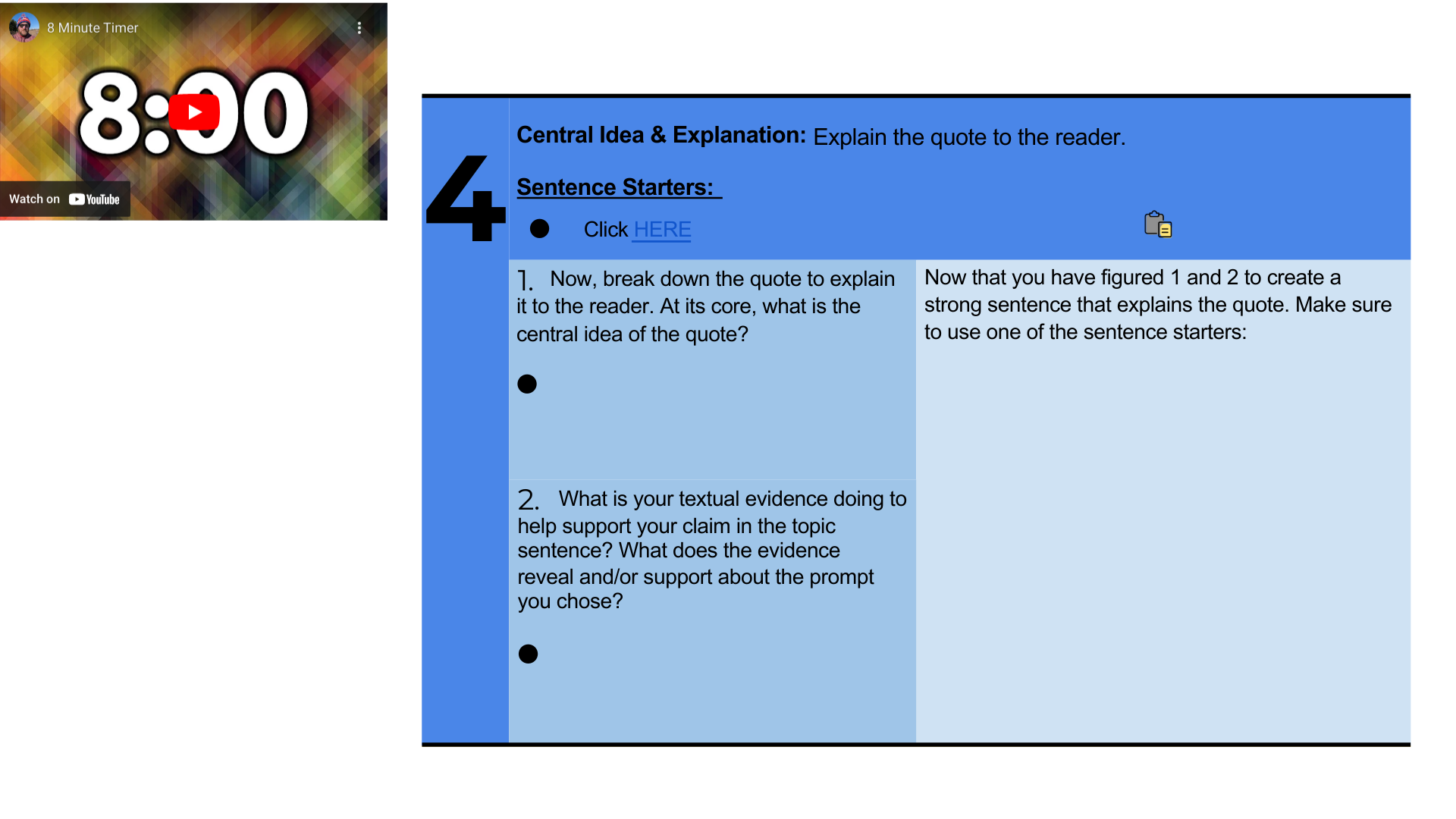
identifying the central idea
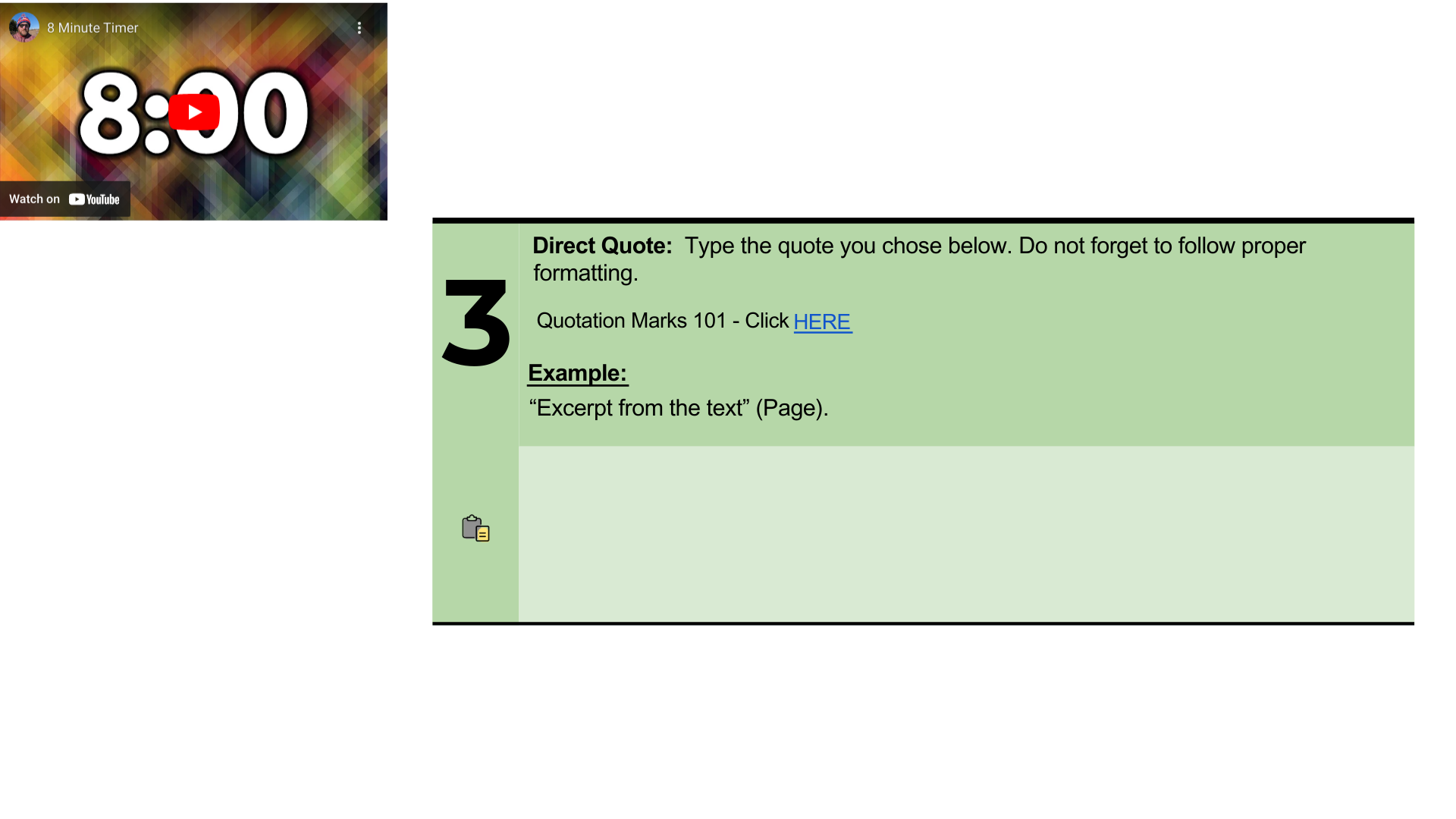
providing support through textual evidence
Analyze the impact of the author's choices.
Throughout this unit, I have created all scaffolds and handouts for students.
-
Building on top of unit one, this unit continues to develop student’s analytical skills, but this time on a longer text.
I have created the structures, the visuals, and the scaffolds to ensure students successfully write a five-paragraph essay.
Preface
My portfolio represents my experience as an educator for the past 12 years. This hard work allows me to establish a strong pedagogical approach to self-reflection and social justice. That enables me to create student-centered materials promoting instructional and curricular design agency for my fellow educators, bringing me a strong purpose. My portfolio shows my work ethic and passion. It also shows my experience analyzing, designing, developing, implementing, and evaluating instructional, curriculum, and materials designs.
-
It exemplifies my:
creativity
critical thinking
attention to detail
ability to think outside the box
capability to envision the bigger picture
-
All of these skills and abilities are critical and what drives my:
self-motivation
time management
teamwork mindset
ability to motivate people around me
-
This hard work allows me to establish a strong pedagogical approach to self-reflection and social justice. That enables me to create student-centered materials promoting instructional and curricular design agency for my fellow educators, bringing me a strong purpose.
Ch. 1
Philosophies
Rethinking Our Values
To have culturally responsive classrooms means that, as educators, we acknowledge that our classrooms are more diverse than ever. Making that acknowledgment is not enough to create a thriving environment for students, let alone students of color. We must also be proactive in celebrating how culturally diverse our students are. To be an educator in the 21st Century means we must provide our students with opportunities to self-reflect on their skin color, cultural backgrounds, multilingual/multidialectal heritage, English proficiencies, personal experiences, and family histories. Educators also need to recognize that every classroom is different because it has different students with different experiences, meaning that our pedagogical strategies must constantly change to fit the students we teach. Students must be offered time and space to explore the self and the other. Looking closely at our humanity, we will find more similarities than differences.
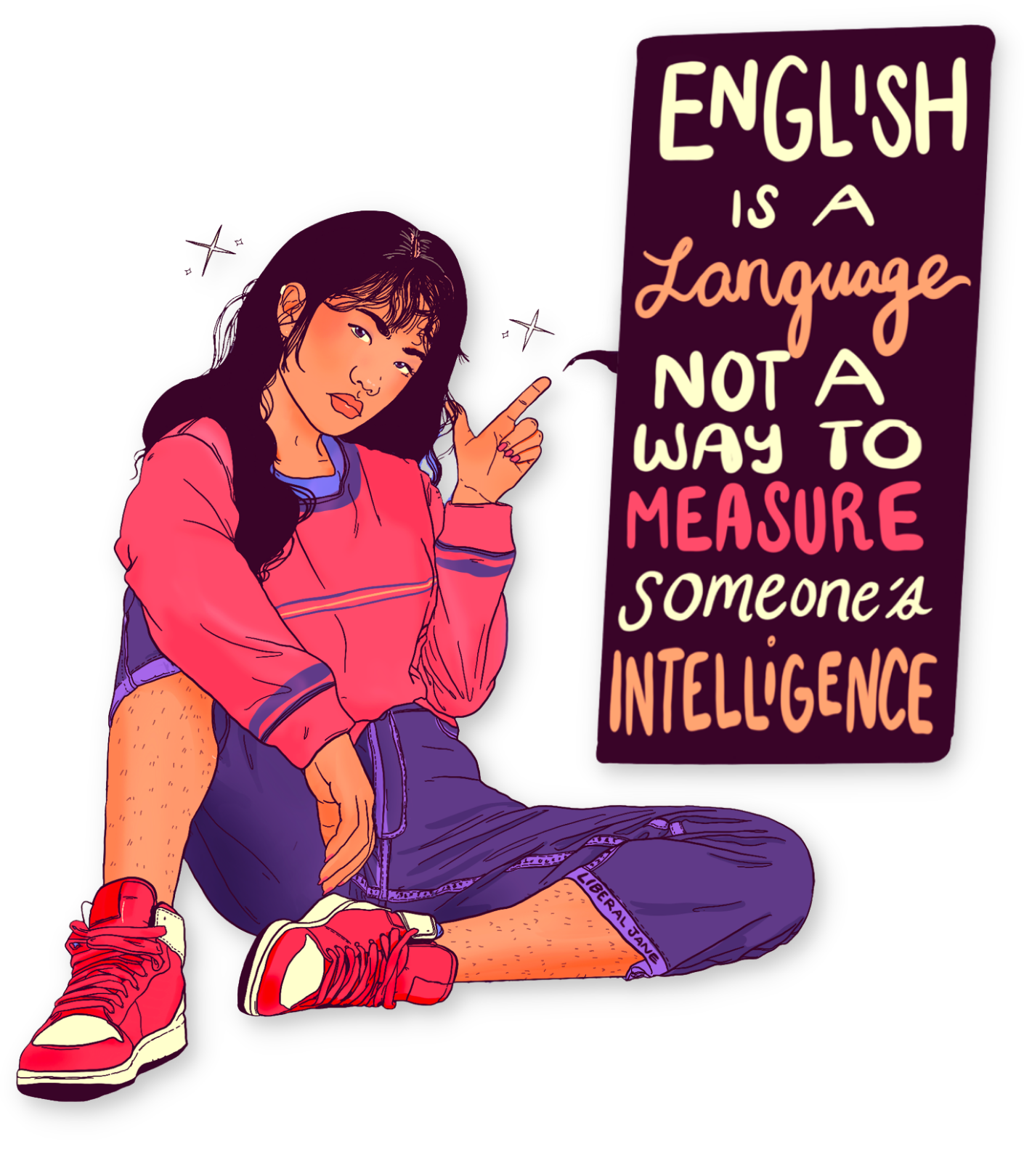
Created by Caitlin Blunnie @liberaljane
-
Write in their own voices or allow time and space for them to explore and find their voice.
My Language Arts teacher in the 10th grade was the first to push me to explore my voice and the stories I wanted to write about. She was the only one who saw past all my grammar mistakes and saw my creativity and potential as a writer.
-
Be seen as an English learner who is in a long process of mastering a second or even a third language. It would help if educators did not view an English language learner as having a problem, especially a problem that must be solved as soon as possible. Being a language learner does not mean a student is not a critical thinker. It just means they can't show it in the new language now.
I was an ESL student in middle school, and it took me over six years to get to a place where I was comfortable sharing my writing. It took only one teacher to see past my grammatical mistakes and judge my writing on my ideas to motivate me to keep focusing on developing my writing. Unfortunately, not all students are this lucky—they are discouraged at a young age, and their ideas are not fostered or developed because the focus goes on grammar and spelling.
Fortunately for all multilingual students in Oregon, House Bill 2056 drops the English mandate in core classes. Now students can show proficiency in any other language. Many school districts now offer core Spanish classes to help students graduate high school.
-
One size doesn't fit all. The umbrella terms' Hispanic,’ 'Latino,' or ‘LatinX’ is misleading, and they strip all the richness from the different countries, their diverse cultures, and language heritages that existed before Spanish or English were imposed so that what is left can fit neatly within any of those words.
In many of my classes in high school and my undergrad. It felt like some of my professors could only see parts of me. The only details they wanted to see were my skin color and accent. The rest of my identity was a mystery to them because they never took the time to know more about me.
-
Code switching and Spanglish (Black Vernacular in other areas) are essential parts of the language identity of young people of color. Often, this is viewed as a problem instead of an innovative and creative way of using language. A teacher must emphasize that using language that way can only work under certain conditions and with the right audience.
I teach my students the power of Standard English. In the US, we have as many as 24 dialects of American spoken English. The US is also home to over 350 other languages. With these many languages, I teach my students the importance of audience and how to use registers.
Building a Teaching Community
I became an educator because representation matters. Our educational system makes it difficult for individuals who look like me and sound like me to become proactive members of an educational system that wasn’t created for me (or people of color). Quality, student-centered, and teacher-friendly learning materials are challenging to get if you work for a small district. Educators have few options; many find themselves scavenging free resources or buying materials online. Let’s consider the following: if we look at Oregon and zoom in to a district, then choose a high school, zoom in further to the English department, and take a look at the teaching materials being used—we will find significant discrepancies, the lack of a common vision, aesthetic and rigor. Even if a district offers materials, curriculum, or a textbook, teachers have no agency to make significant modifications to fit the students in their classroom. Then, those same educators must supplement, finding themselves in the vicious cycle from the previous example.
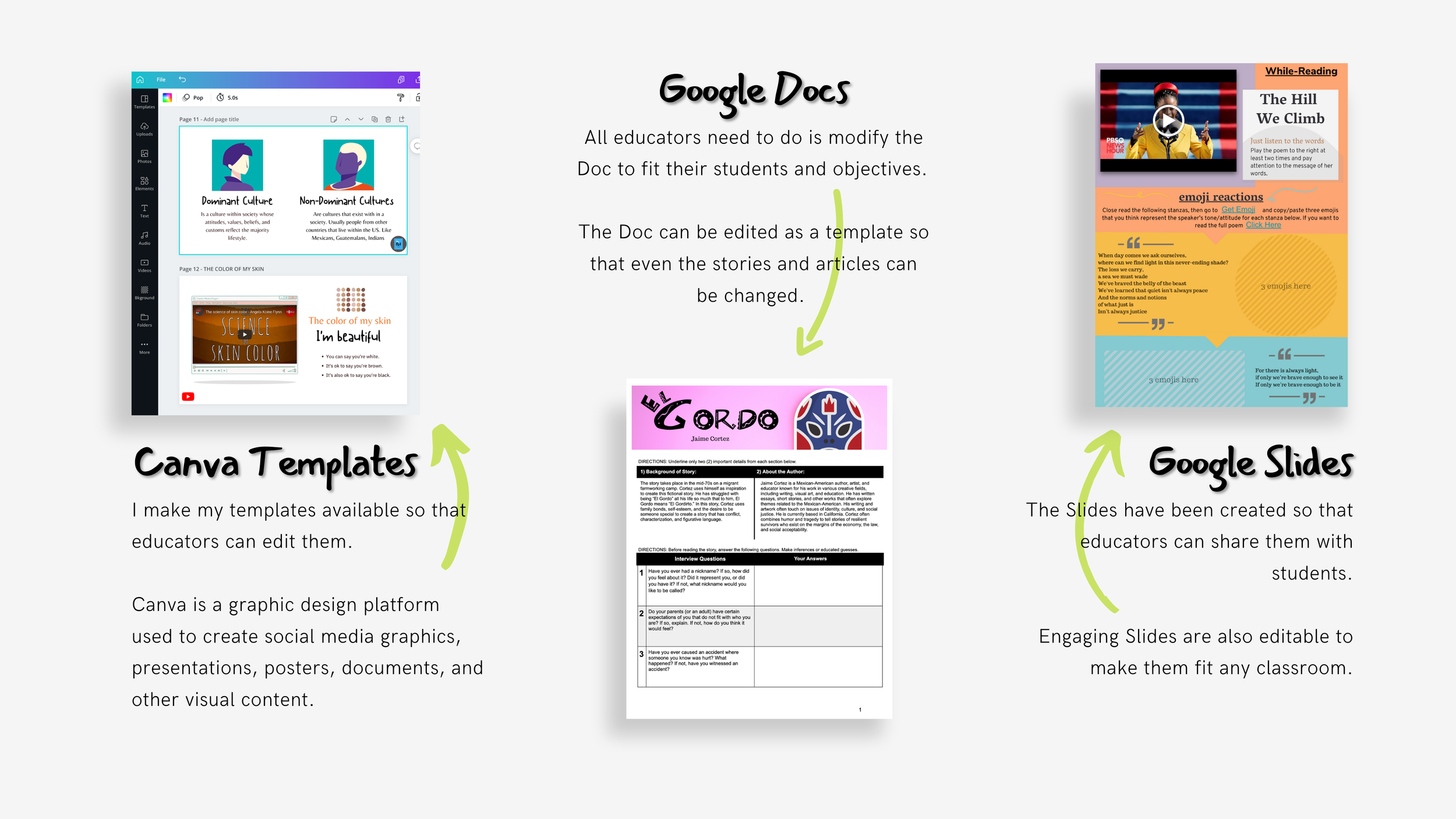
I propose that districts provide their educators with structures, scaffolds, and a library of editable materials. Educators must have the power to choose, edit, provide support, and create extra scaffolds that the original materials did not have because every classroom is different. Not having access to quality teaching materials drove me to create my own. Building materials that are not only student-centered but provide teachers the agency to change and modify is my contribution to the teaching community.
-
A big problem I face as a K12 educator is the lack of strong educational materials that I could manipulate to make my own—that is why all I create gives that agency to educators.
-
The need for Culturally Responsive and inclusive Classrooms goes beyond the selection of a story written by BIPOC writers. To be an educator in the 21st Century means that we must provide our students with opportunities to be: self-reflective about their skin color, their cultural backgrounds, their multilingual/multidialectal heritages, their English proficiencies, and their personal and family histories. All the digital materials I create always have this aim.
-
Scaffolds and Chunking are strategies I have been implementing for a few years. Since I started, I have seen quiz scores increase for reading comprehension. I have also seen more students turn in final essays that have all the components needed.
Ch. 2
SBAC Alignment
The organization responsible for creating the Smarter Balanced Assessment Consortium (SBAC), the state, school districts, and teachers interpret the State Common Core Standards differently—creating unequal teaching and learning for students in Oregon. One solution I am offering the teaching community is to look at all the questions we assign students in our classes, not just Language Arts, and restructure them to match the SBAC. Imagine we expose students to these questions since they enter the k12 system—it could improve scores and a higher level of thinking and rigor in every class.

The structure of my assignments combines my teaching experience and the never-missing process of trial and error. As a middle school teacher, my students spent a couple of weeks testing, yet I was struggling to help my students be successful with the SBAC. On top of this, most, if not all, of my students do not take the assessment as seriously as teachers would like them to. There are many reasons for this, like the lack of motivation, having a bad day, their reading is not at grade level, test fatigue, or the assessment not being interesting and culturally responsive to them. My school, like many others, could benefit from improved test scores. Many of my colleagues were also struggling with these same questions; some even did lessons on test-taking skills and tips, but none seemed to be working. I started to analyze all that I was doing then I decided to look at the available sample SBAC assessment. After reading and analyzing some of the sample questions, it hit me, what if the questions I was creating for my assignments were not appropriately structured? What if I missed an excellent opportunity to expose my students to SBAC-like questions so they would be ready when they finally took the assessment? Little did I know how much structure and brain power goes into making a single question. I wanted to test my assignments and see how they are helping my students be successful on the Oregon SBAC. In 2021 I added SBAC-like questions and multiple-choice answers in a Google Form to see how students would do. I also started researching how the SBAC structures its questions—I found that each question was like an onion with multiple layers of complexity.
Once I figured out the complexity of each question, my goal was to create materials that serve multiple purposes and allow students to practice skills that they can transfer to other parts of their lives. At the same time, I started to wonder how I could provide support and resources to fellow educators, and below, you will find what I have been able to create.
I was teaching 7th grade then and wanted to see how my students would do. I assigned the reading as I usually would without changing much. The SBAC assessment sample I initially studied had 25 questions. I did not use all the questions. Instead, I focused only on our standards for that particular unit. I decided to create two SBAC-like questions per standard. I have to admit that it was difficult and time-consuming at first. But I got better with practice and time. I also asked demographic questions to see if they influenced students' performance.
SBAC Teacher Guide
With suitable structures and curricula in place, students can perform much better. You can look at the report I created to the left to see better how students performed and why I claim that we must do backward design and planning using SBAC-like questions. The SBAC has four main sections: reading, writing, listening, and research & inquiry. The sample assessment divided the reading section into two. Section one has a grade-level narrative text with six questions. Section two has an informative text of over one thousand words, followed by five questions. I took the standards my school required my 7th graders to master and reworked my old questions to fit the SBAC better. The results of this little experiment led me to start this project.
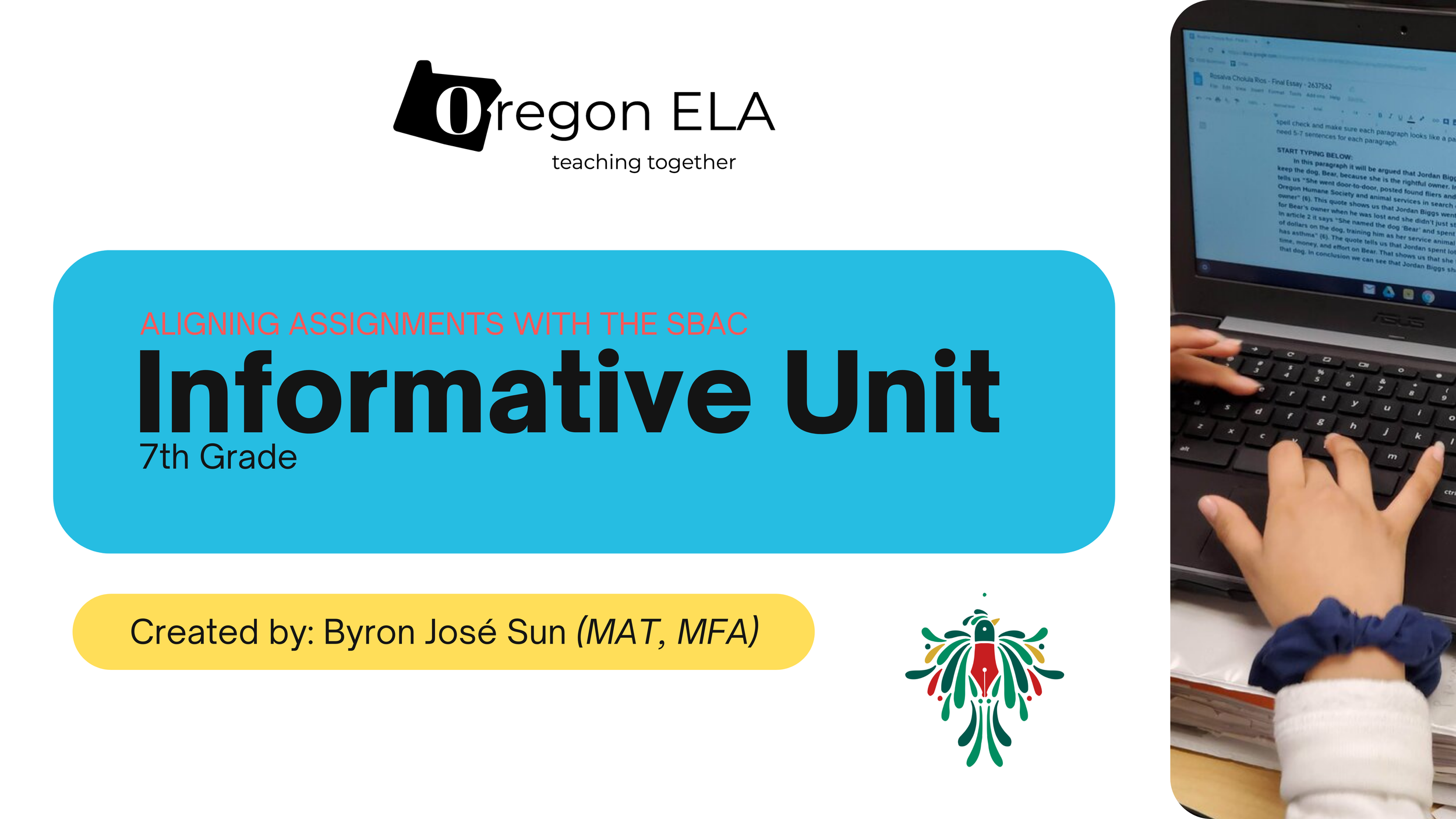
A solution that I am proposing is not to teach for the test but to instead use all of our knowledge and skills we have from:
Instructional Design
Curricular Design
Cross-Curricular Design
Materials Development
To create assignments and lessons that are culturally responsive and inclusive and materials that will engage students and get them used to SBAC-like questions. To do this, a teacher must be willing to spend the time and mental power on a taste that will take a few tries to master. But do not worry. You are not alone. I am in the process of creating SBAC Teacher Guides to help you every step of the way. Here is a preview of the work to come.
Educators have to always keep in mind three things, yet because of the lack of time, resources, and professional development; we tend to forget that we get new students each year. We forget that our students continue to grow and master the skills we teach them. Perhaps they do not grow as fast as we would like, but they are learning, so we must not forget to adapt and meet them where they are.
-
We must assume that our assignments, especially our questions, are not aligned with the SBAC. Once in this mindset, it will help us be critical of structuring our questions. I am not suggesting you throw away all the curricula you already have. Instead, please look at how you structure your questions on assignments to provide students with questions that resemble the SBAC.
-
If you are teaching 7th grade ELA, I have created a complete lesson that you can assign students to get some preliminary data. The data will let you know how your students are doing before modifying your questions. Once you change your questions using the guides I have provided, you will need to monitor your student’s progress.
-
Adapting and growing is a skill we try to teach our students. What we need to know is that every student will learn skills differently. Because of this, we must change our assignments to fit our current students.
4. Next Steps
Where do you go from here?
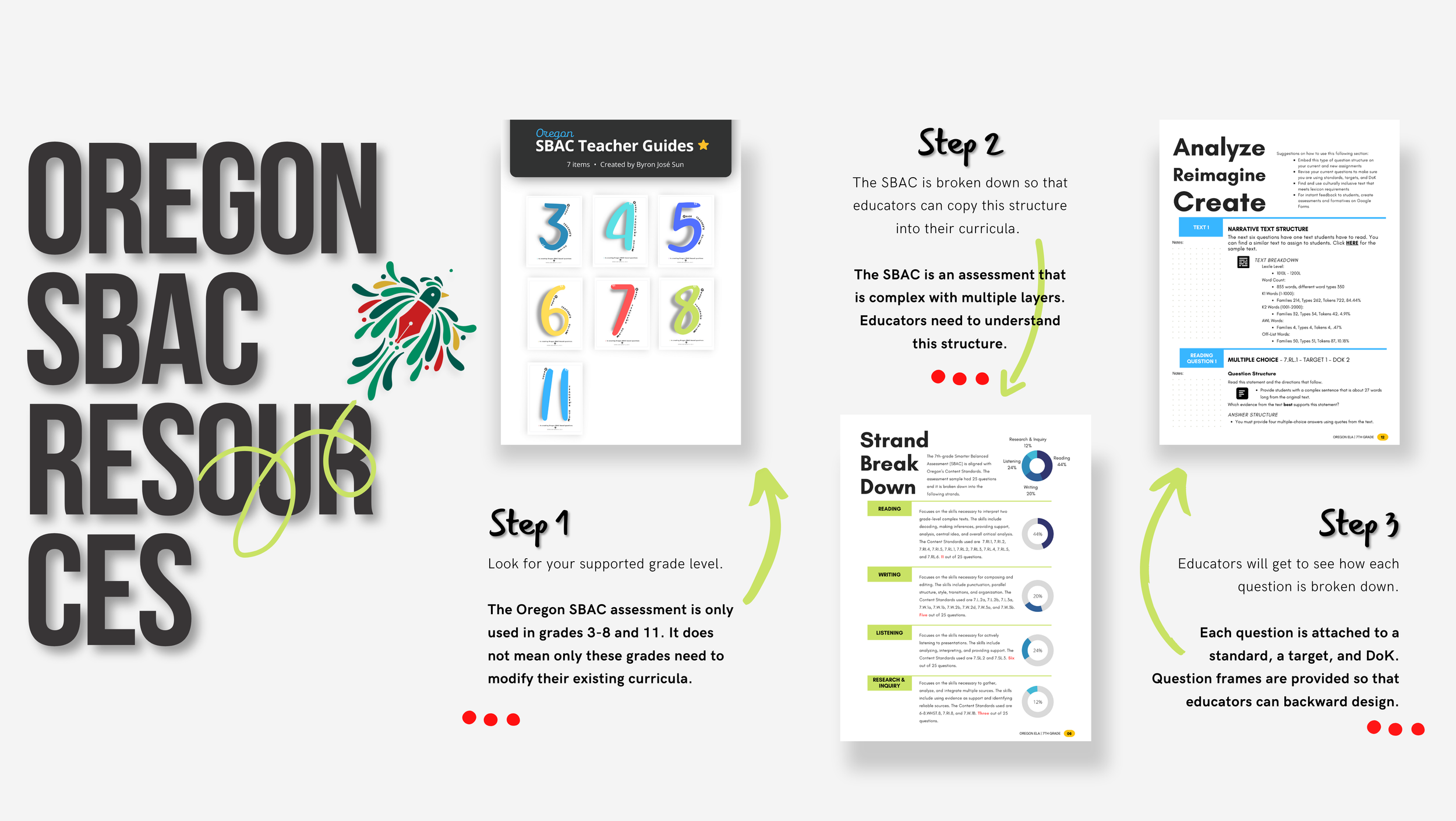
The work of the teacher is never over. To make all of our lives easier, I am in the process of creating SBAC teacher guides to help educators in k12 better serve their students. Oregon schools start testing students in their 3rd grade, and they take a version of the test through their 8th grade. Once students reach high school, they are not tested again until the 11th grade. The SBAC for all rates provides a similar overall structure, meaning that you will know all of them if you know one of them. The big difference is that the standards differ depending on the grade level. Below you will see how the 7th-grade level SBAC is broken down.
5. Understanding the 7th grade Oregon SBAC
-
This item presents students with a two-part question, parts A and B. Students select a correct response from four options in Part A and then identify textual support for that response in Part B. One out of 25 questions.
-
The Hot Text item type includes words or phrases that students can either select (highlight) by clicking or rearrange by clicking and dragging. Five out of 25 questions.
-
The Match interaction type requires students to match text or images in rows to values in columns. The student selects the boxes where a match is valid. Two out of 25 questions.
-
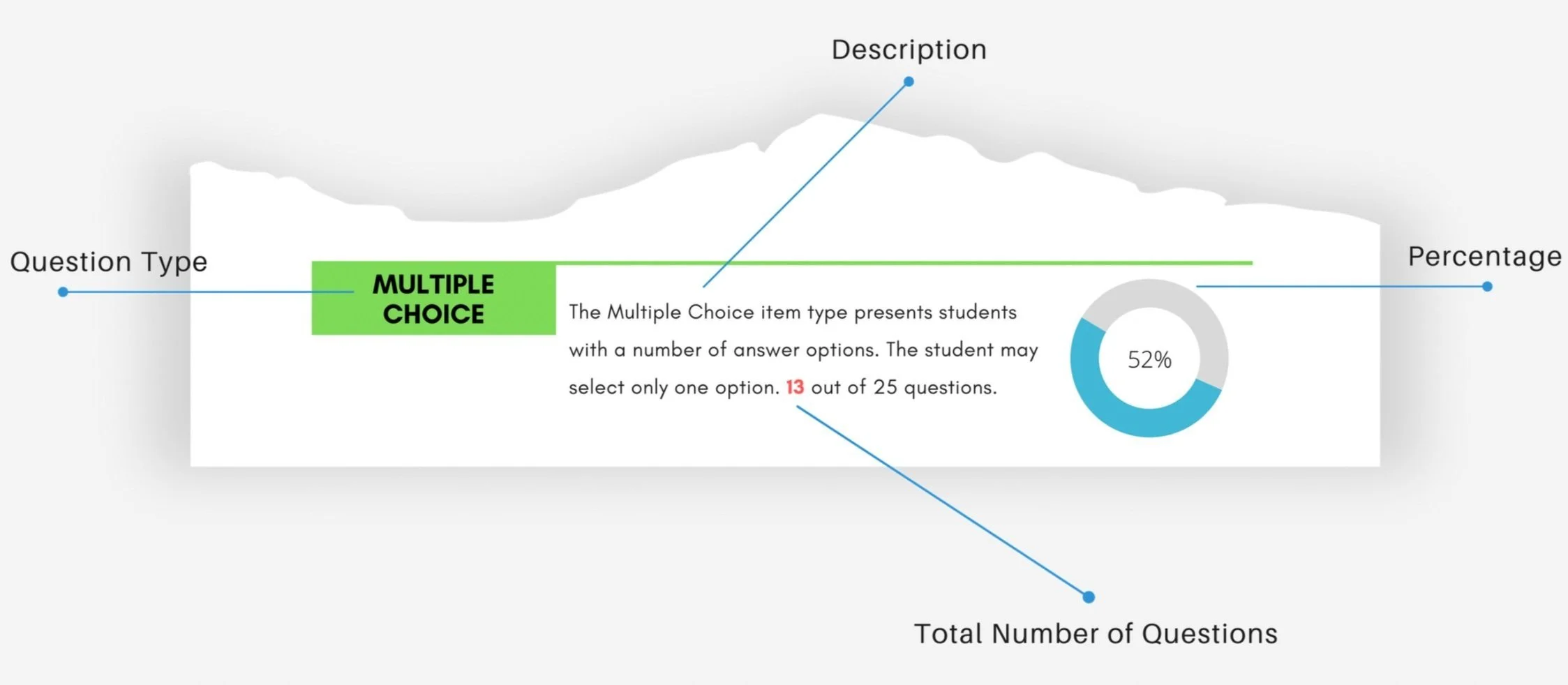
The Multiple Choice item type presents students with a number of answer options. The student may select only one option. 13 out of 25 questions.
-
The MulticSelect item type presents students with several answer options. The student may select one or more options. For this example, two of the options will be chosen. Four out of 25 questions.
The Oregon 7th-grade Smarter Balanced Assessment (SBAC) is a tool that provides educators with data to prepare students for success in the classroom. However, it is a multilayered tool that cannot be deconstructed and studied easily. Suppose an educator can engage and interact with how the SBAC questions are structured. In that case, they can reproduce it to create rigorous scaffolded instruction that builds transferable knowledge with culturally responsive and student-centered assignments. This document aims to help educators backward design from how questions are structured in the SBAC to modifying existing curricula but, more specifically, the questions presented to students. The end goal is to help educators better prepare students for success in the classroom and standardized tests.
SBAC Background
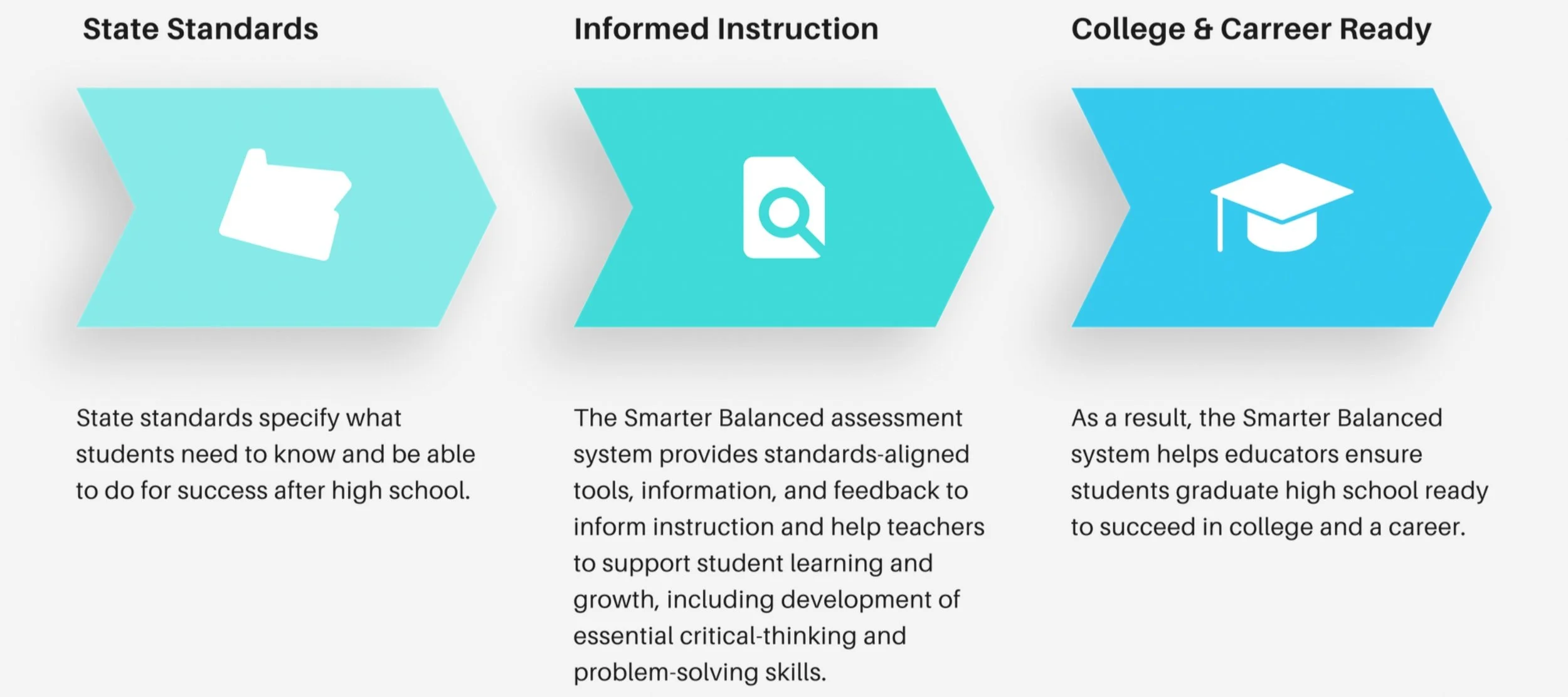
In 2010 the Smarter Balance consortium was created as a project that would use the knowledge of K12 educators collaborating with higher education experts to develop an assessment that would use state standards and informed instruction to better prepare students for success. Educators across the United States wrote test items, created and reviewed resources and tools, and advised on policies and practices.
Strand Break Down
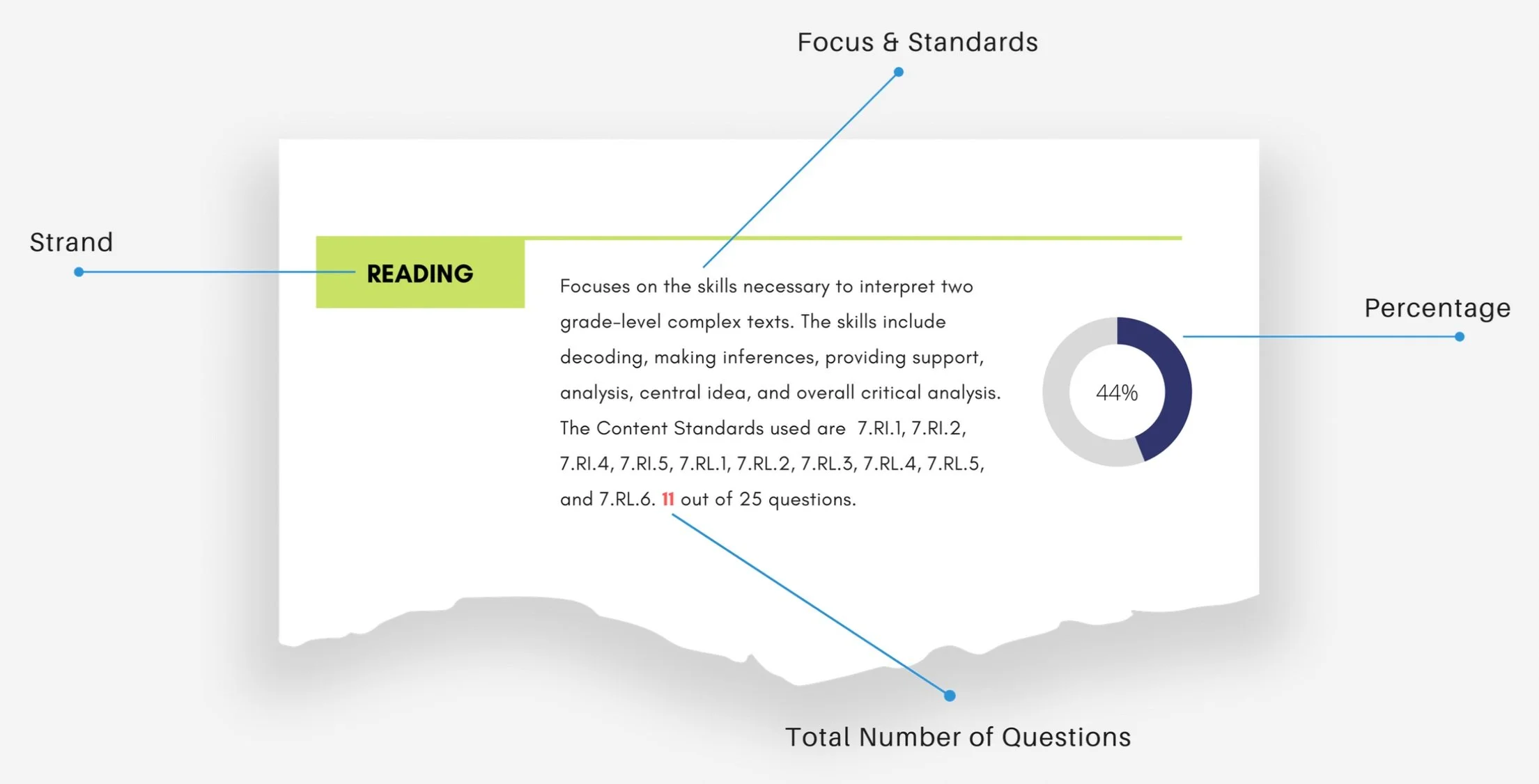
This section aims to provide educators with a glance at how the SBAC is organized into the language skills of Reading, Writing, Listening, and Research/Inquiry. The SBAC then uses a specific standard, target, depth of knowledge (DoK), and question type for every question used in these strands. Educators also see the percentage each strand makes up and the number of questions in the assessment. Understanding this structure makes it easier for educators to modify existing curricula and see what and how state standards are used.
Question Break Down
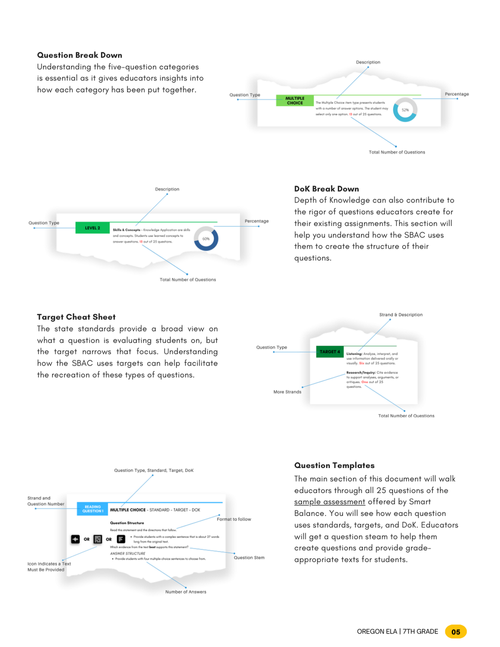
Understanding the five-question categories is essential as it gives educators insights into how each category has been put together.
DoK Break Down
Depth of Knowledge can also contribute to the rigor of questions educators create for their existing assignments. This section will help you understand how the SBAC uses them to create the structure of their questions.
Target Cheat Sheet
The state standards provide a broad view of what a question is evaluating students on, but the target narrows that focus. Understanding how the SBAC uses targets can help facilitate the recreation of these types of questions.
Question Templates
The main section of this document will walk educators through all 25 questions of the sample assessment offered by Smart Balance. Educators will see how each question uses standards, targets, and DoK. Educators will get a question steam to help them create questions and provide grade-appropriate texts for students.
Strand Break Down
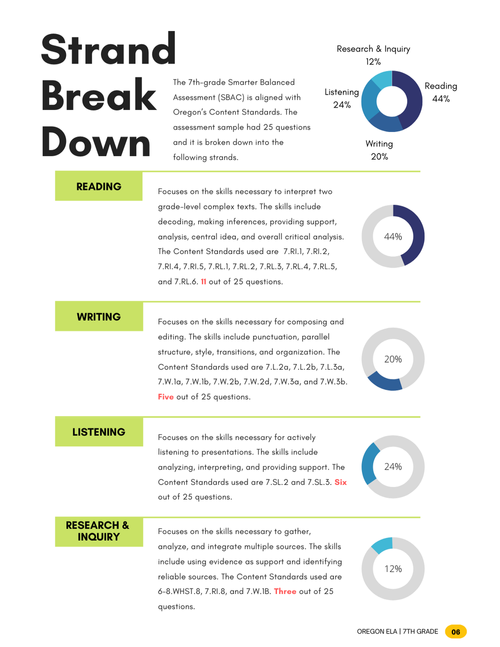
The 7th-grade Smarter Balanced Assessment (SBAC) is aligned with Oregon’s Content Standards. The assessment sample has 25 questions, and it is broken down into the following four strands:
-
Focuses on the skills necessary to interpret two grade-level complex texts. The skills include decoding, making inferences, providing support, analysis, central idea, and overall critical analysis. The Content Standards used are:
7.RI.1
7.RI.2
7.RI.4
7.RI.5
7.RL.1
7.RL.2
7.RL.3
7.RL.4
7.RL.5
7.RL.6
11 out of 25 questions
-
Focuses on the skills necessary for composing and editing. The skills include punctuation, parallel structure, style, transitions, and organization. The Content Standards used are:
7.L.2a
7.L.2b
7.L.3a
7.W.1a
7.W.1b
7.W.2b
7.W.2d
7.W.3a
7.W.3b
Five out of 25 questions.
-
Focuses on the skills necessary for actively listening to presentations. The skills include analyzing, interpreting, and providing support. The Content Standards used are:
7.SL.2
7.SL.3
Six out of 25 questions.
-
Focuses on the skills necessary to gather, analyze, and integrate multiple sources. The skills include using evidence as support and identifying reliable sources. The Content Standards used are:
6-8.WHST.8
7.RI.8
7.W.1B
Three out of 25 questions.
Question Break Dow
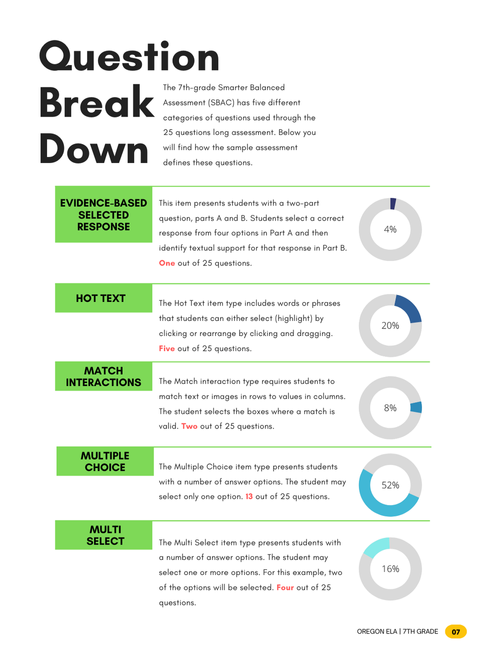
The 7th-grade Smarter Balanced Assessment (SBAC) has five different categories of questions used through the 25-question-long assessment. Below, you will find how the sample assessment defines these questions:
-
This item presents students with a two-part question, parts A and B. Students select a correct response from four options in Part A and then identify textual support for that response in Part B. One out of 25 questions.
-
The Hot Text item type includes words or phrases that students can either select (highlight) by clicking or rearrange by clicking and dragging. Five out of 25 questions.
-
The Match interaction type requires students to match text or images in rows to values in columns. The student selects the boxes where a match is valid. Two out of 25 questions.
-
The Multiple Choice item type presents students with a number of answer options. The student may select only one option. 13 out of 25 questions.
-
The Multi Select item type presents students with a number of answer options. The student may select one or more options. For this example, two of the options will be selected. Four out of 25 questions.
DoK Break Down
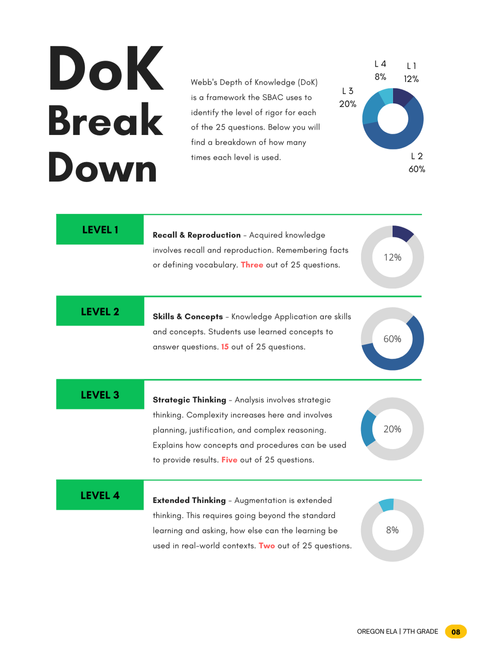
Webb's Depth of Knowledge (DoK) is a framework the SBAC uses to identify the level of rigor for each question. It helps assessment makers measure the degree of understanding required of students to answer or explain an assessment-related item. In other words, it is the cognitive processing required to complete a task. Each of the four strands has a different DoK definition that are described on a scale of 1 through 4 below:
-
Three out of 25 questions
Level 1 includes recalling or reciting facts or using simple skills or abilities. Recall & Reproduction - Acquired knowledge involves recall and reproduction. Remembering facts or defining vocabulary.
Reading - DoK1
Level 1 requires students to receive or recite facts or to use simple skills or abilities. Oral reading that does not include analysis of the text and basic comprehension of a text is included. Items require only a shallow understanding of the text presented and often consist of verbatim recall from text or a simple understanding of a single word or phrase.
Writing - DoK1
Level 1 requires the student to write or recite simple facts. This writing or recitation does not include complex synthesis or analysis but basic ideas. The students are engaged in listing ideas or words as in a brainstorming activity before written composition, are engaged in a simple spelling or vocabulary assessment, or are asked to write simple sentences. Students are expected to write and speak using Standard English conventions. This includes using appropriate grammar, punctuation, capitalization, and spelling.
Listening - DoK1
Level 1 requires students to receive or recite facts or to use simple skills or abilities. Basic comprehension of a reading text is included. Items require only a shallow understanding of an audio presentation, often consisting of verbatim recall or a simple understanding of a single word or phrase. Some examples that represent but do not constitute all of Level 1 performance are: - Support ideas by referencing details in a presentation. - Identify the claim being made by a speaker in a presentation.
-
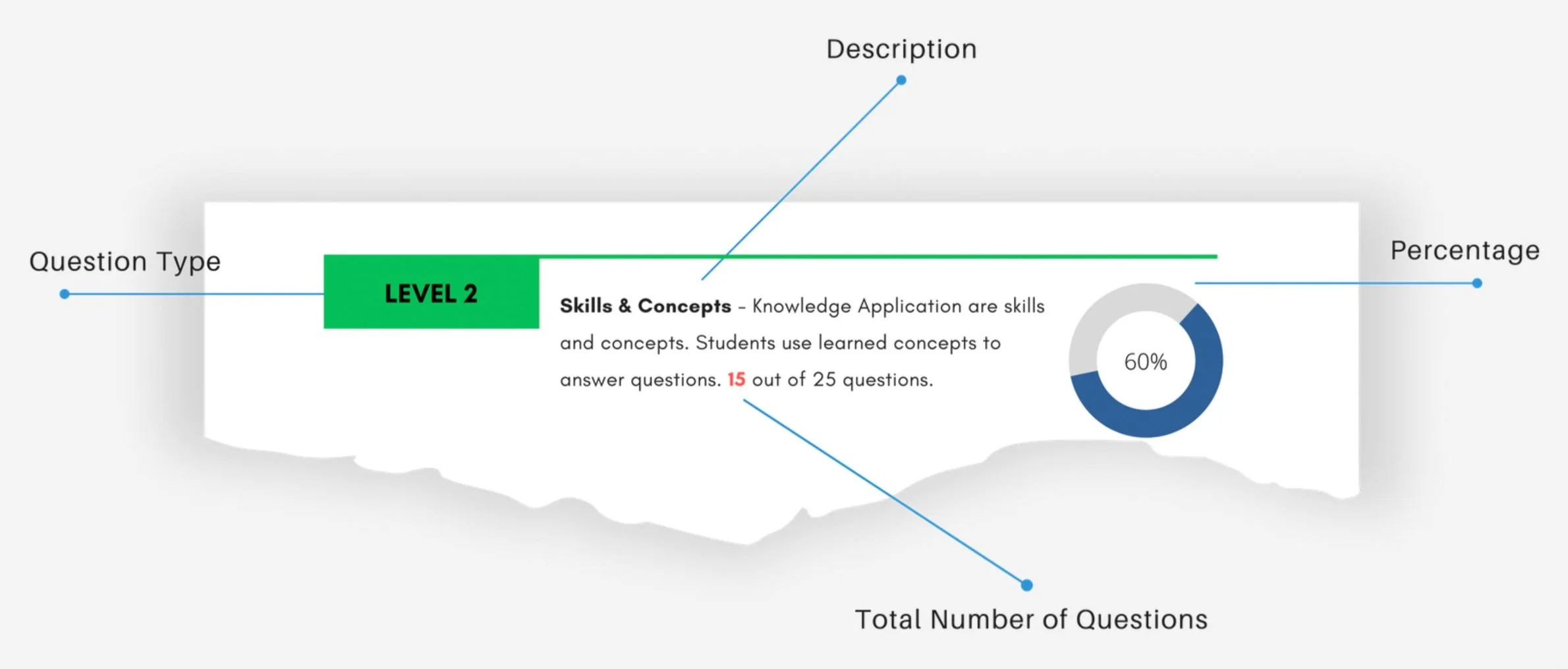
15 out of 25 questions
Level 2 includes engaging in some mental processing beyond recalling or reproducing a response.
R-DOK2
Level 2 includes engaging in mental processing beyond recalling or reproducing a response; it requires both comprehension and subsequent processing of text or portions of text. Intersentence analysis of inference is required. Some important concepts are covered but not in a complex way. Standards and items at this level may include words such as summarize, interpret, infer, classify, organize, collect, display, compare, and determine whether fact or opinion. Literal main ideas are stressed. A Level 2 assessment item may require students to apply some of the skills and concepts covered in Level 1.
Writing - DoK2
Level 2 requires some mental processing. At this level, students are engaged in first-draft writing or brief extemporaneous speaking for a limited number of purposes and audiences. Students are beginning to connect ideas using a simple organizational structure. For example, students may be engaged in note-taking, outlining, or simple summaries. Text may be limited to one paragraph. Students demonstrate a basic understanding and appropriate use of such reference materials as a dictionary, thesaurus, or website.
Listening - DoK2
Level 2 includes engaging in mental processing beyond recalling or reproducing a response; it requires both comprehension and subsequent processing of a reading text or portions of that text. Intersentence analysis of inference is required. Some important concepts are covered but not in a complex way. Standards and items at this level may include words such as summarize, interpret, infer, classify, organize, collect, display, compare, and determine whether fact or opinion. A Level 2 assessment item may require students to apply some of the skills and concepts covered in Level 1. Some examples that represent but do not constitute all of Level 2 performance are: - Interpret the key points or central idea of a presentation. - Predict a logical outcome based on information in a presentation. - Make an inference or support a conclusion based on evidence in a presentation.
Research & Inquiry - DoK2
Level 2 includes engaging in mental processing beyond recalling or reproducing a response; it requires both comprehension and subsequent processing of source materials used for research or portions of those sources. Some important concepts are covered but not in a complex way. Standards and items at this level may include words such as interpret, integrate, paraphrase, organize, compare, support and distinguish between fact or opinion. Some examples that represent but do not constitute all of Level 2 performance are: - Locate information within and among sources to support central ideas and key details that are provided. - Distinguish relevant/irrelevant information. - Use evidence to determine the credibility and accuracy of sources to gather and select information to support research. - Cite evidence from a source to support opinions, ideas, or claims.
-
Five out of 25 questions
Level 3 includes strategic thinking and reasoning. The analysis involves strategic thinking. Complexity increases here and requires planning, justification, and complex logic. Explains how concepts and procedures can be used to provide results.
Reading - DoK3
Deep knowledge becomes more of a focus at Level 3. Students are encouraged to go beyond the text; however, they are still required to show an understanding of the ideas in the text. Students may be prompted to explain, generalize, or connect ideas. Standards and items at Level 3 involve reasoning and planning. Students must be able to support their thinking. Things may involve abstract theme identification, inference across an entire passage, or students’ application of prior knowledge. Items may also apply more superficial connections between texts.
Writing - DoK3
Level 3 requires some higher-level mental processing. Students are engaged in developing compositions that include multiple paragraphs. These compositions may consist of complex sentence structures and may demonstrate some synthesis and analysis. Students show awareness of their audience and purpose through focus, organization, and appropriate compositional elements. The use of formal compositional elements includes such things as addressing chronological order in a narrative or including supporting facts and details in an informational report. At this stage, students are engaged in editing and revising to improve the quality of the composition.
Listening - DoK3
Deep knowledge becomes more of a focus at Level 3. Students are encouraged to go beyond the read text; however, they are still required to show understanding of the ideas in the text. Students may be prompted to explain, generalize, or connect ideas. Standards and items at Level 3 involve reasoning and planning. Students must be able to support their thinking. Things may involve abstract theme identification, inference across an entire presentation, or students’ application of prior knowledge. Some examples that represent but do not constitute all of Level 3 performance are: - Determine the speaker’s purpose and describe how it affects the interpretation of a presentation. - Determine the credibility/reliability of a speaker and the evidence used in a presentation. - Analyze the rhetorical devices used by a speaker during a presentation.
-
Two out of 25 questions
Level 4 includes higher-order thinking and deep knowledge. This level's standard or assessment item will probably be an extended activity.
Reading - DoK4
Higher-order thinking is central, and knowledge is deep at Level 4. This level's standard or assessment item will probably be an extended activity, with extended time provided. The extended time period is not a distinguishing factor if the required work is only repetitive and does not require applying significant conceptual understanding and higher-order thinking. Students take information from at least one passage and are asked to apply this information to a new task. They may also be asked to develop hypotheses and perform complex analyses of the connections among texts.
-
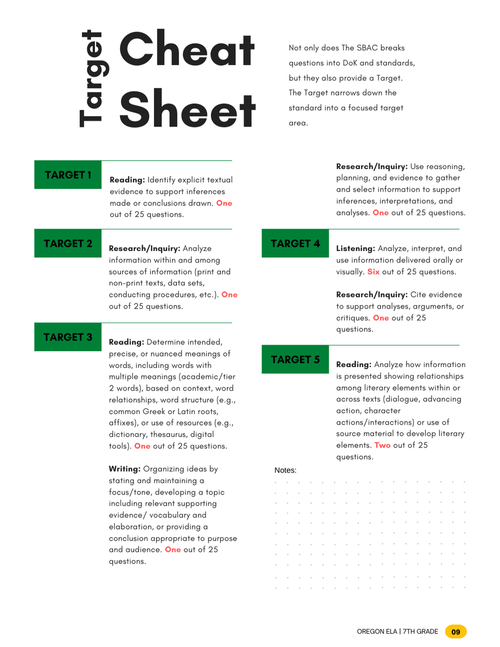
Reading:
Identify explicit textual evidence to support inferences made or conclusions drawn.
One out of 25 questions.
-
Research/Inquiry:
Analyze information within and among sources of information (print and non-print texts, data sets, conducting procedures, etc.).
One out of 25 questions.
-
Reading:
Determine intended, precise, or nuanced meanings of words, including words with multiple meanings (academic/tier 2 words), based on context, word relationships, word structure (e.g., common Greek or Latin roots, affixes), or use of resources (e.g., dictionary, thesaurus, digital tools).
One out of 25 questions.
Writing:
Organizing ideas by stating and maintaining a focus/tone, developing a topic including relevant supporting evidence/ vocabulary and elaboration, or providing a conclusion appropriate to purpose and audience.
One out of 25 questions.
Research/Inquiry:
Use reasoning, planning, and evidence to gather and select information to support inferences, interpretations, and analyses.
One out of 25 questions.
-
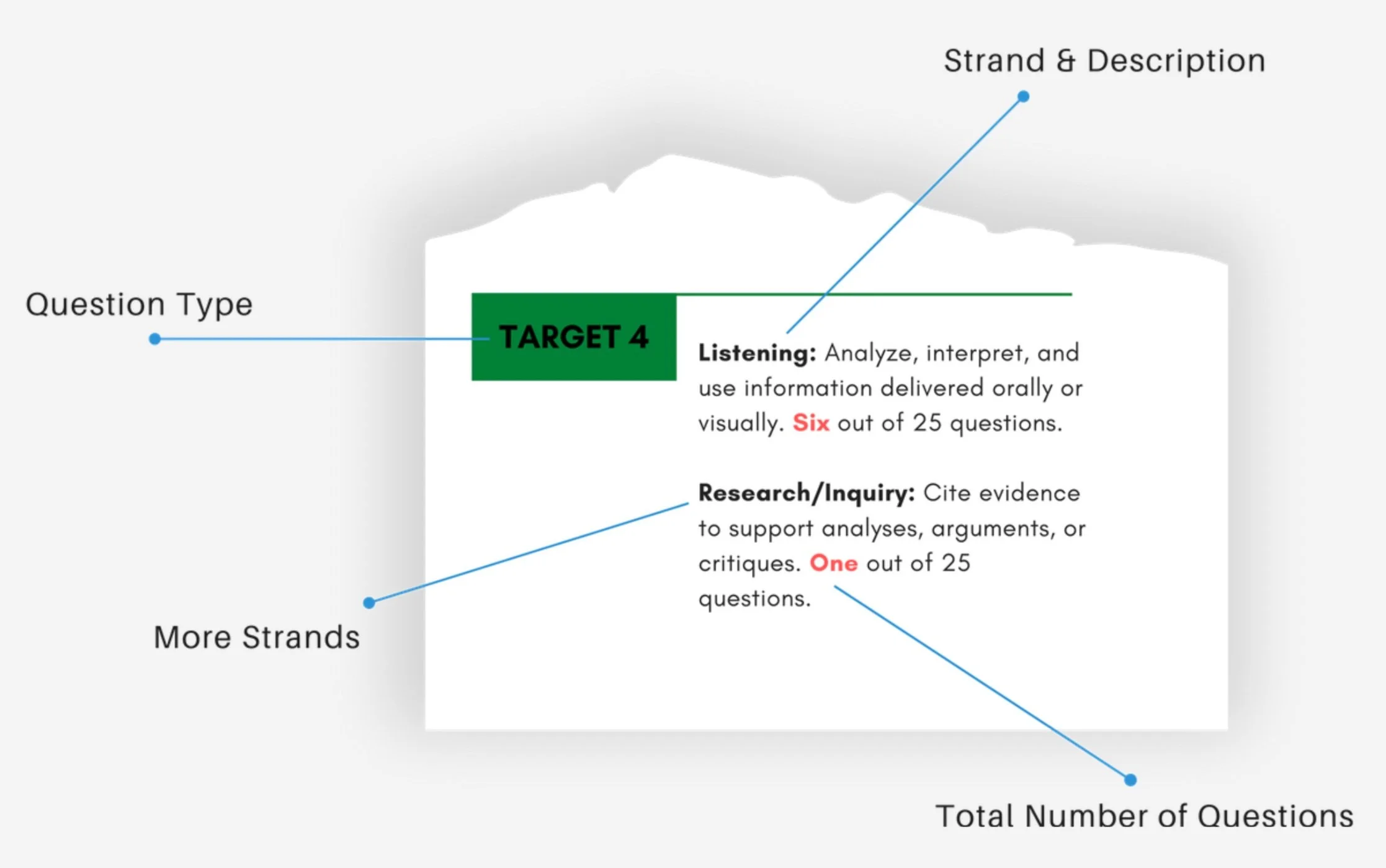
Listening:
Analyze, interpret, and use information delivered orally or visually.
Six out of 25 questions.
Research/Inquiry:
Cite evidence to support analyses, arguments, or critiques.
One out of 25 questions.
-
Reading:
Analyze how information is presented showing relationships among literary elements within or across texts (dialogue, advancing action, character actions/interactions) or use of source material to develop literary elements.
Two out of 25 questions.
-
Reading:
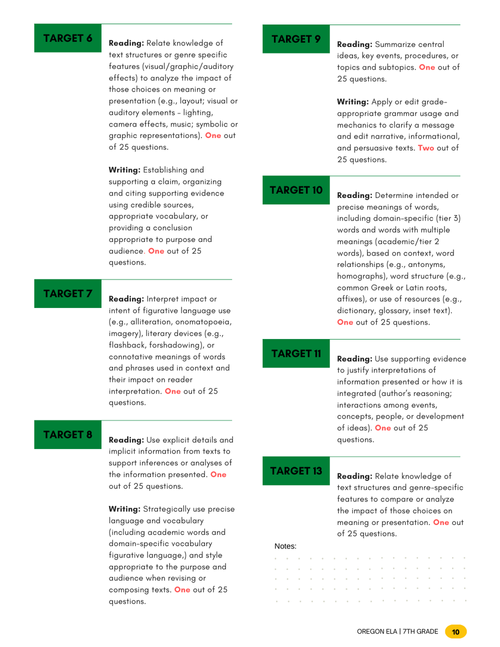
Relate knowledge of text structures or genre specific features (visual/graphic/auditory effects) to analyze the impact of those choices on meaning or presentation (e.g., layout; visual or auditory elements – lighting, camera effects, music; symbolic or graphic representations).
One out of 25 questions.
Writing:
Establishing and supporting a claim, organizing and citing supporting evidence using credible sources, appropriate vocabulary, or providing a conclusion appropriate to purpose and audience.
One out of 25 questions.
-
Reading:
Interpret impact or intent of figurative language use (e.g., alliteration, onomatopoeia, imagery), literary devices (e.g., flashback, forshadowing), or connotative meanings of words and phrases used in context and their impact on reader interpretation.
One out of 25 questions.
-
Reading:
Use explicit details and implicit information from texts to support inferences or analyses of the information presented.
One out of 25 questions.
Writing:
Strategically use precise language and vocabulary (including academic words and domain-specific vocabulary figurative language,) and style appropriate to the purpose and audience when revising or composing texts.
One out of 25 questions.
-
Reading:
Summarize central ideas, key events, procedures, or topics and subtopics.
One out of 25 questions.
Writing:
Apply or edit grade-appropriate grammar usage and mechanics to clarify a message and edit narrative, informational, and persuasive texts.
Two out of 25 questions.
-
Reading:
Determine intended or precise meanings of words, including domain-specific (tier 3) words and words with multiple meanings (academic/tier 2 words), based on context, word relationships (e.g., antonyms, homographs), word structure (e.g., common Greek or Latin roots, affixes), or use of resources (e.g., dictionary, glossary, inset text).
One out of 25 questions.
-
Reading:
Use supporting evidence to justify interpretations of information presented or how it is integrated (author’s reasoning; interactions among events, concepts, people, or development of ideas).
One out of 25 questions.
-
Reading:
Relate knowledge of text structures and genre-specific features to compare or analyze the impact of those choices on meaning or presentation.
One out of 25 questions.
Target Cheat Sheet
Not only does the SBAC breaks questions into DoK and standards, but they also provide a Target. The Target narrows down the standard into a focused target area. Each of the four strands has a different target definition. You will find those definitions below:
6. SBAC Question breakdown & Templates
Suggestions on how to use the following section:
Embed this type of question structure on your current and new assignments
Revise your current questions to make sure you are using standards, targets, and DoK
Find and use culturally inclusive text that meets lexicon requirements
For instant feedback to students, create assessments and formatives on Google Forms
-
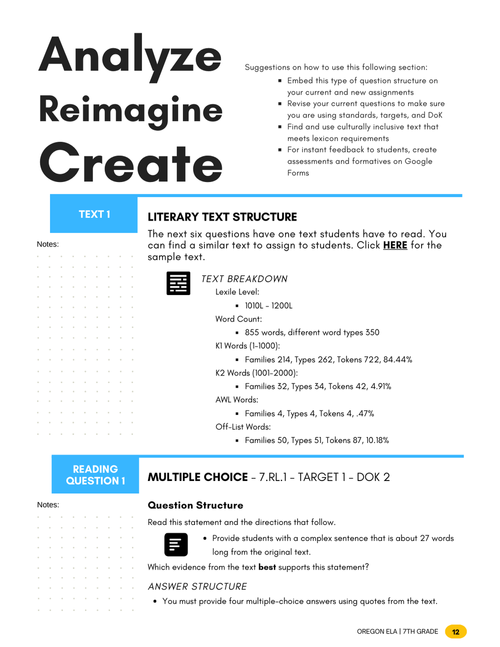
The first six questions of the SBAC sample assessment are questions that use one narrative text structure that is broken the following way:
Lexile Level: 1010L - 1200L
Word Count: 855 words, different word types 350
K1 Words (1-1000): Families 214, Types 262, Tokens 722, 84.44%
K2 Words (1001-2000): Families 32, Types 34, Tokens 42, 4.91%
AWL Words: Families 4, Types 4, Tokens 4, .47%
Off-List Words: Families 50, Types 51, Tokens 87, 10.18%Description text goes here
-
Question Structure:
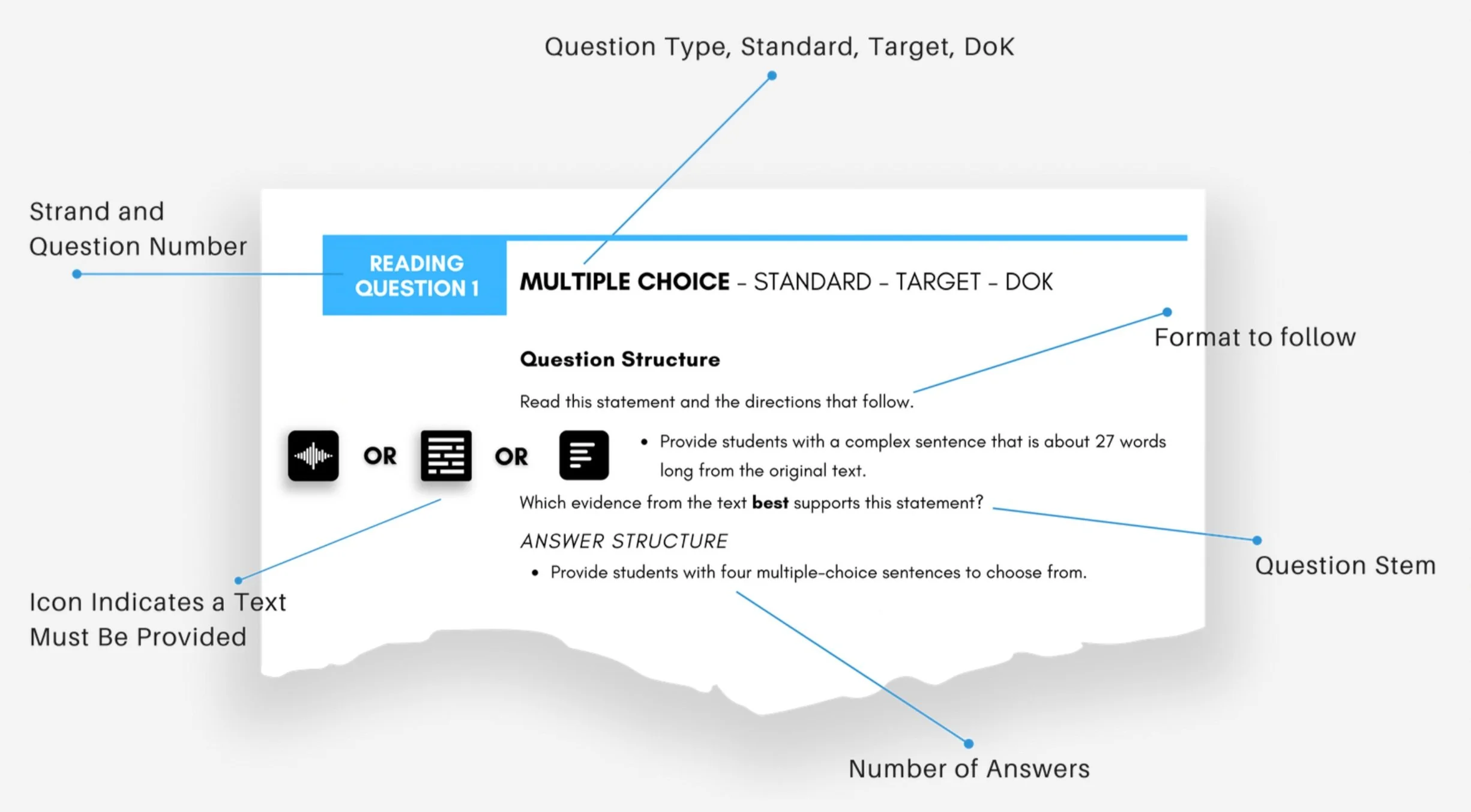
Read this statement and the directions that follow.
Provide students with a complex sentence that is about 27 words long from the original text.
Which evidence from the text best supports this statement?
Answer Structure:
You must provide four multiple-choice answers using quotes from the text.
-
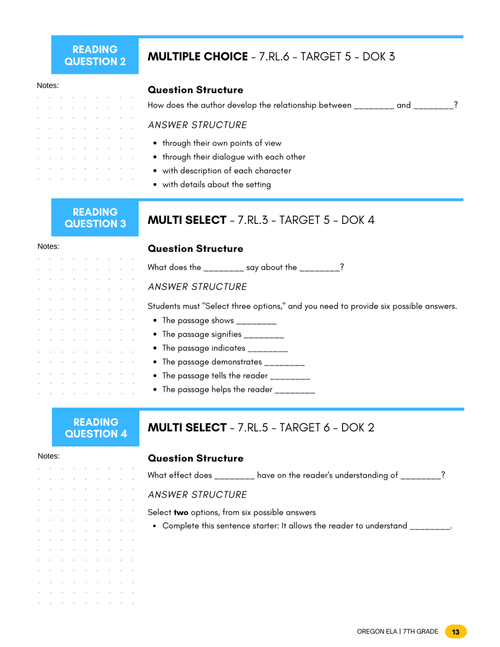
Question Structure:
How does the author develop the relationship between ________ and ________?
Answer Structure:
through their own points of view
through their dialogue with each other
with description of each character
with details about the setting
-
Question Structure:
What does the ________ say about the ________?
Answer Structure:
Students must "Select three options," and you need to provide six possible answers.
The passage shows ________
The passage signifies ________
The passage indicates ________
The passage demonstrates ________
The passage tells the reader ________
The passage helps the reader ________
-
Question Structure:
What effect does ________ have on the reader's understanding of ________?
Answer Structure:
Select two options, from six possible answers
Complete this sentence starter: It allows the reader to understand ________.
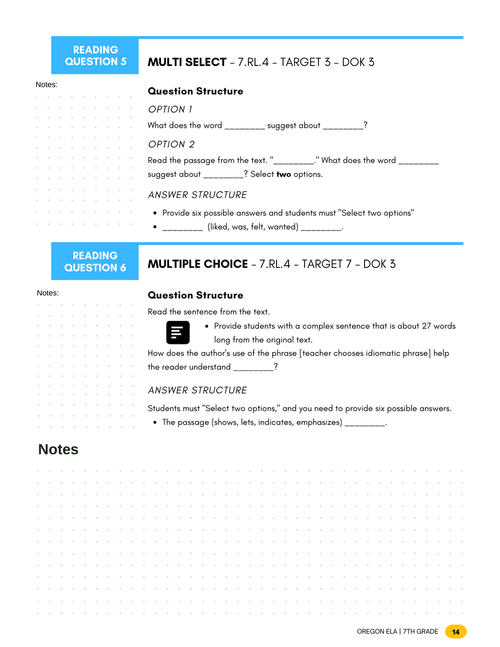
-
Question Structure:
Option 1 - What does the word ________ suggest about ________?
Option 2 - Read the passage from the text. "________." What does the word ________ suggest about ________? Select two options.
Answer Structure:
Provide six possible answers and students must "Select two options"
________ (liked, was, felt, wanted) ________.
-
Question Structure:
Read the sentence from the text.
Provide students with a complex sentence that is about 27 words long from the original text.
How does the author’s use of the phrase [teacher chooses idiomatic phrase] help the reader understand ________?
Answer Structure:
Students must "Select two options," and you need to provide six possible answers.
The passage (shows, lets, indicates, emphasizes) ________.
SBAC Section 1: Literary Text Structure
For the following six Reading Questions (RQ) students are given a single literary text to read. Educators can find a similar text to assign to students. Click HERE for the sample text.
Teacher’s Guide
Here is an example of what the printable resource will look like. You can also find a download button below. If you have any feedback, please get in touch with me. NOTE: all of this is a work in progress.





Ch. 3
Materials Development
ENGLISH 9
The structure of all the following reading assignments is similar. I am currently adding an extra step to the workflow for those teachers living in Oregon. The extra step consists of SBAC-like questions to help students practice with questions and multiple-choice answers. You have a few options for assigning the following assignments to students.
First, you can give them all the work in a single Google Doc (this is how I have them now). If you do this, you will need to consider that it is a large file, and some Chromebooks might be unable to handle it (they might encounter a lot of lag).
The second option is to break up the assignment into different parts and assign them to students.
Lastly, you can print the work for students and have them do the Performance and Multiple-Choice Tasks on the computer.
Whatever you decide, chunk and do many check-ins for understanding and processing.
For these assignments to be successful, you must chunk them, and after a certain amount of time, you need to ask some students to share their answers. If students know they need to share, you can likely keep more of them on task. You can give more or less time depending on what you ask students to do. I usually try to provide them with 15 minutes between tasks/check-ins. One of the benefits of asking for processing is that it can serve as a teaching moment for all students. Providing this type of feedback is essential for learning. The more students see how to revise their mistakes, the better they will become at doing it independently. That is why a check-in must be followed by constructive feedback and time for revisions.
Unit 1: Elements of Narrative
Main Standards (assessed)
-
Determine the central idea of a text and analyze in detail its development over the course of the text, including how it emerges and is shaped and refined by specific details. Provide an evidence-based summary of the text.
-
Analyze the impact of the author's choices (narrative elements, figurative language, conflict, setting, dialogue) regarding the development of complex characters over the course of a text, the interaction with other characters and/or the social, cultural, historical context, and the advancement of the plot.
-
Analyze what the text says explicitly as well as inferentially; cite strong and thorough textual evidence to support the analysis.
-
Demonstrate understanding of figurative language, word relationships, and nuances in word meanings.
-
Determine the meaning of words and phrases as they are used in the text, including figurative and connotative meanings; analyze the cumulative impact of specific word choices on meaning and tone (e.g., how the language evokes a sense of time and place; how it sets a formal or informal tone).
-
Write routinely over extended time frames (time for research, reflection, and revision) and shorter time frames (a single sitting or a day or two) for a range of tasks, purposes, and audiences
Supporting Standards (skills)
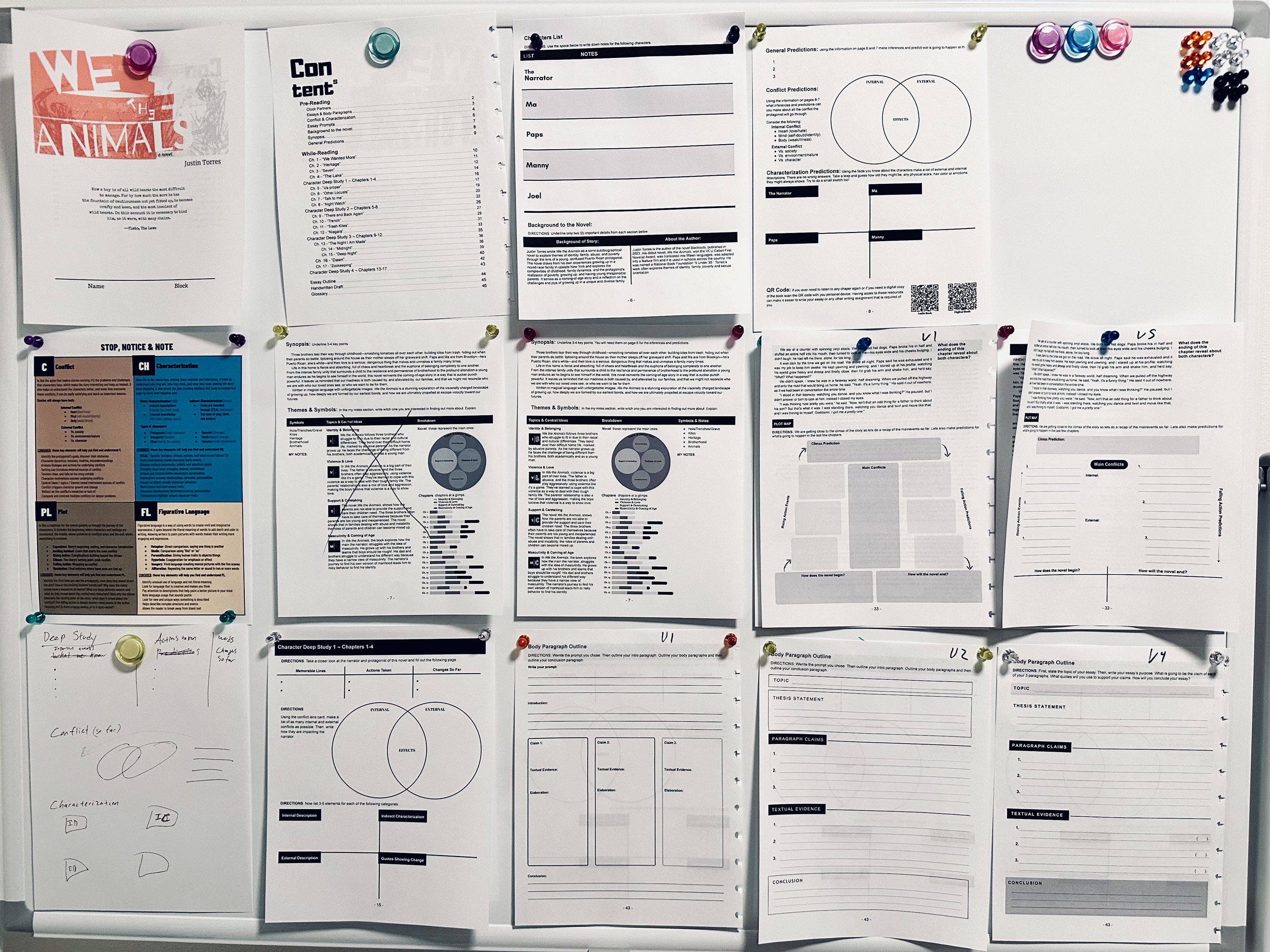
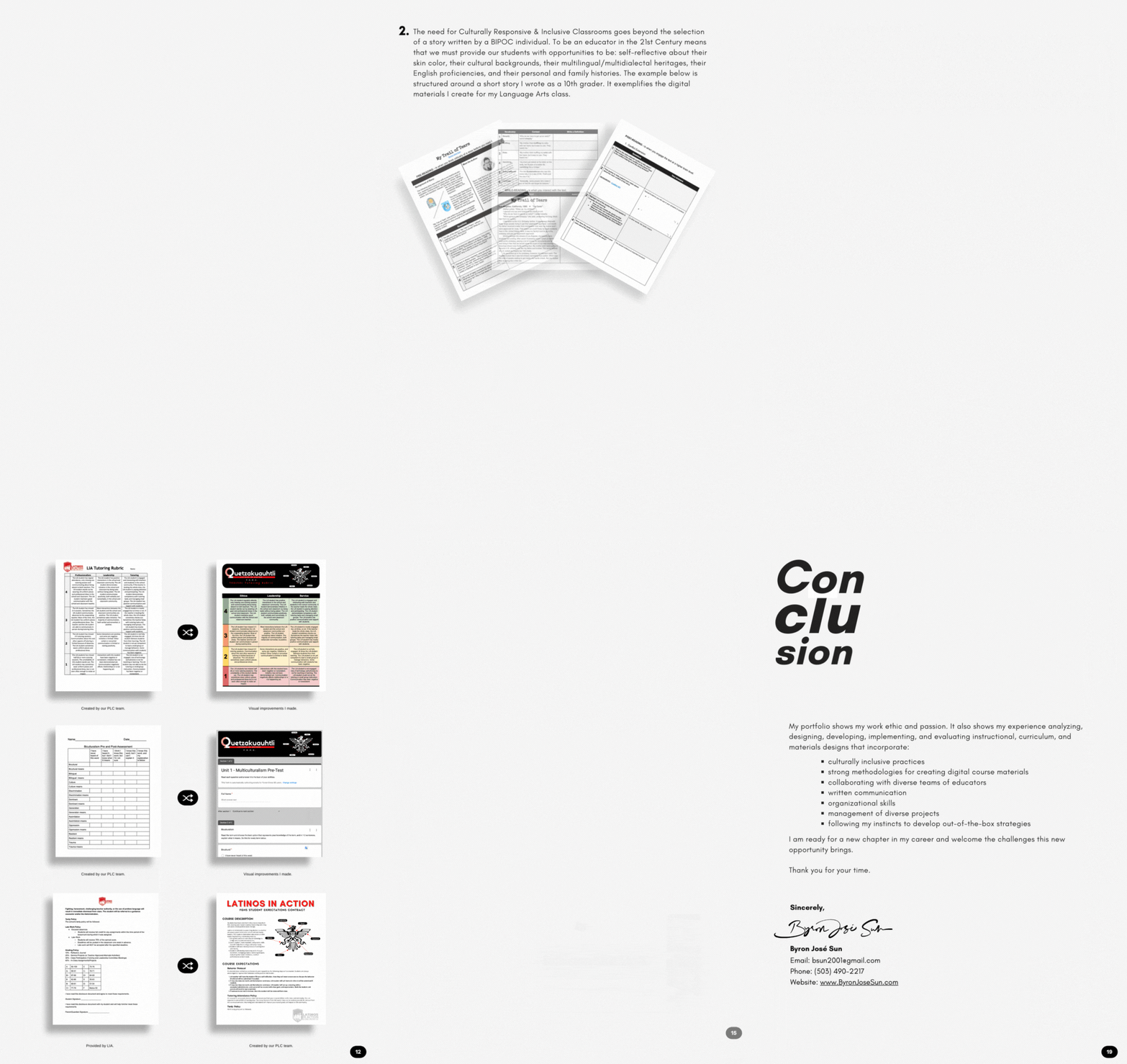
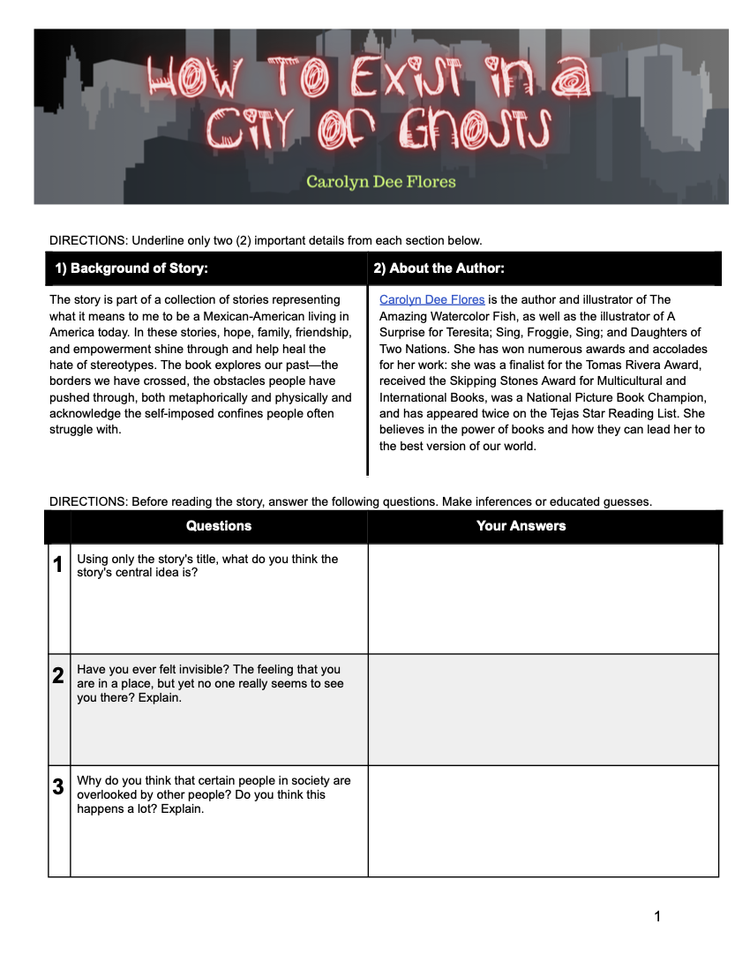
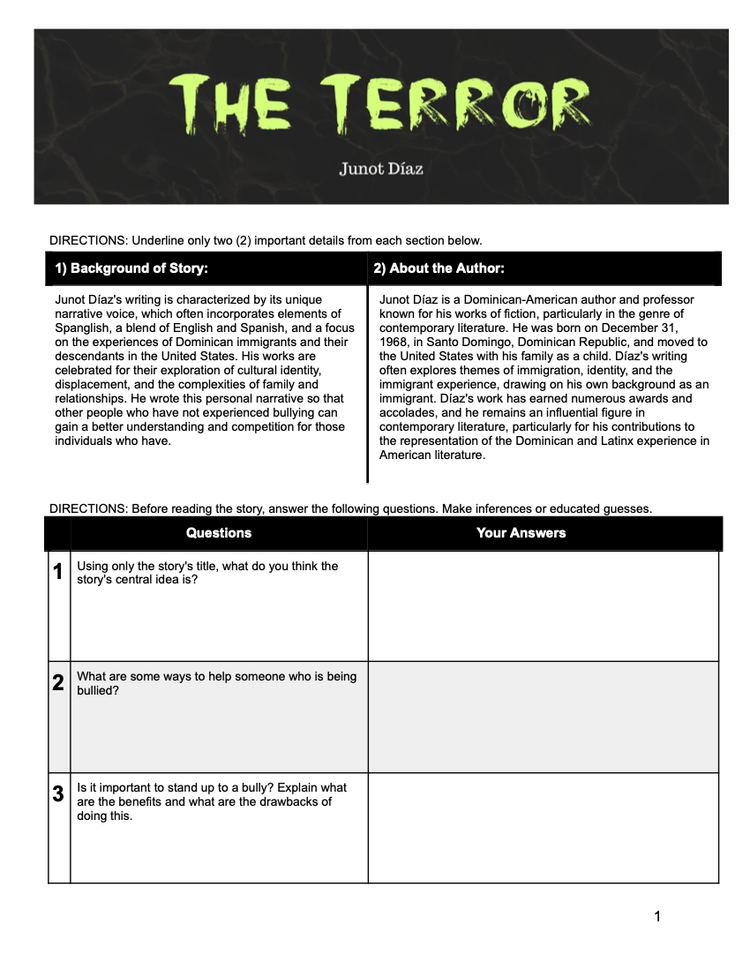
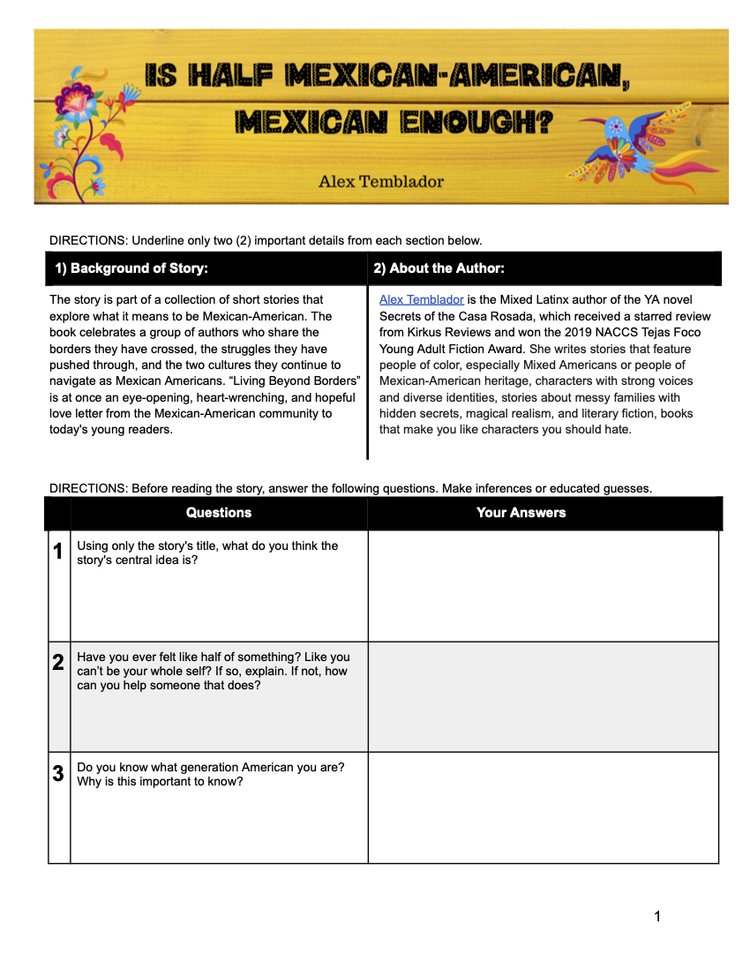
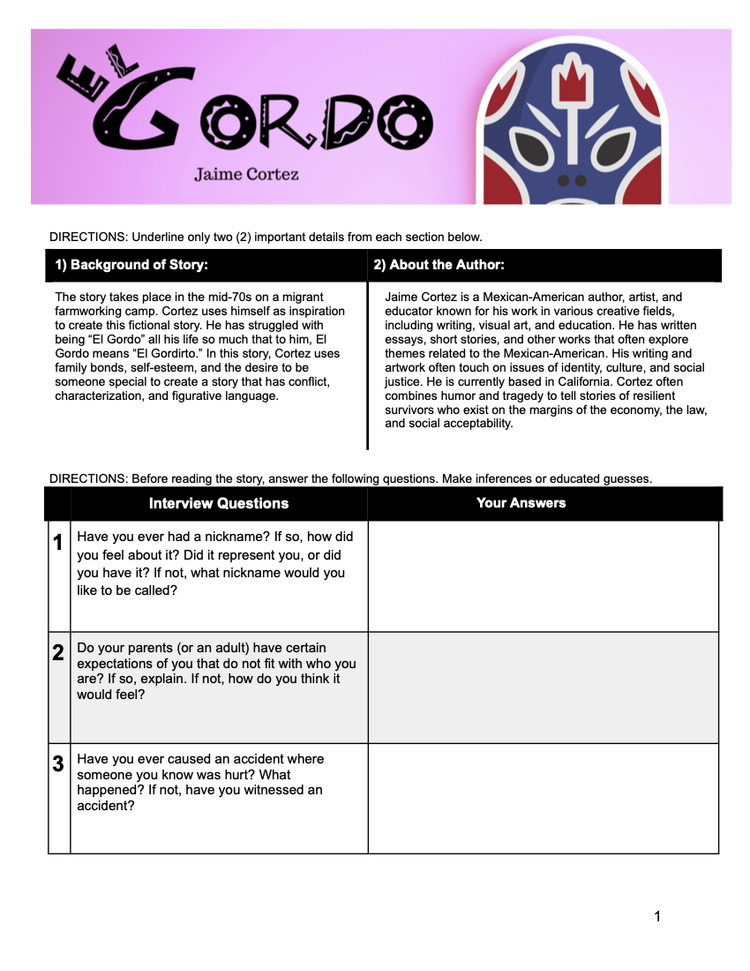
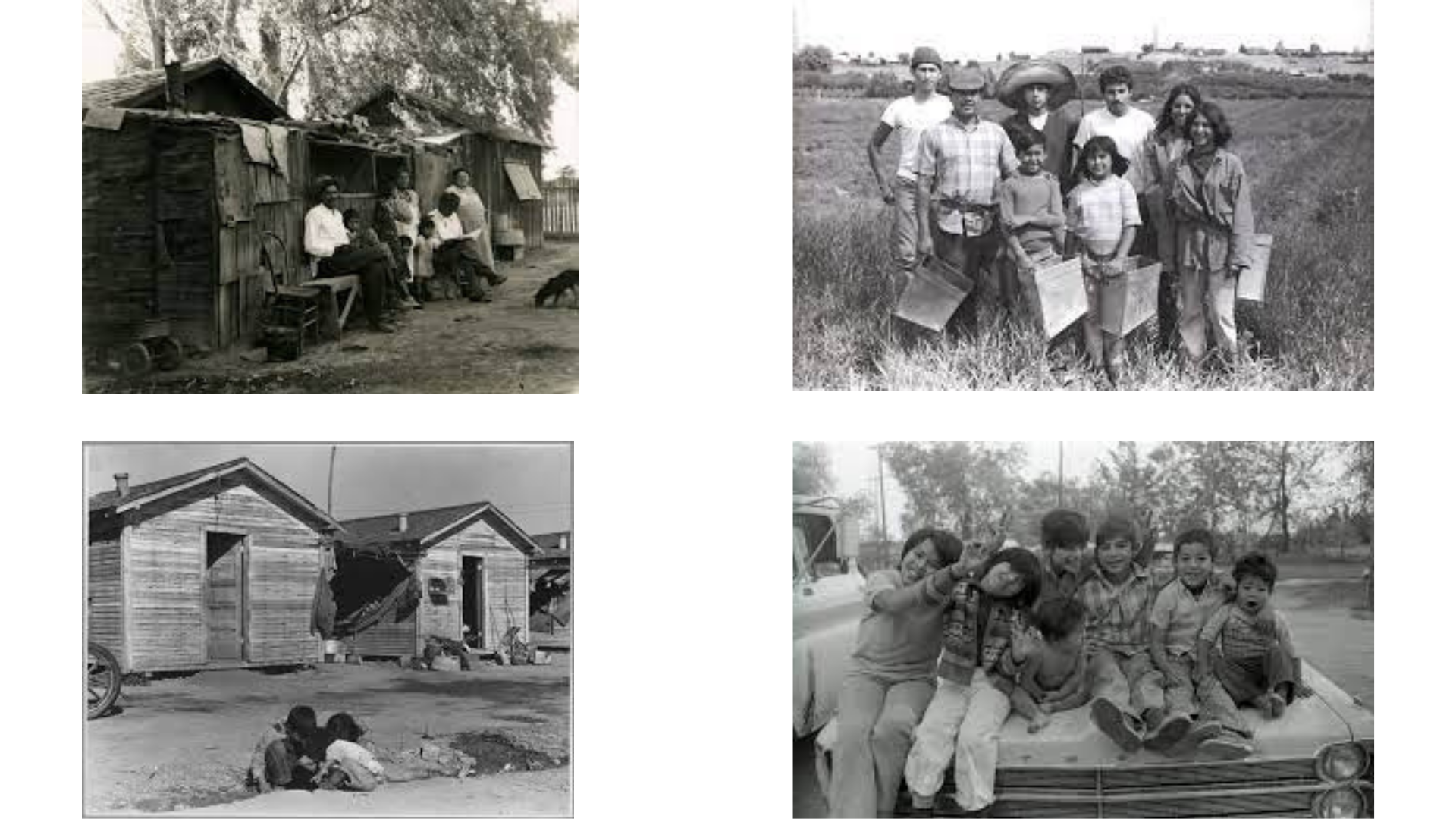
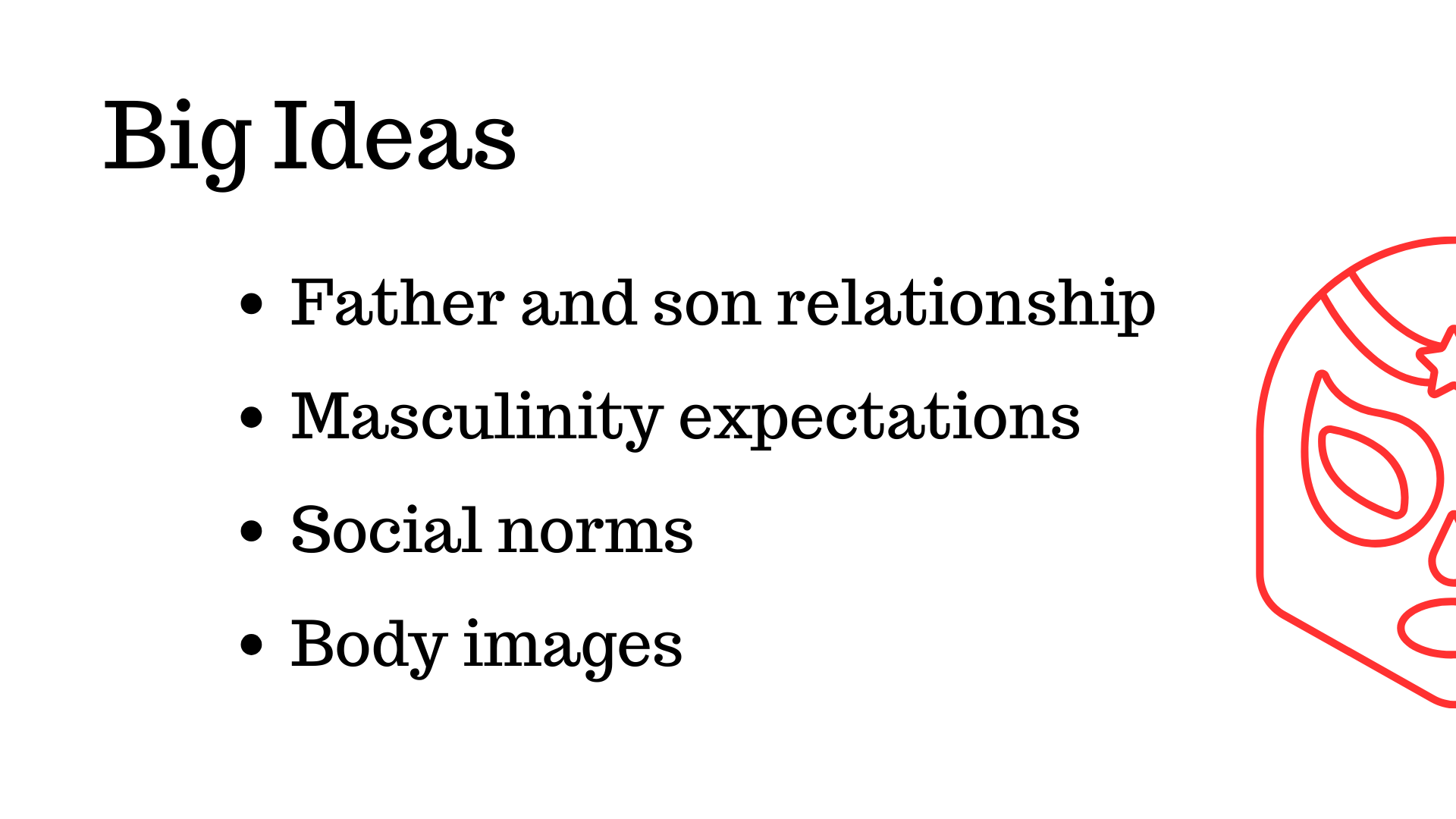
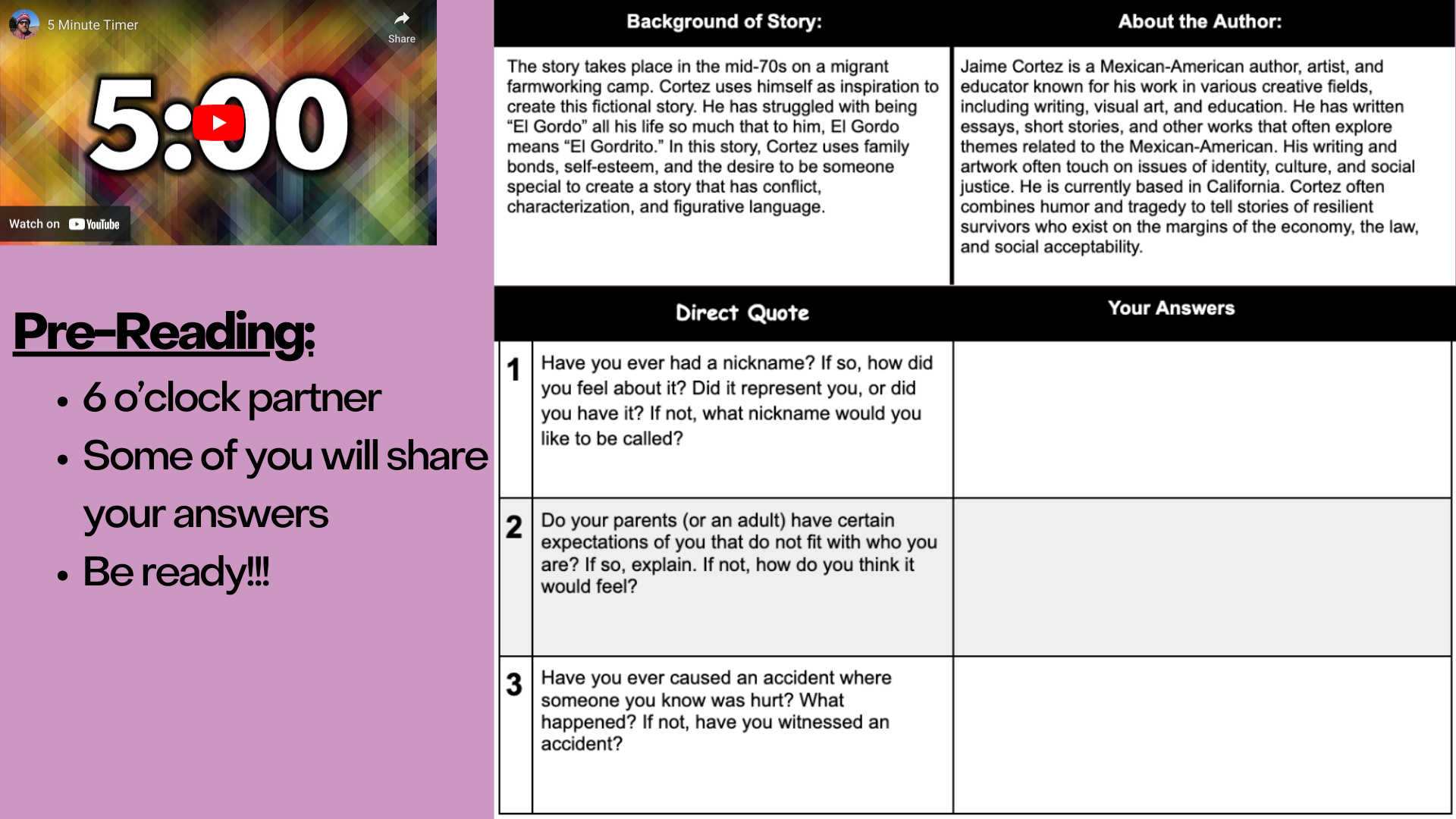
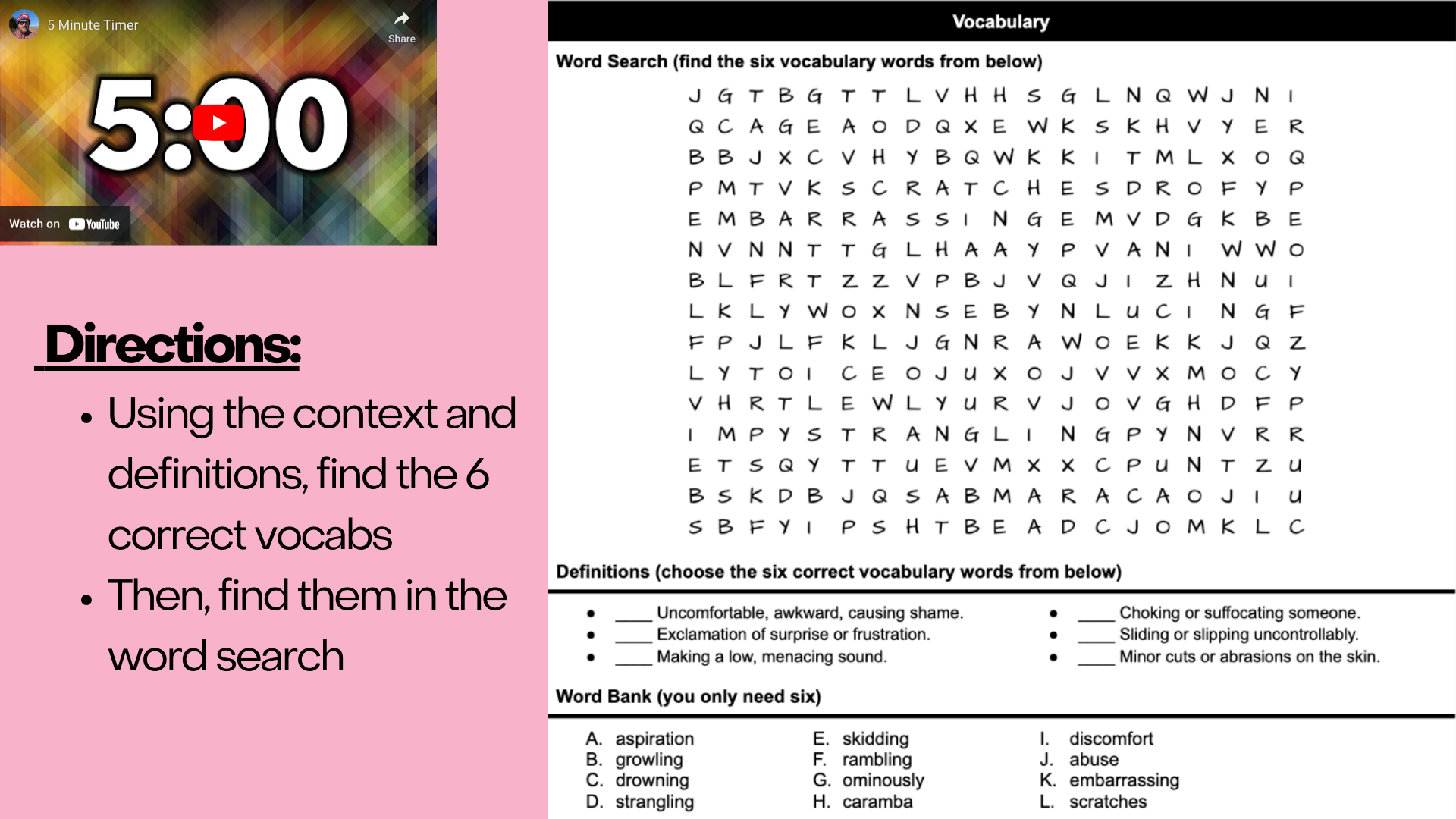
The need for Culturally Responsive and inclusive Classrooms goes beyond the selection of a story written by a BIPOC individual. To be an educator in the 21st Century means we must provide our students with opportunities to self-reflect on their skin color, cultural backgrounds, multilingual/multidialectal heritages, English proficiencies, and personal and family histories. The example below concerns a short story I wrote as a 10th grader. It exemplifies the digital materials I create for my Language Arts class.
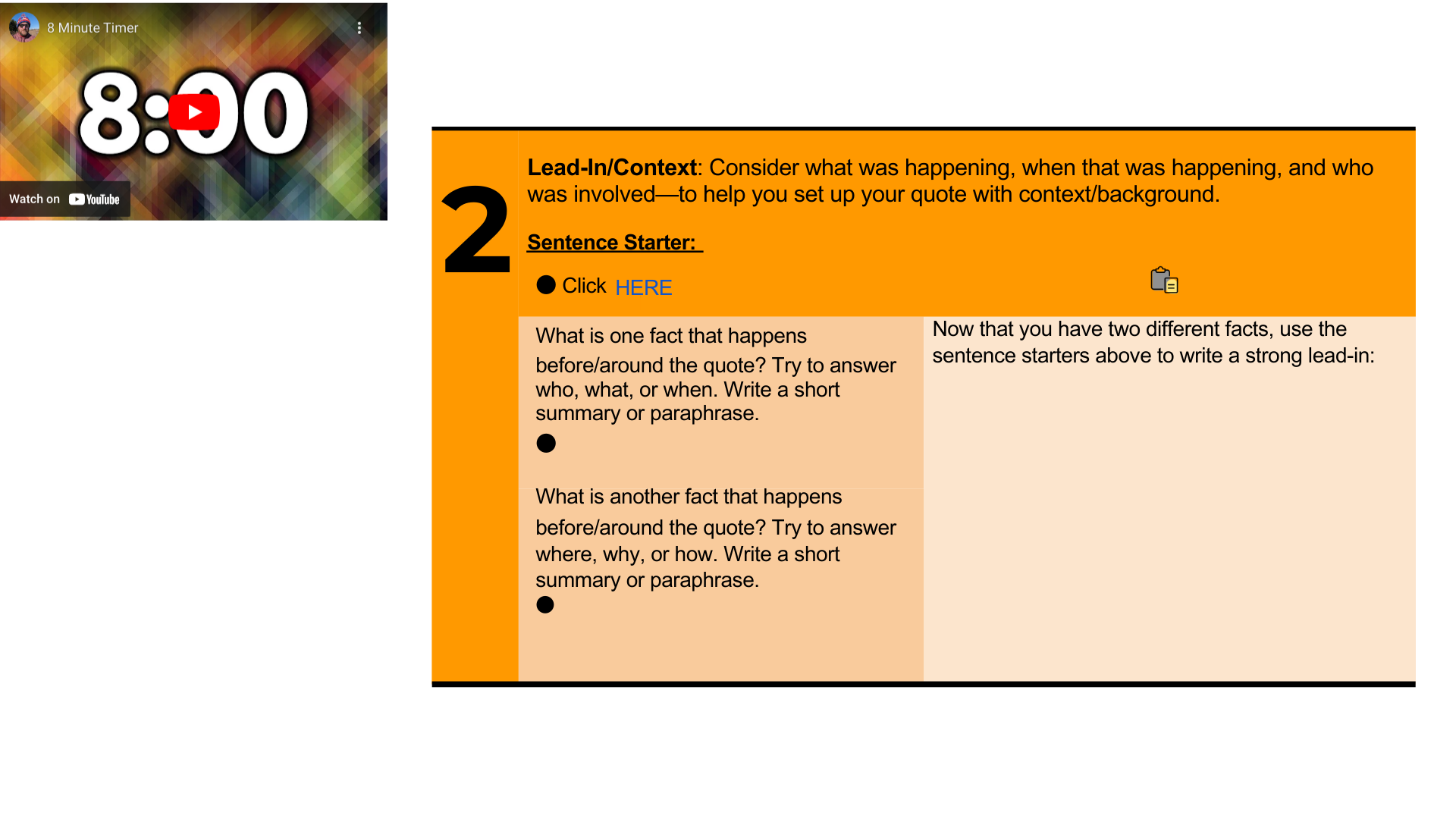
Uniformity, structure & chunking scaffolds

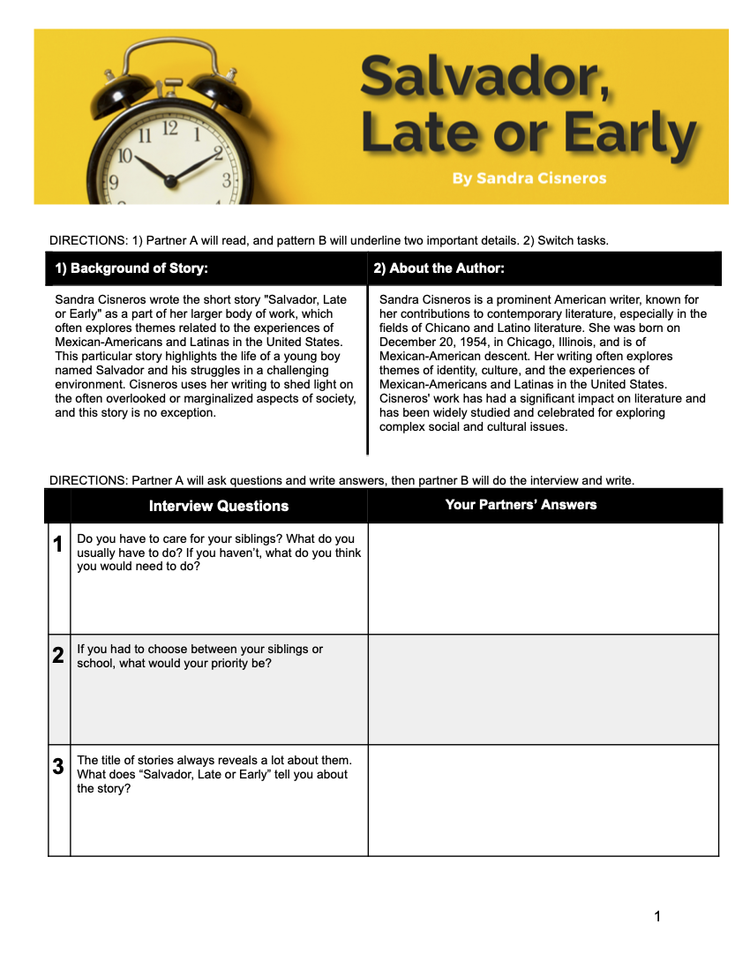
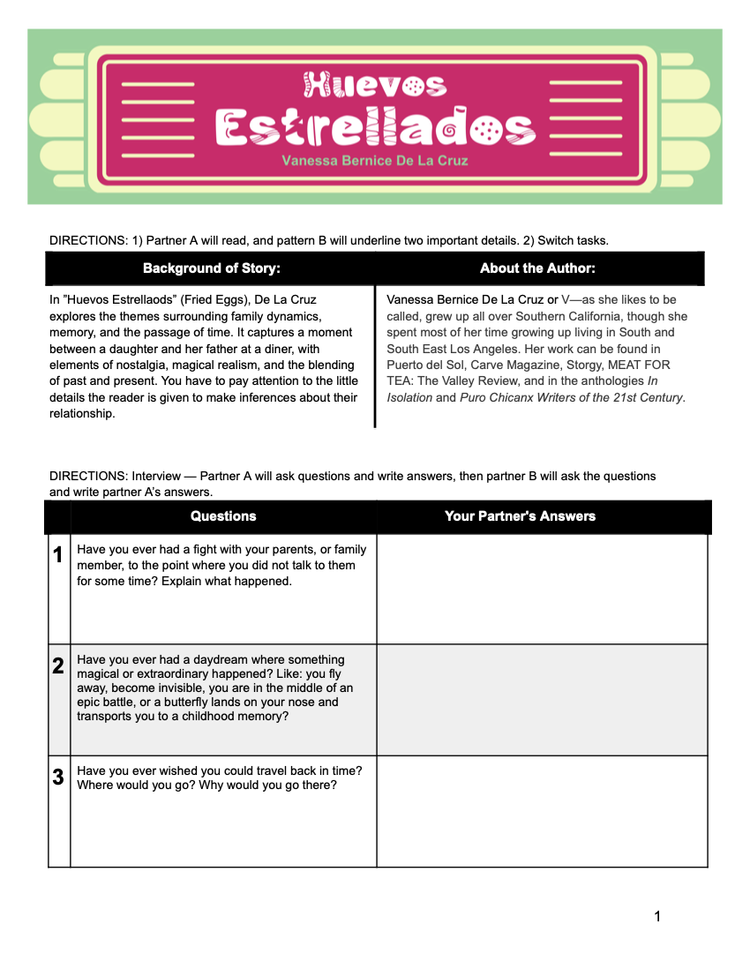
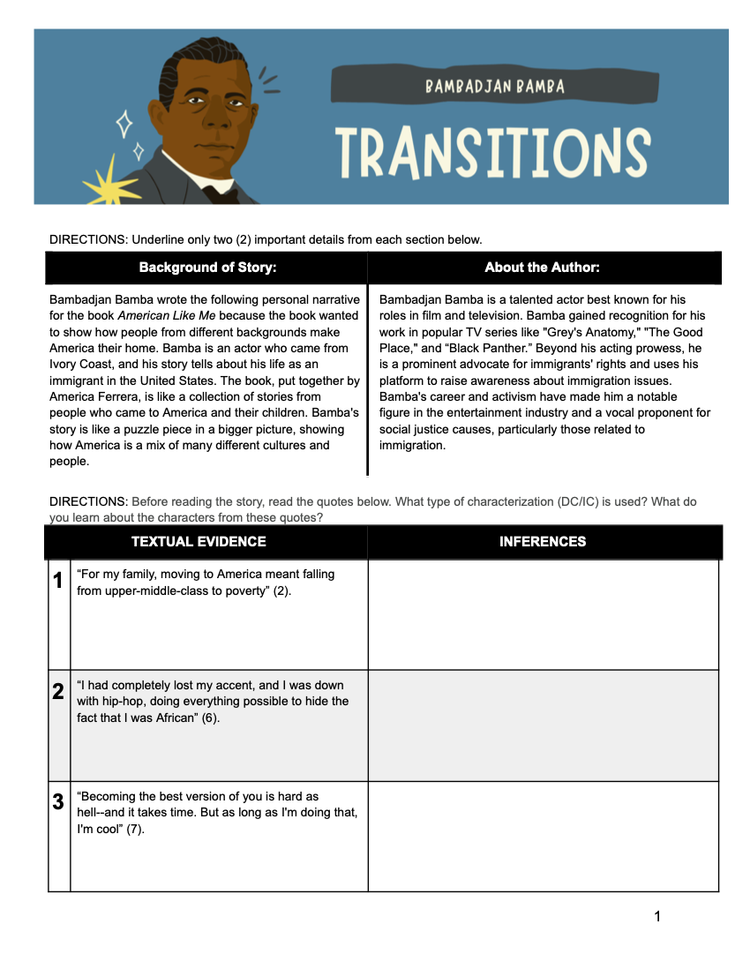
Full Interactive Reading Packet
Using AI to Create Audios
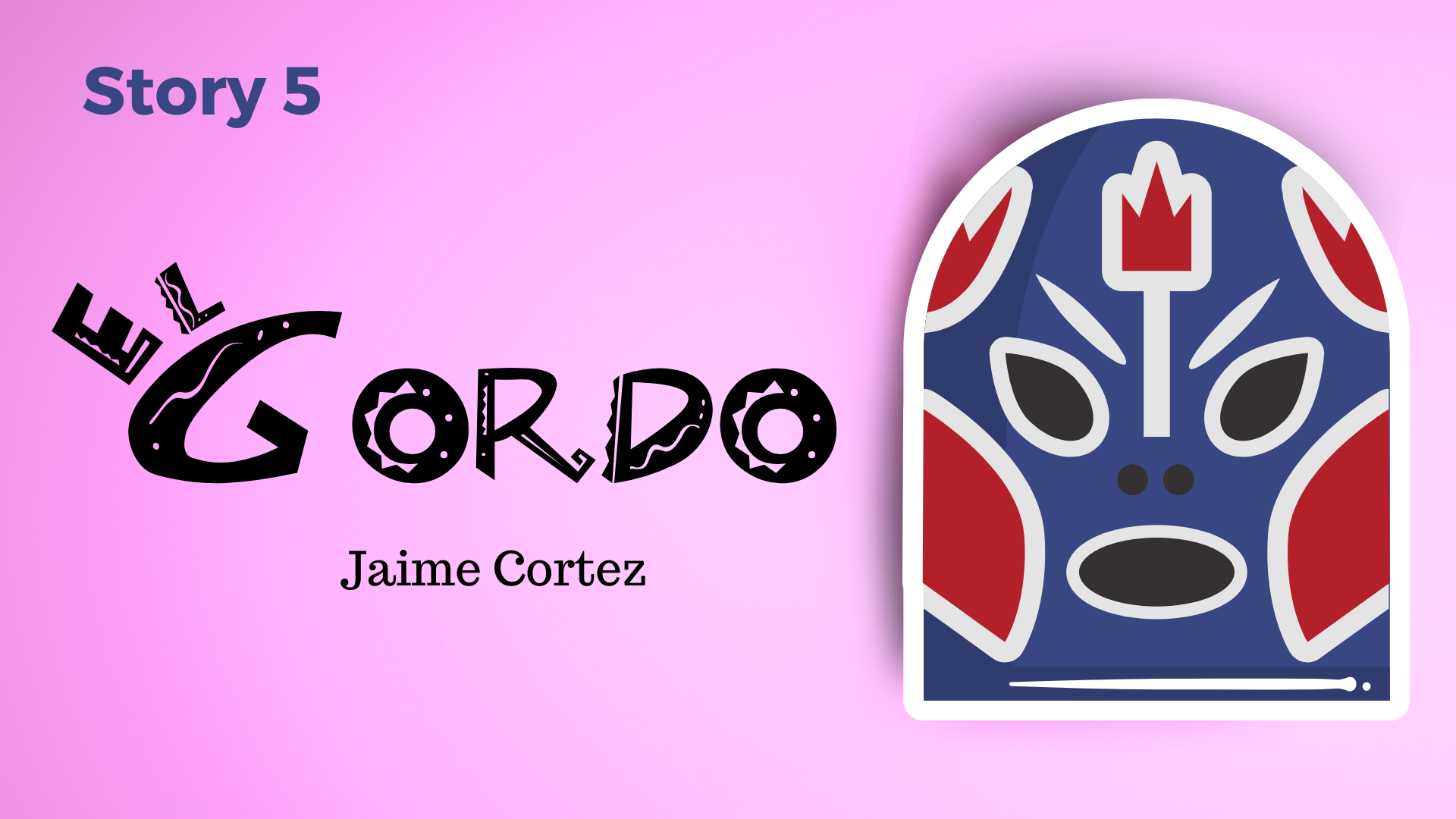

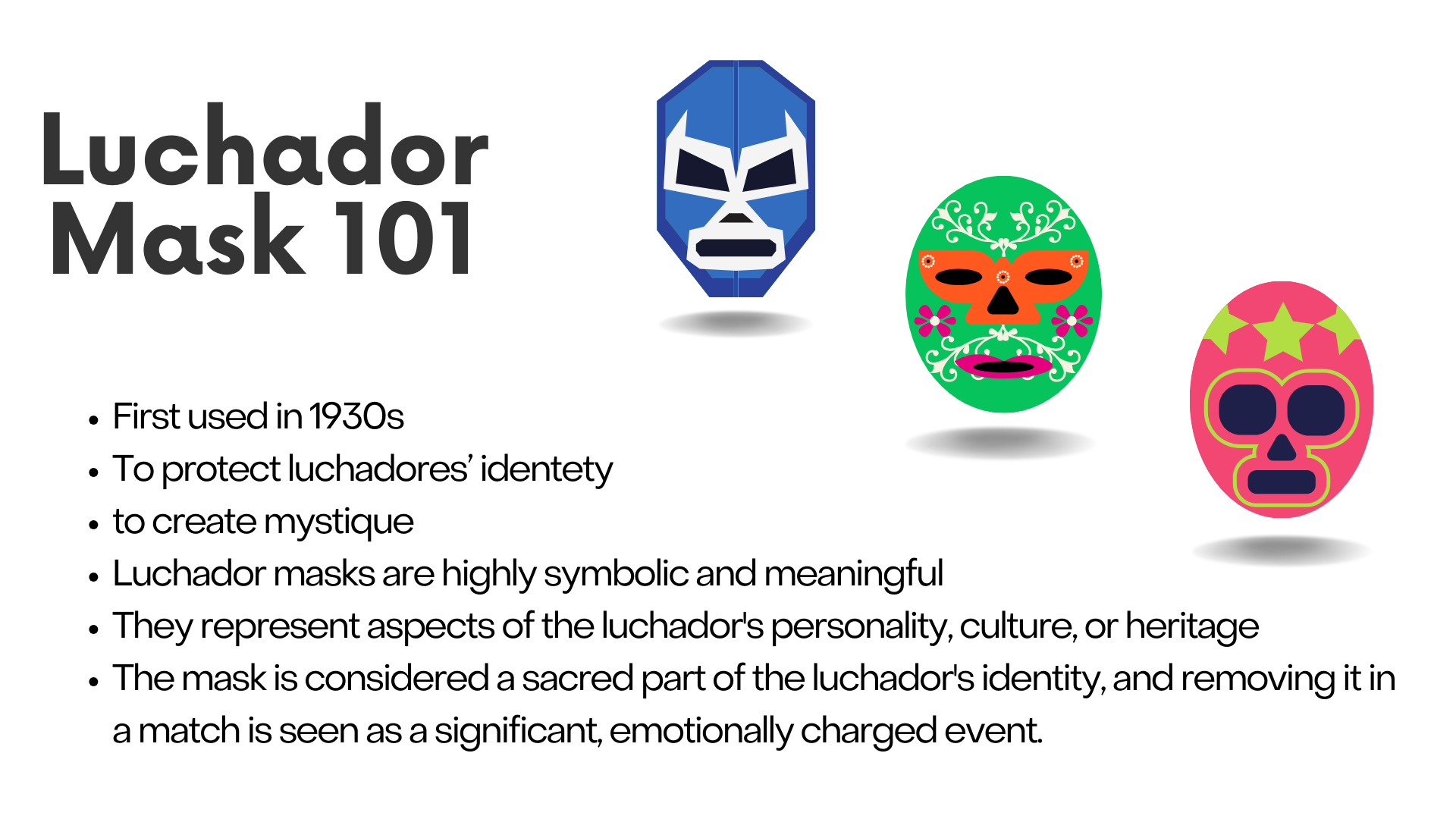
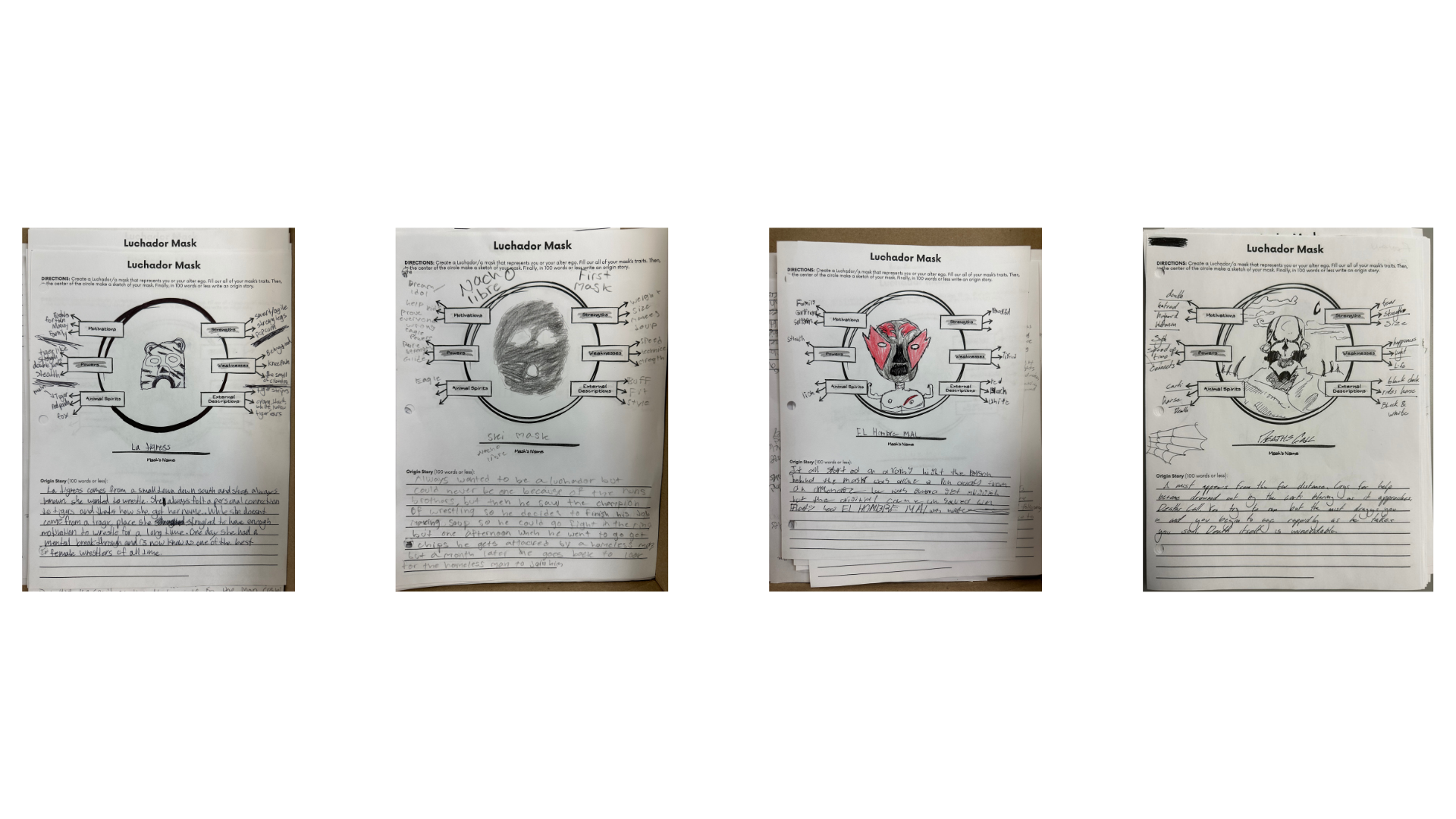
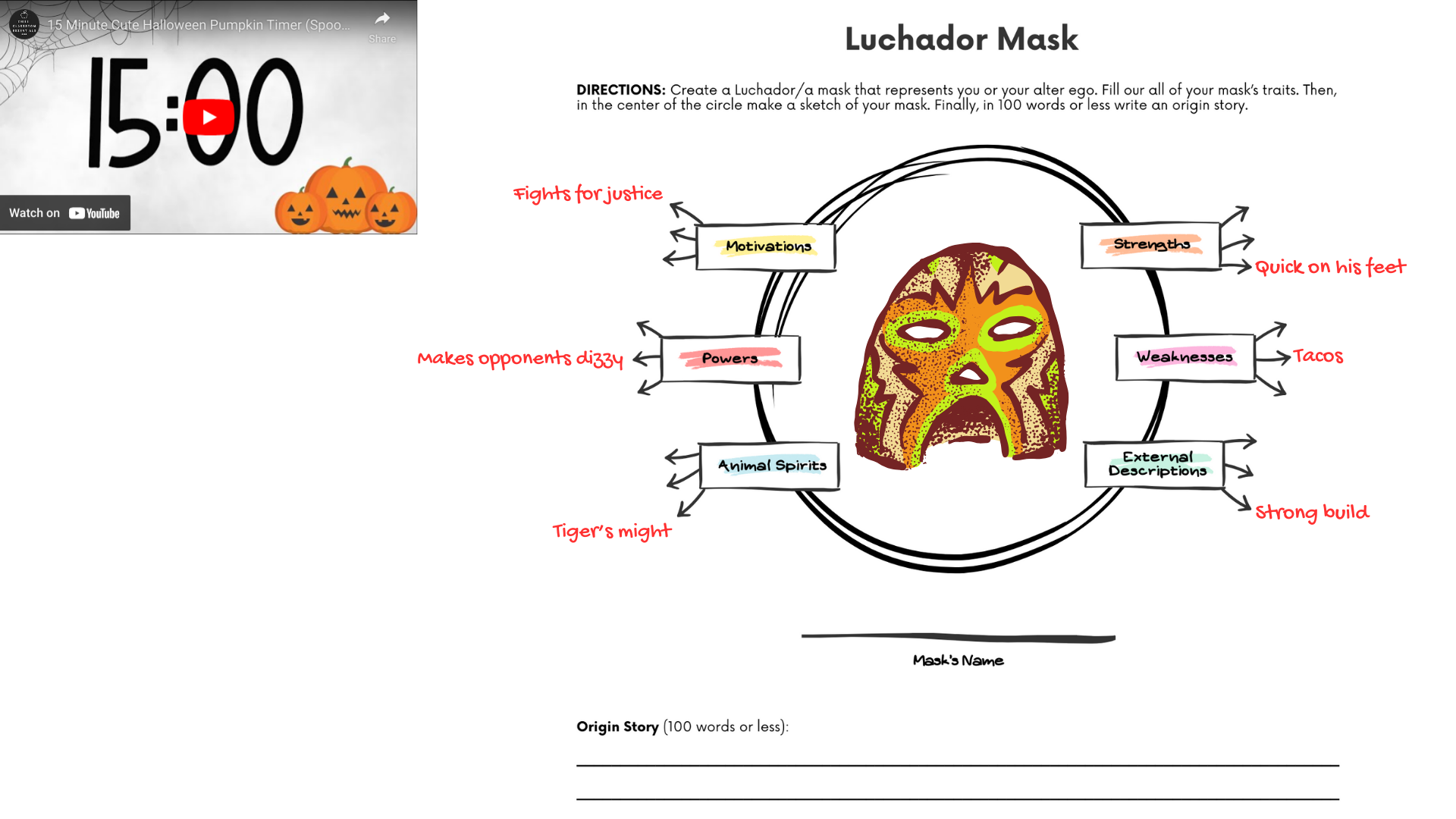
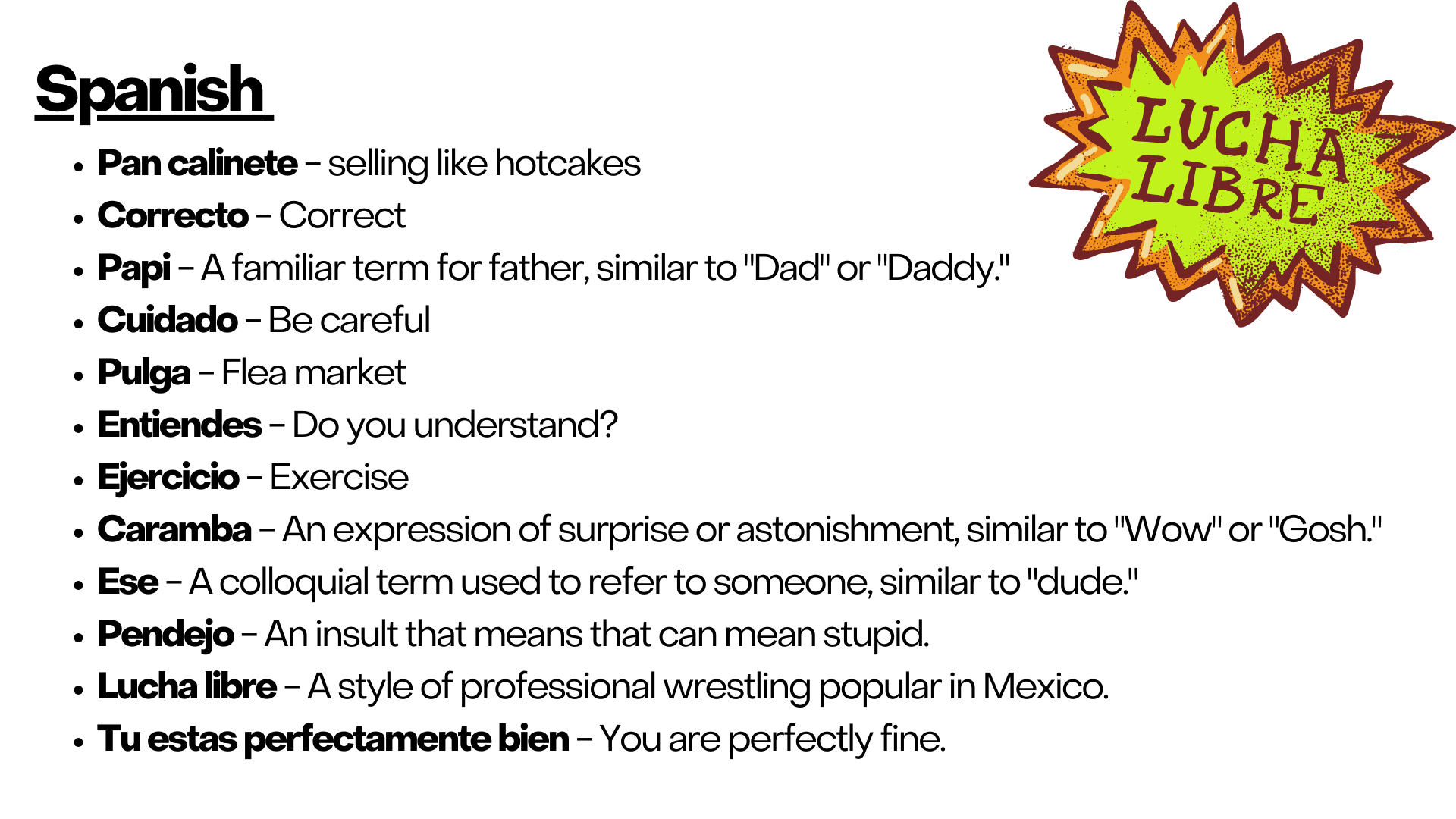
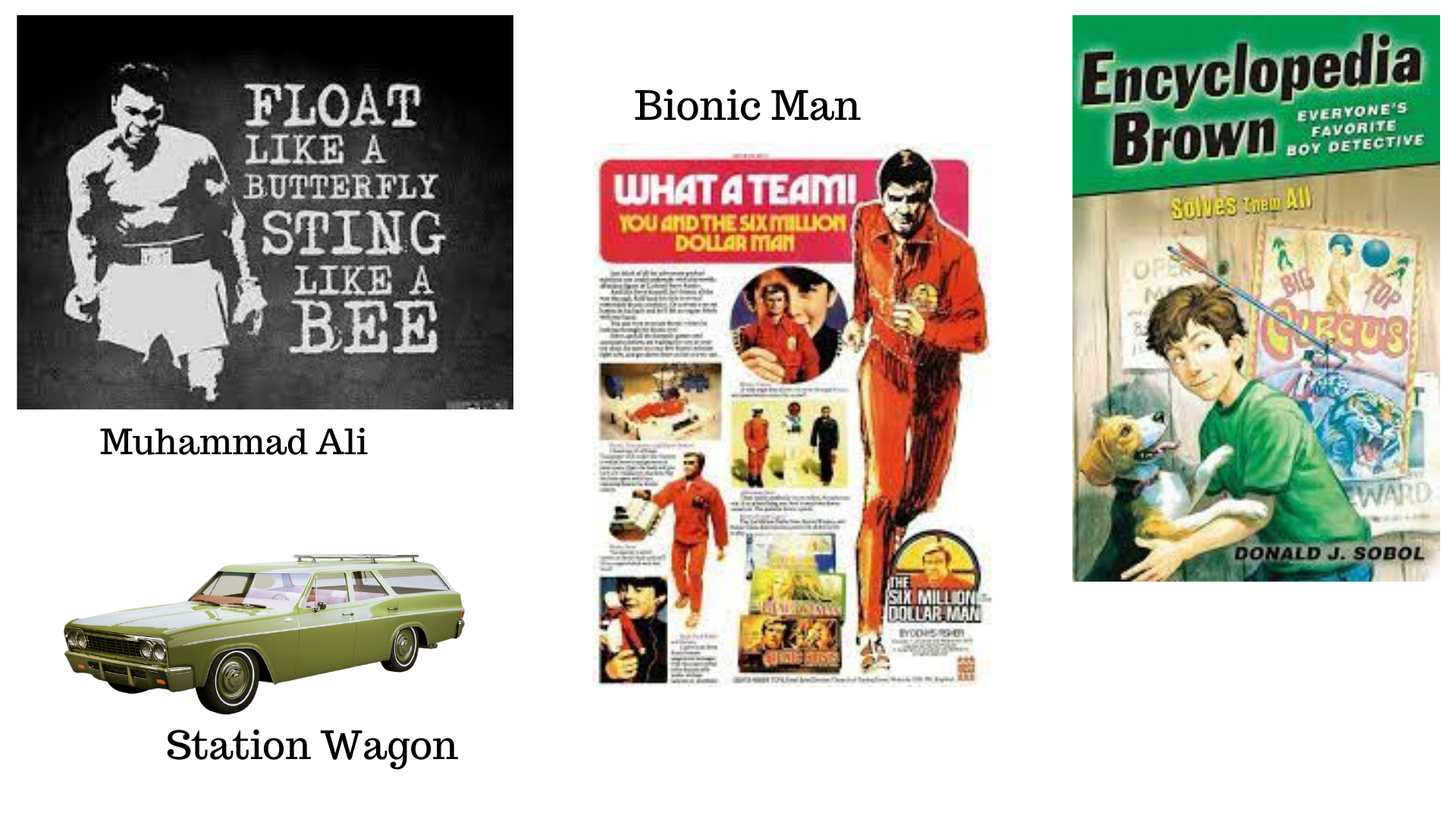


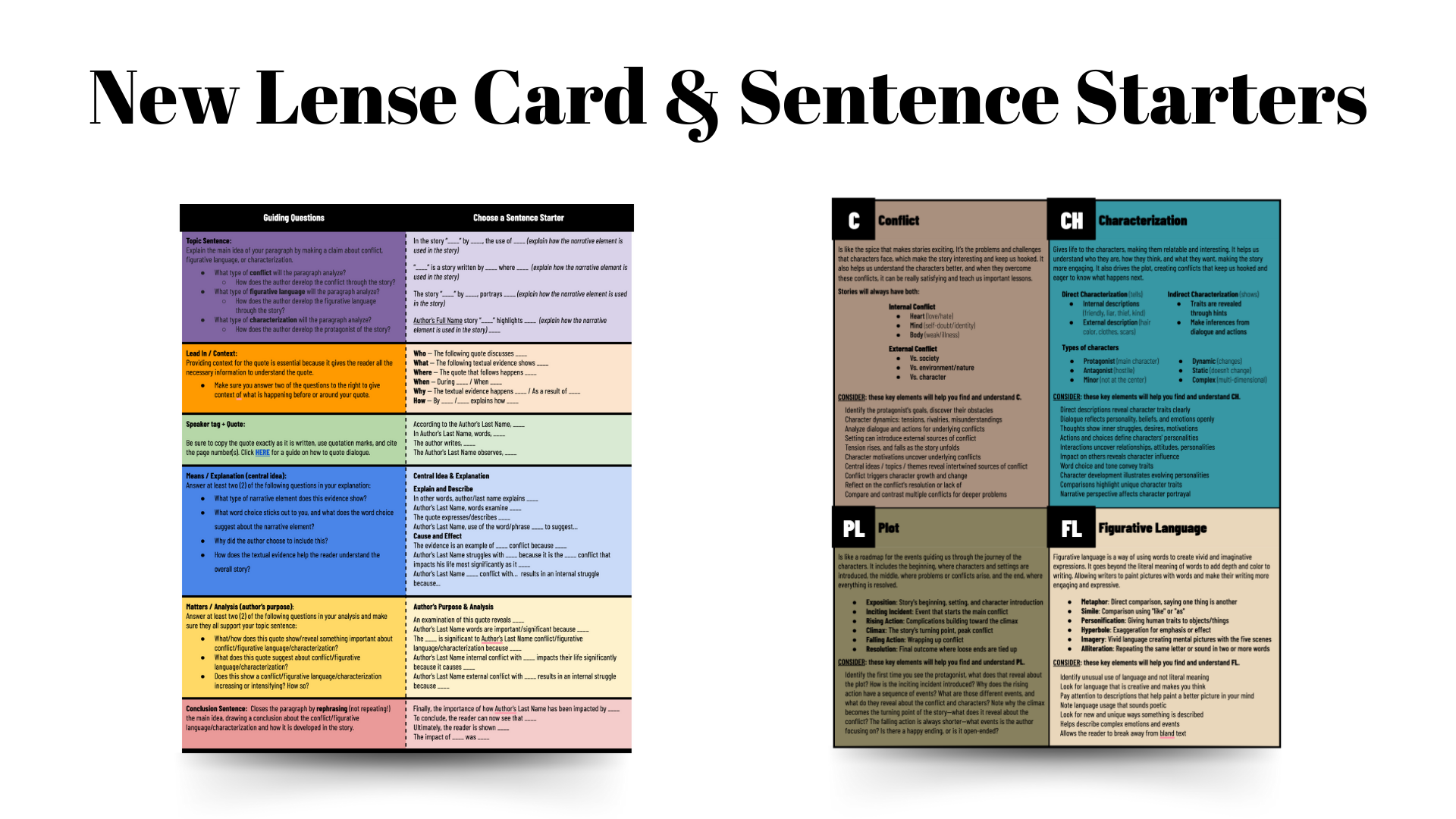
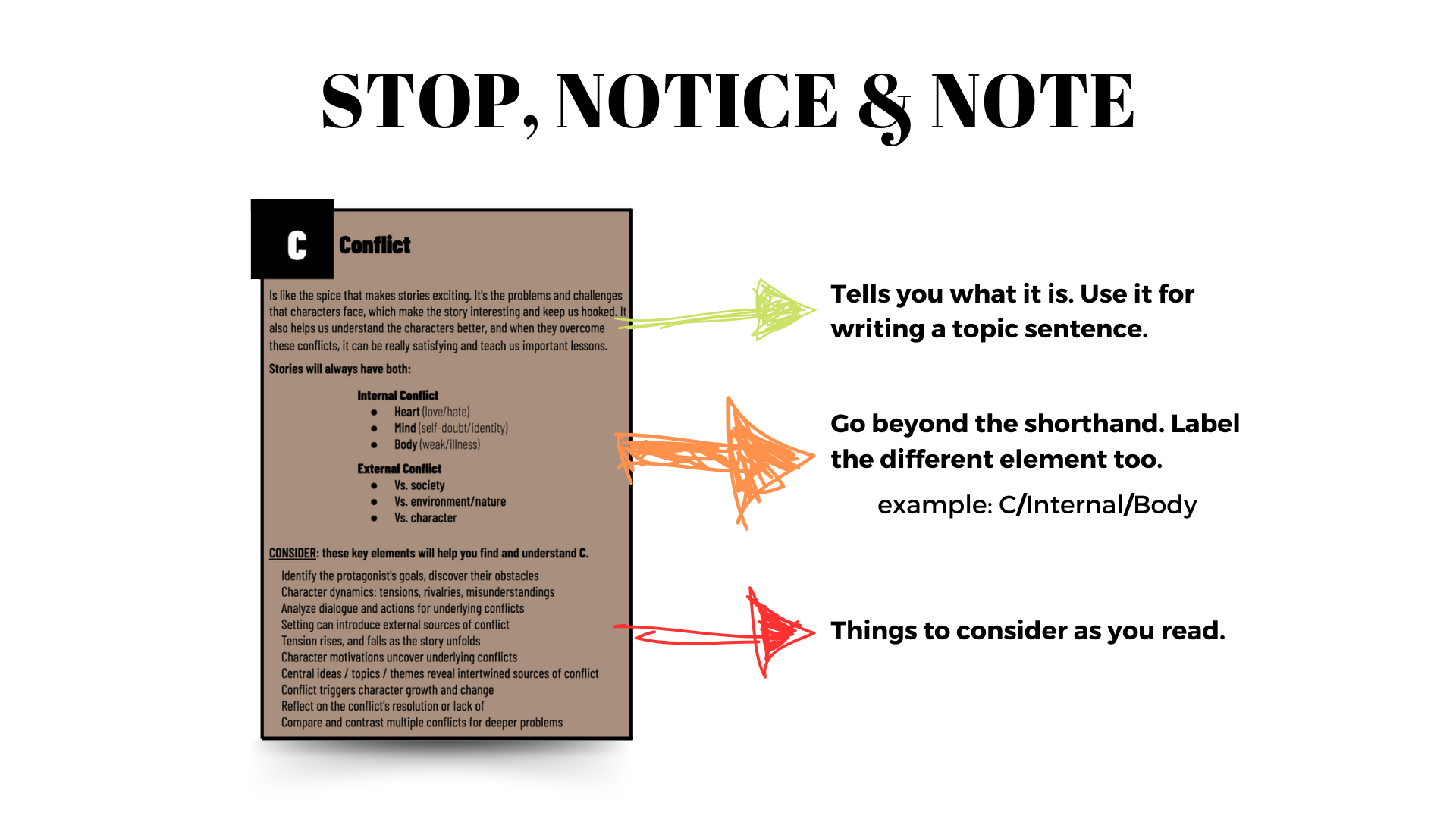
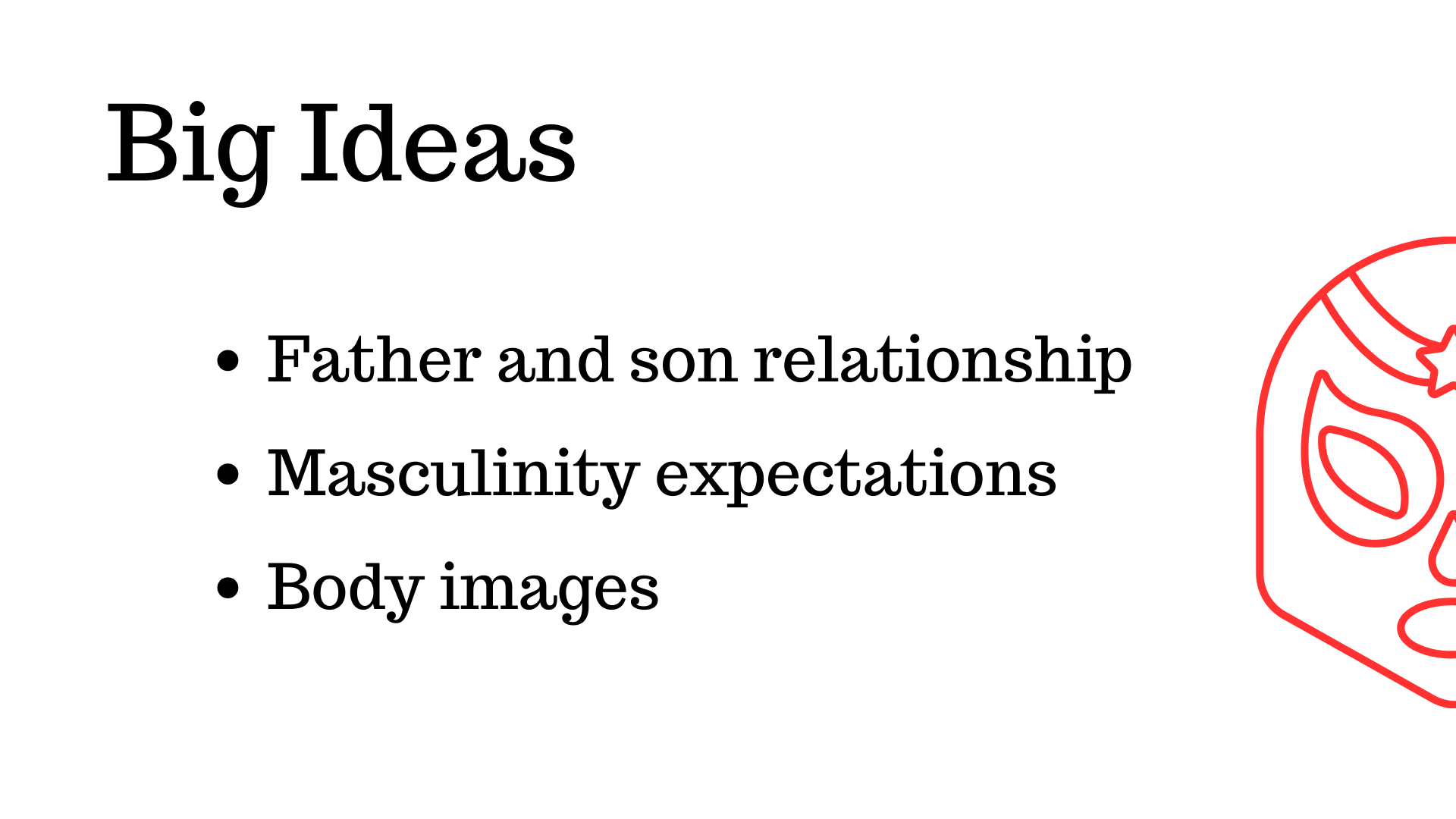
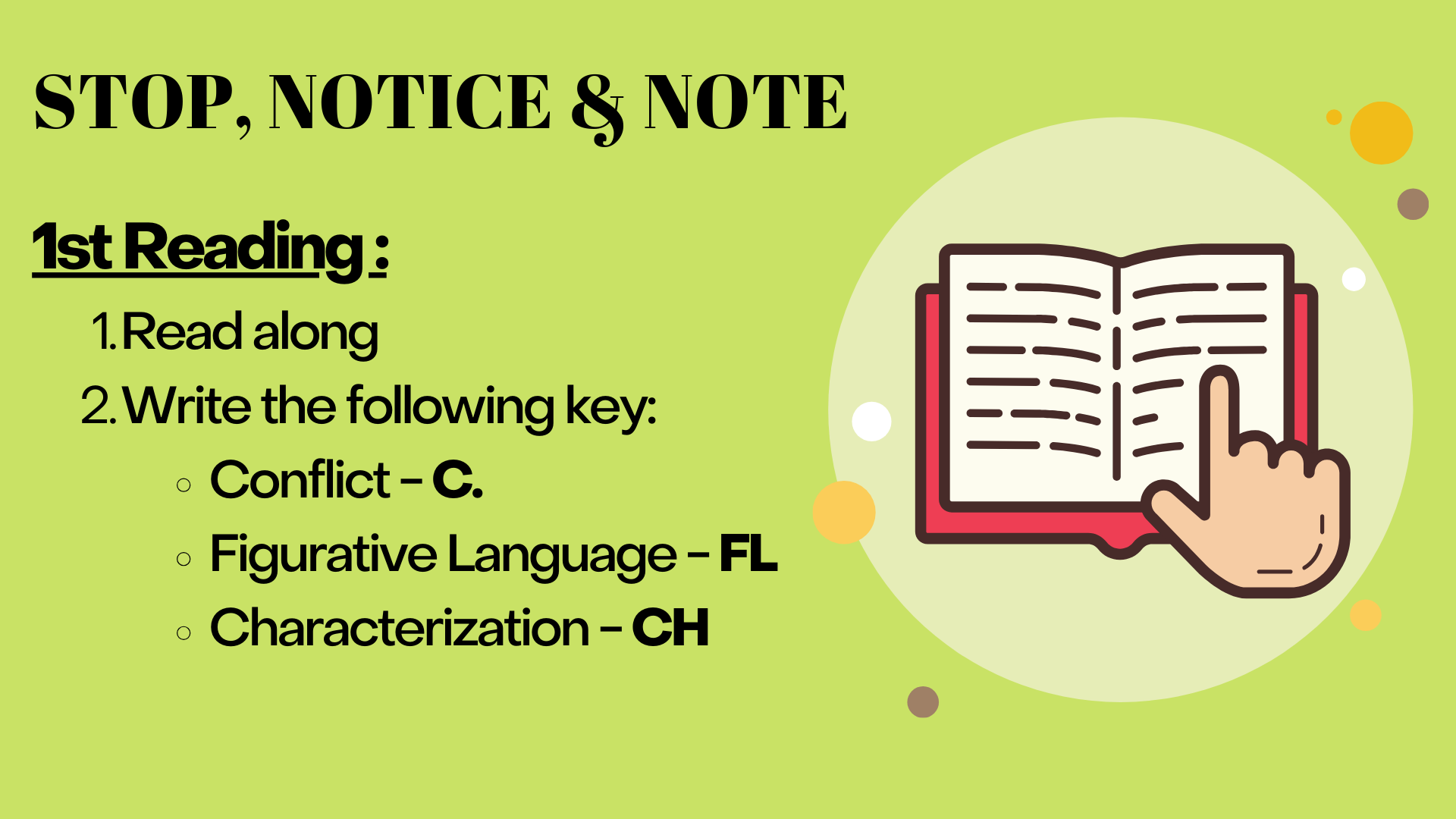
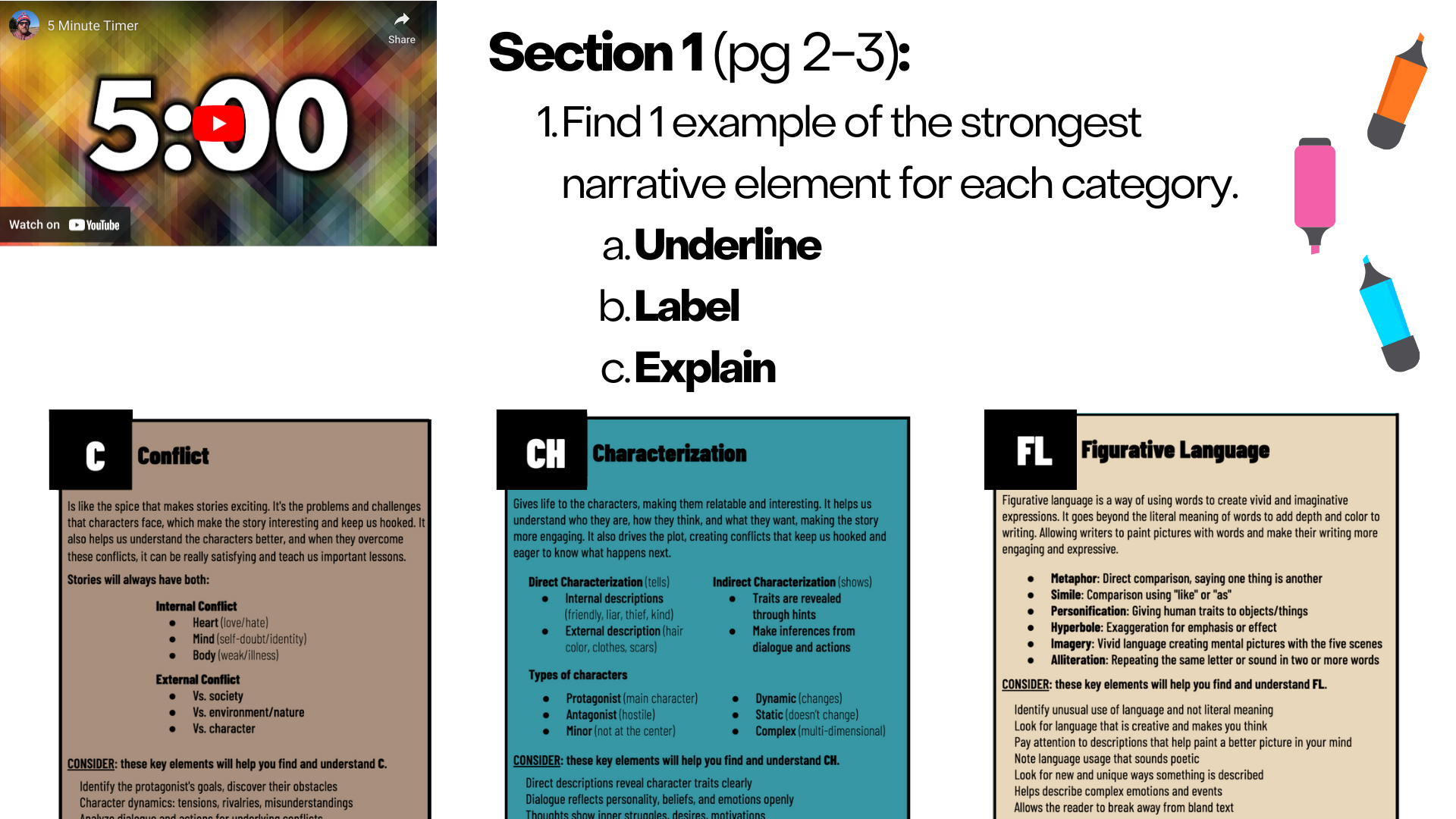
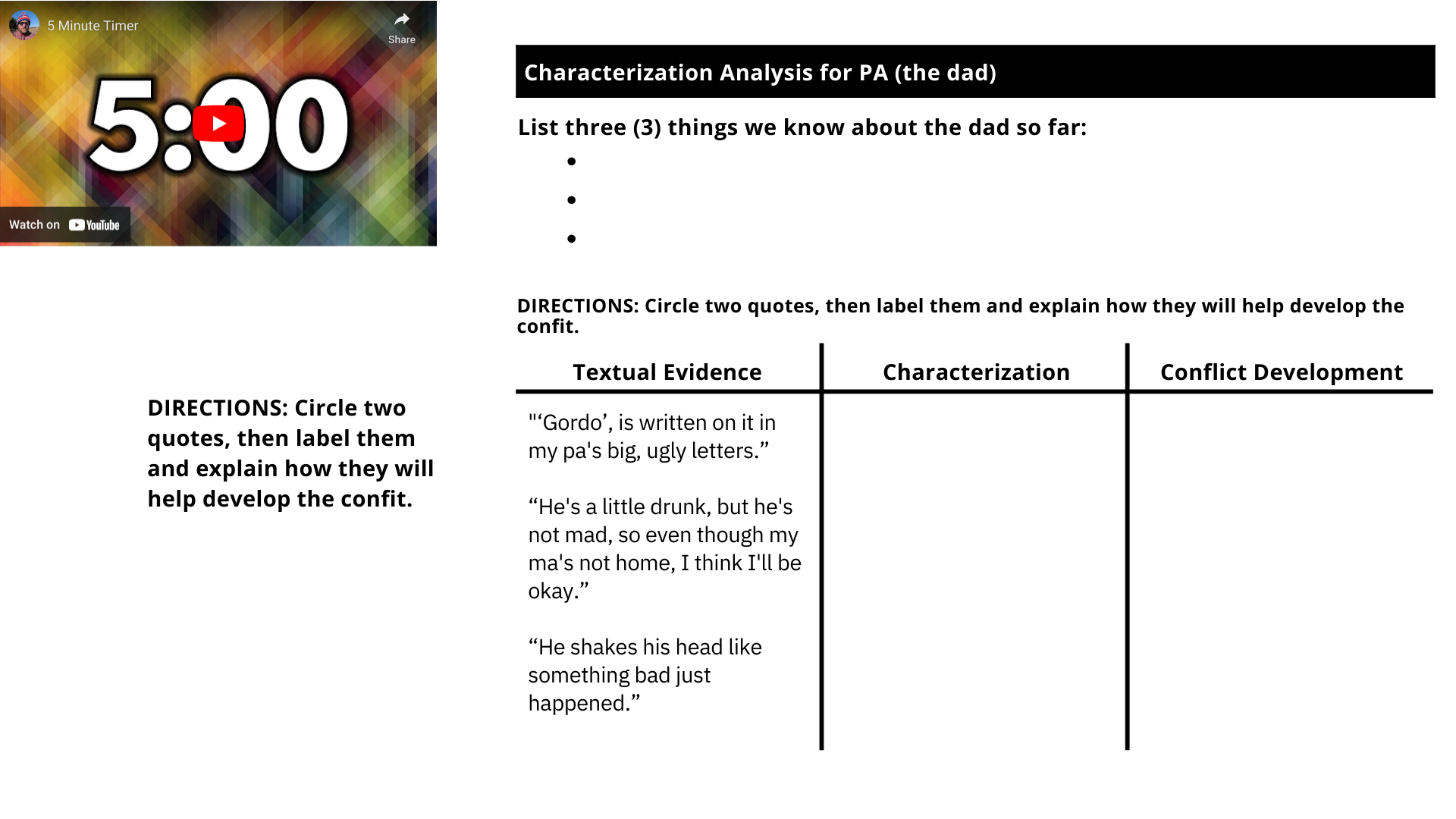
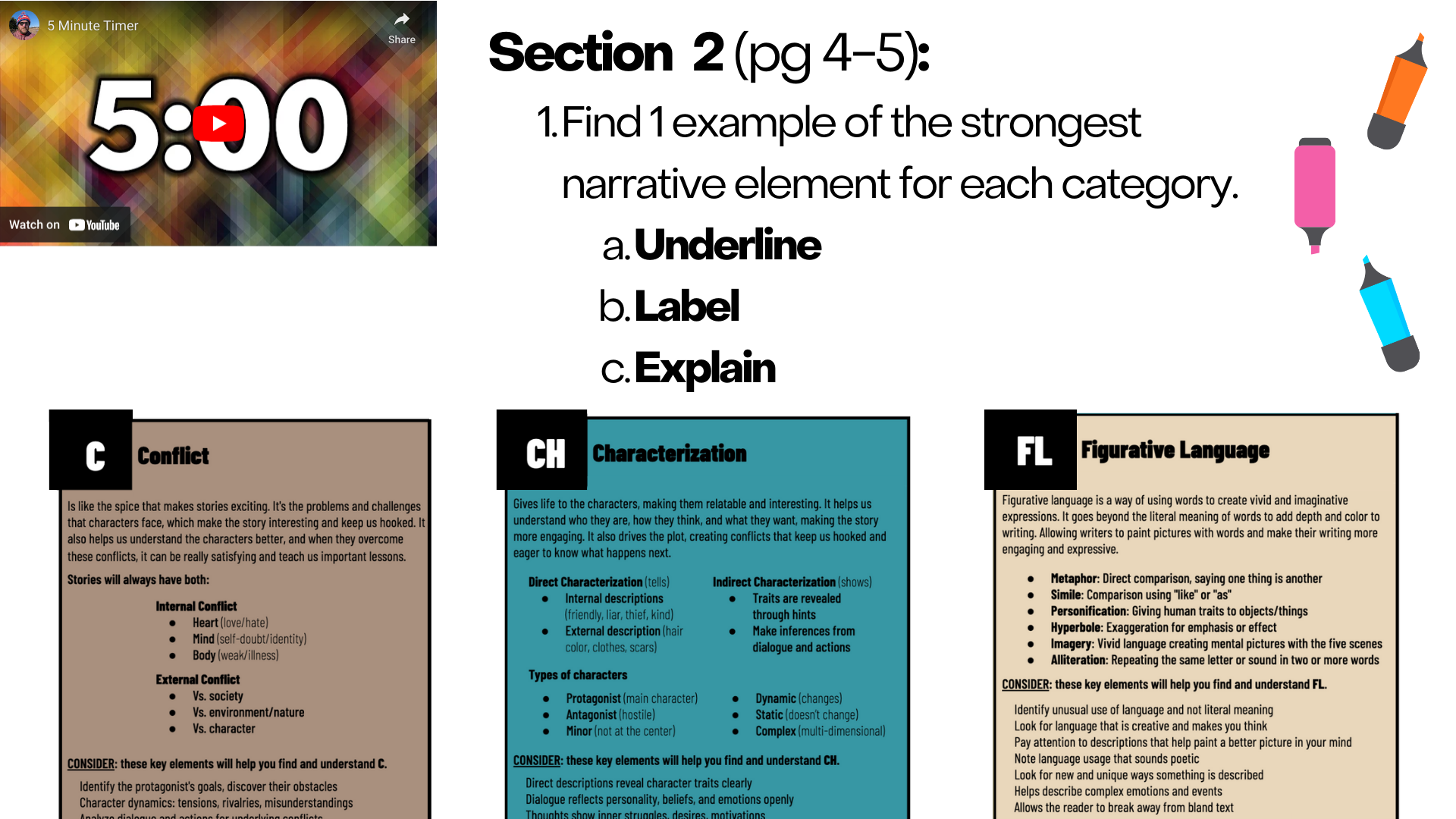
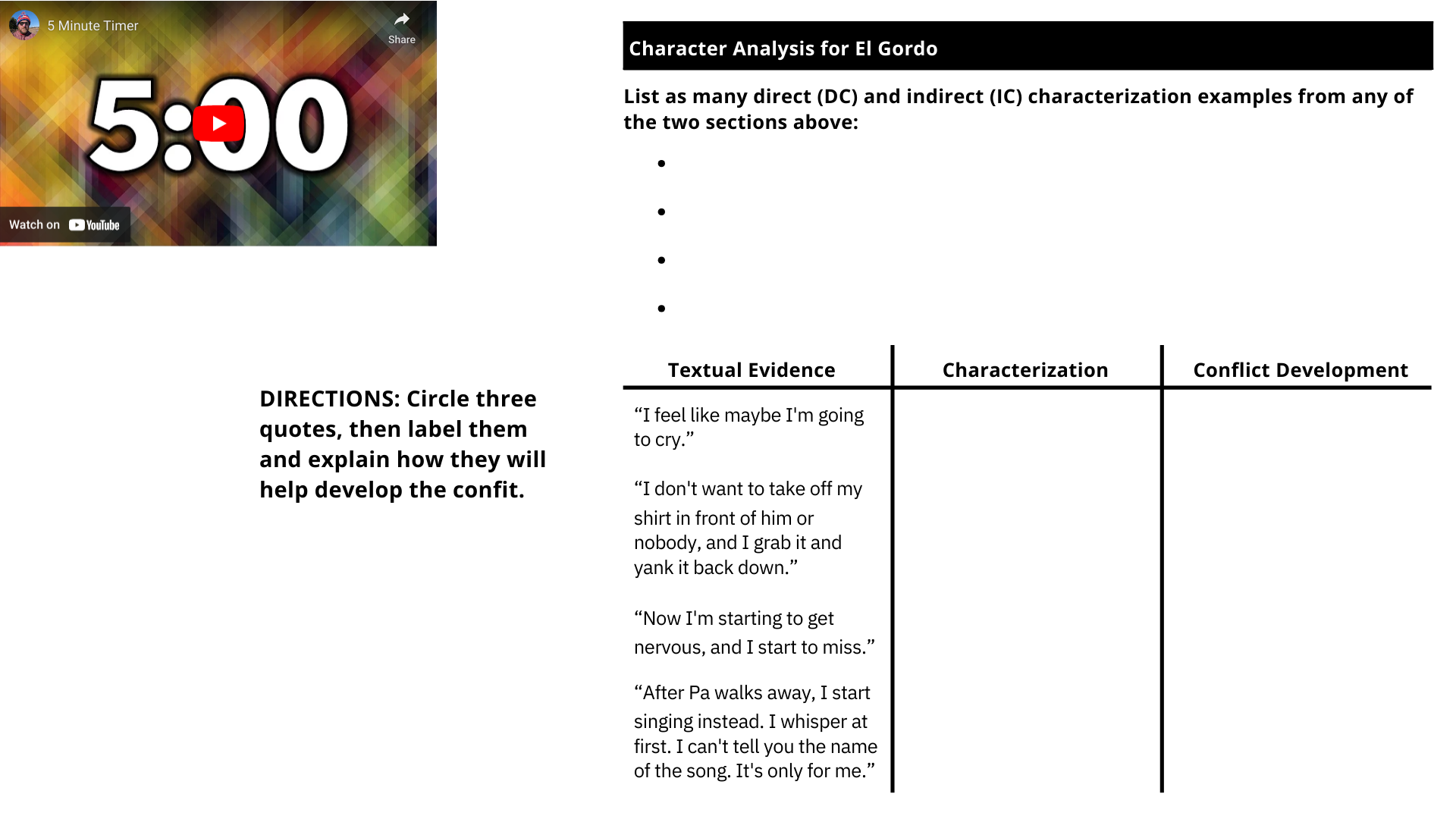
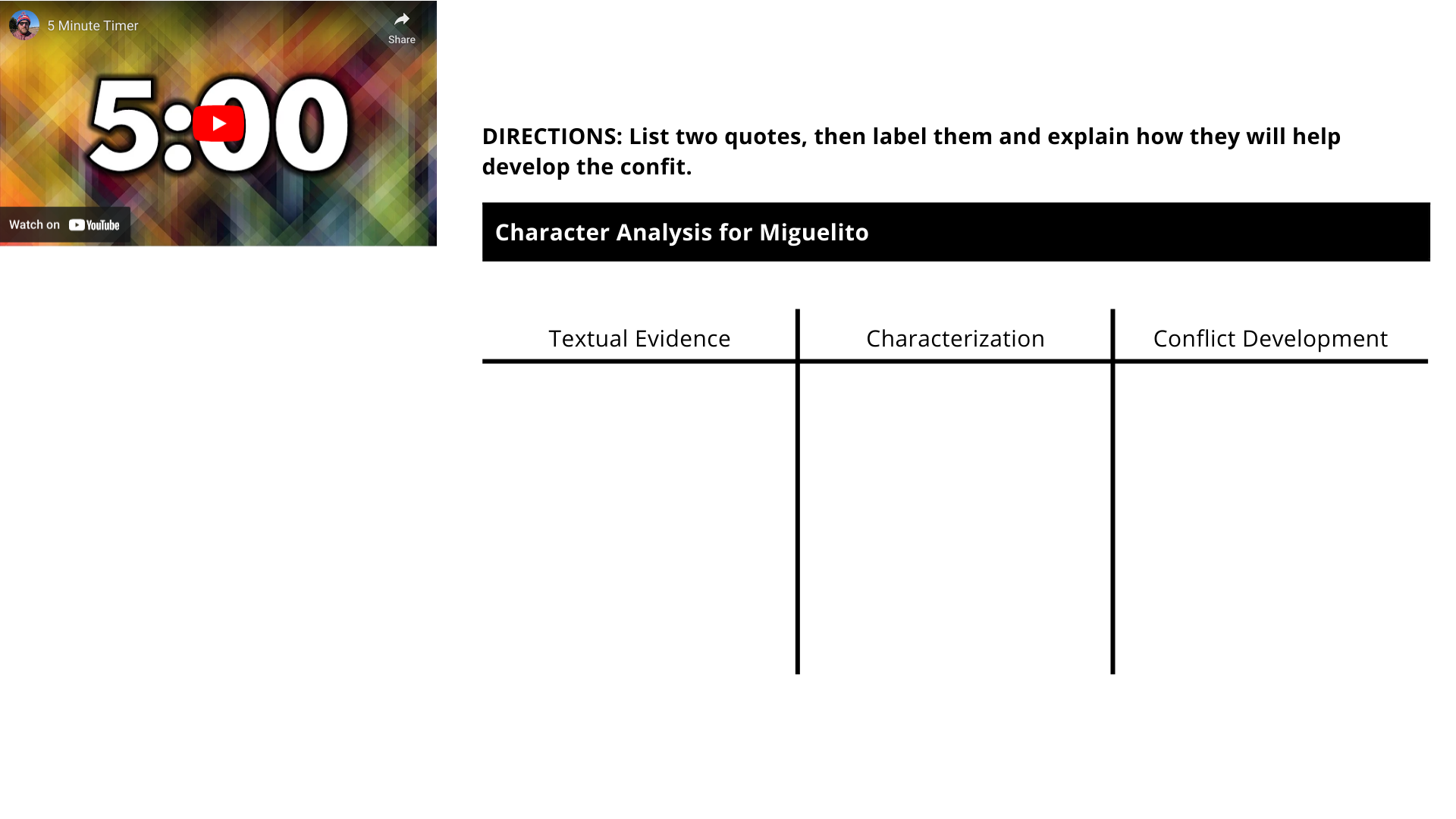
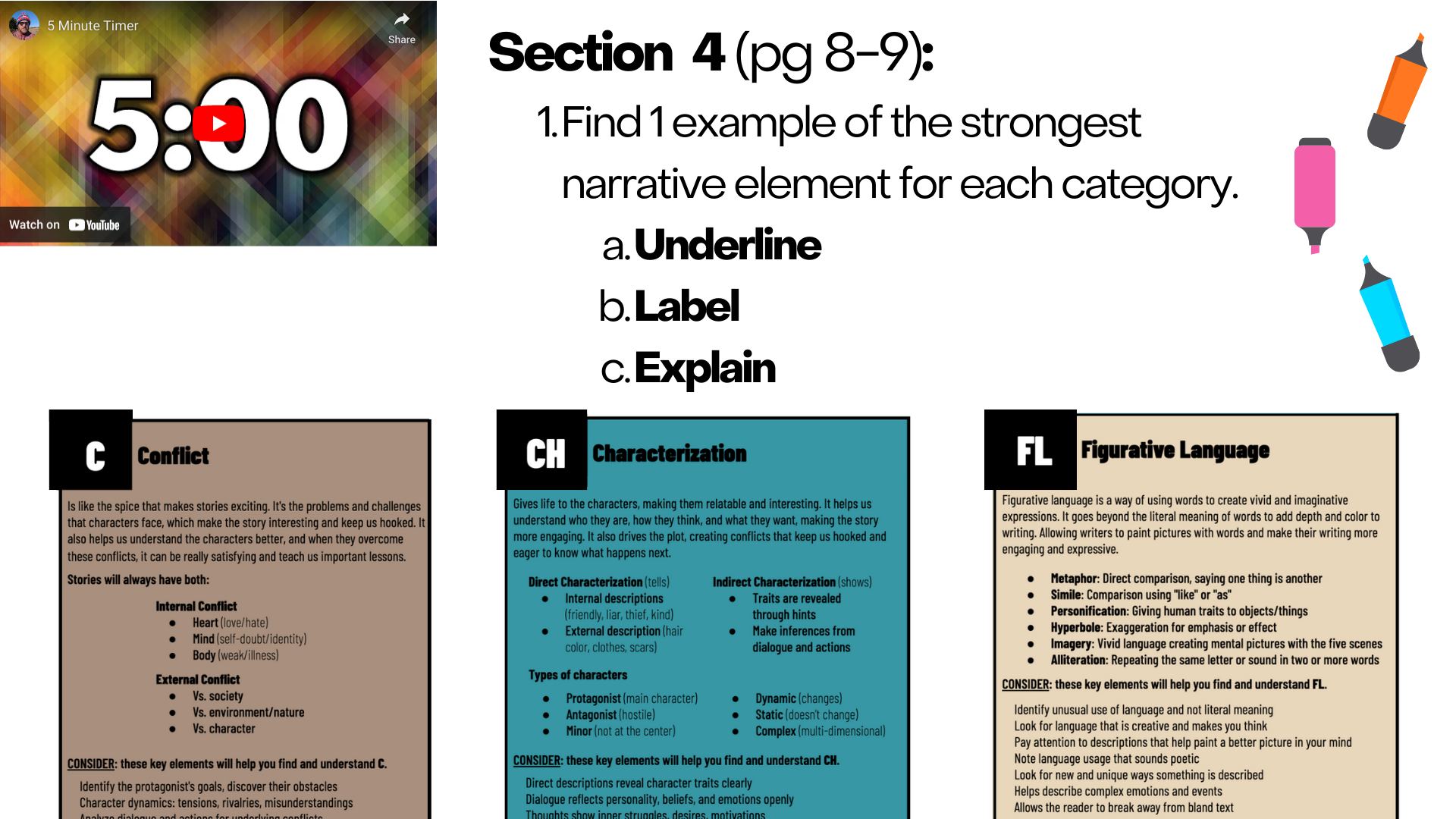
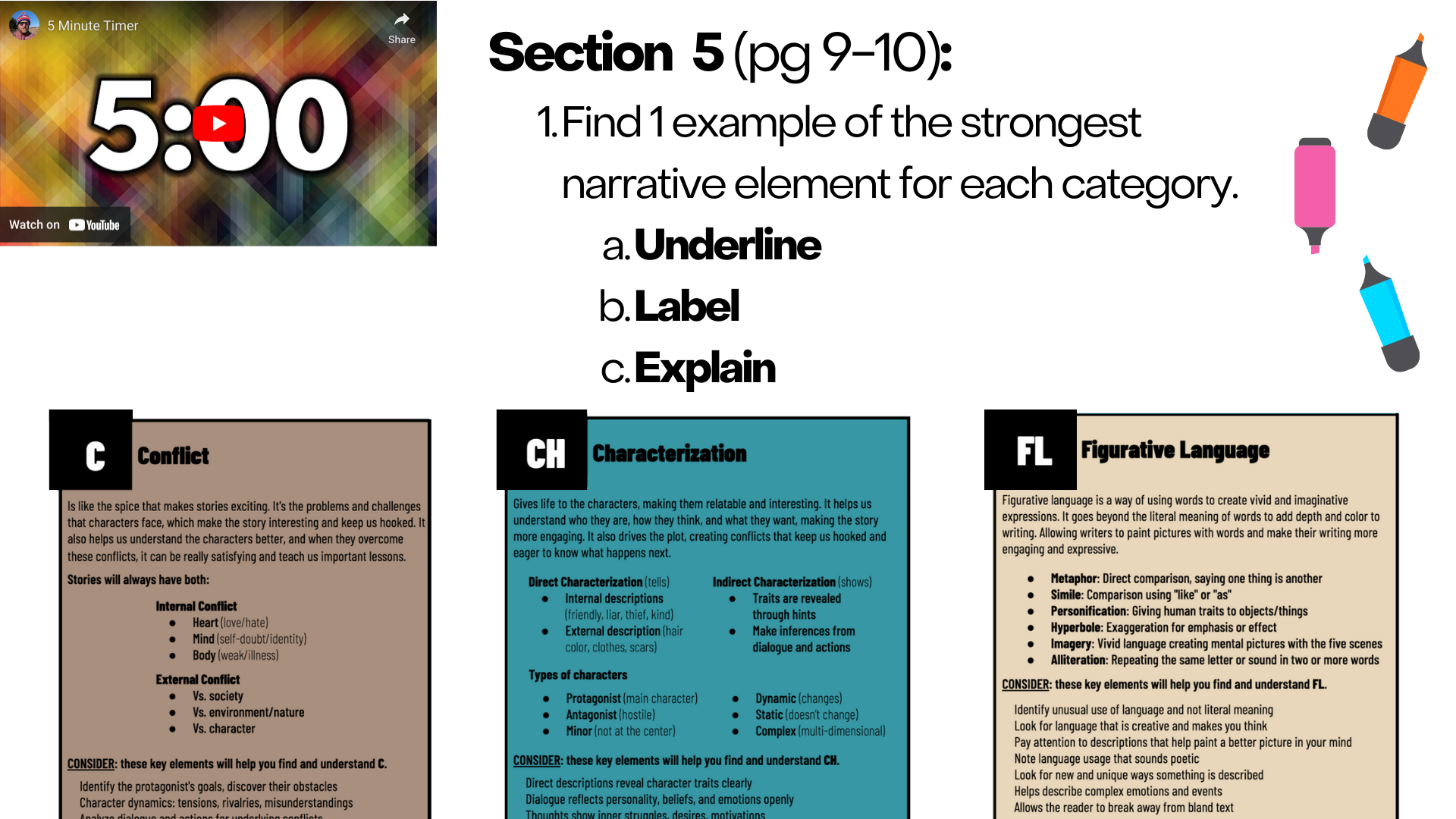
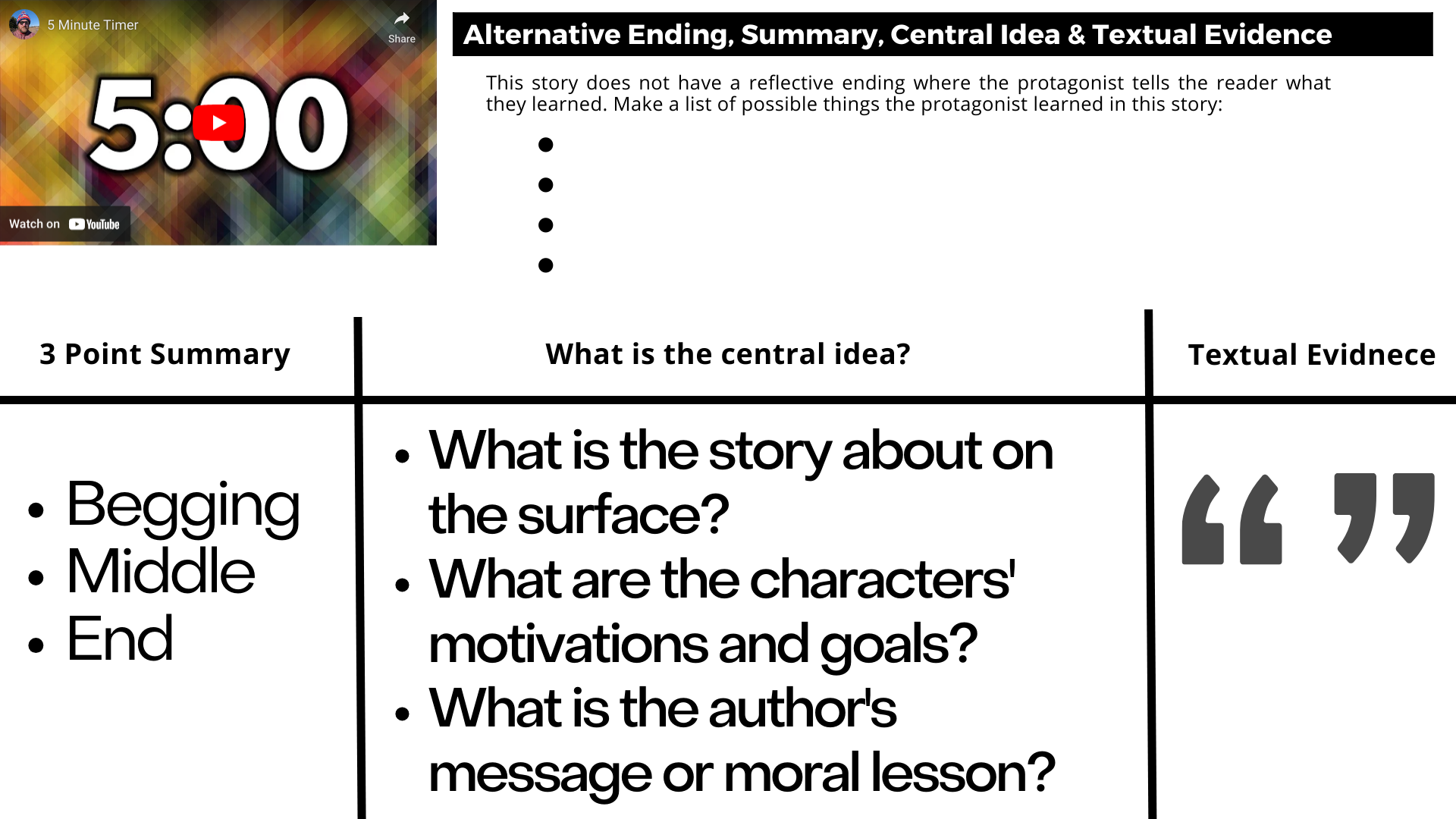
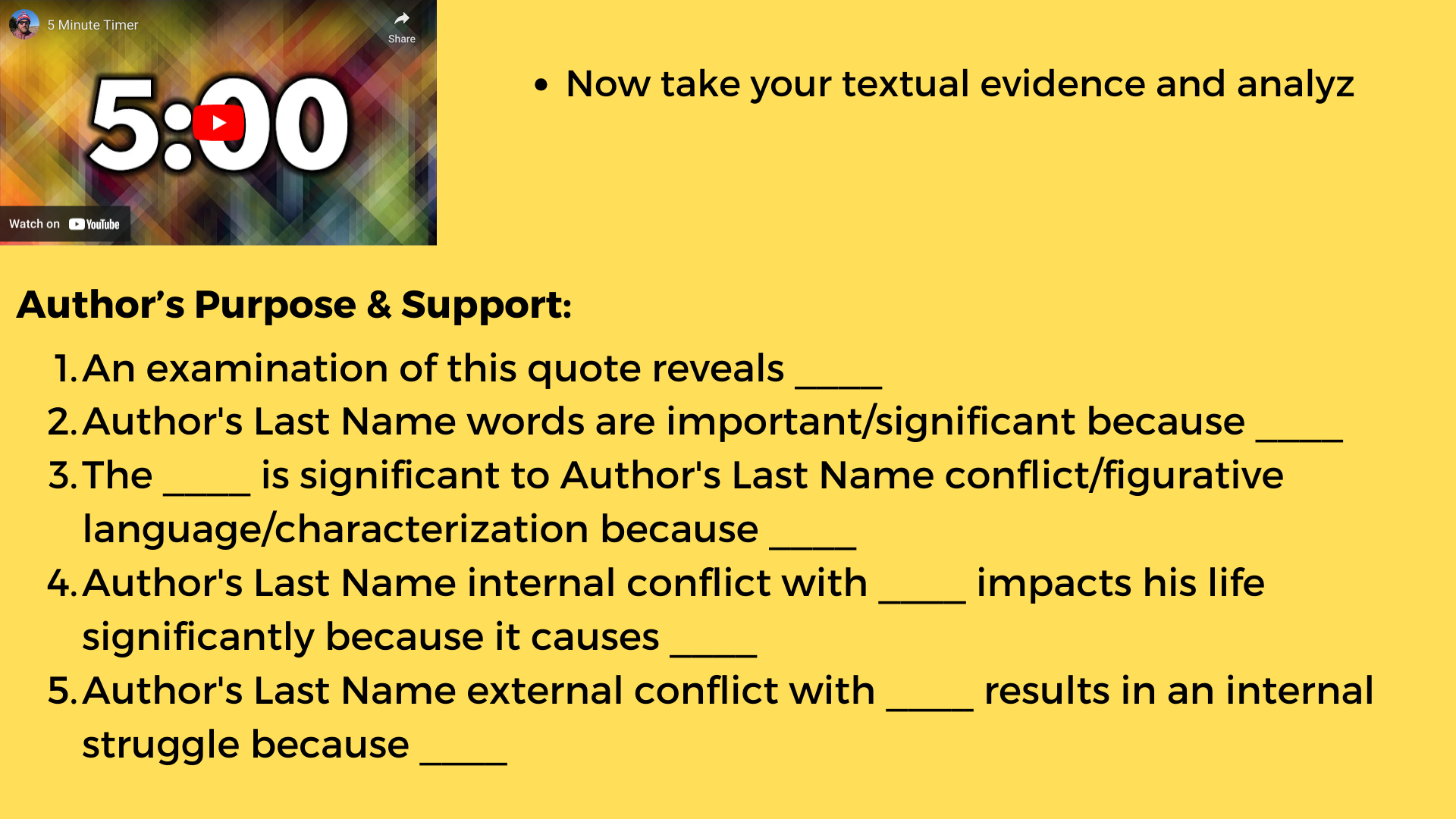
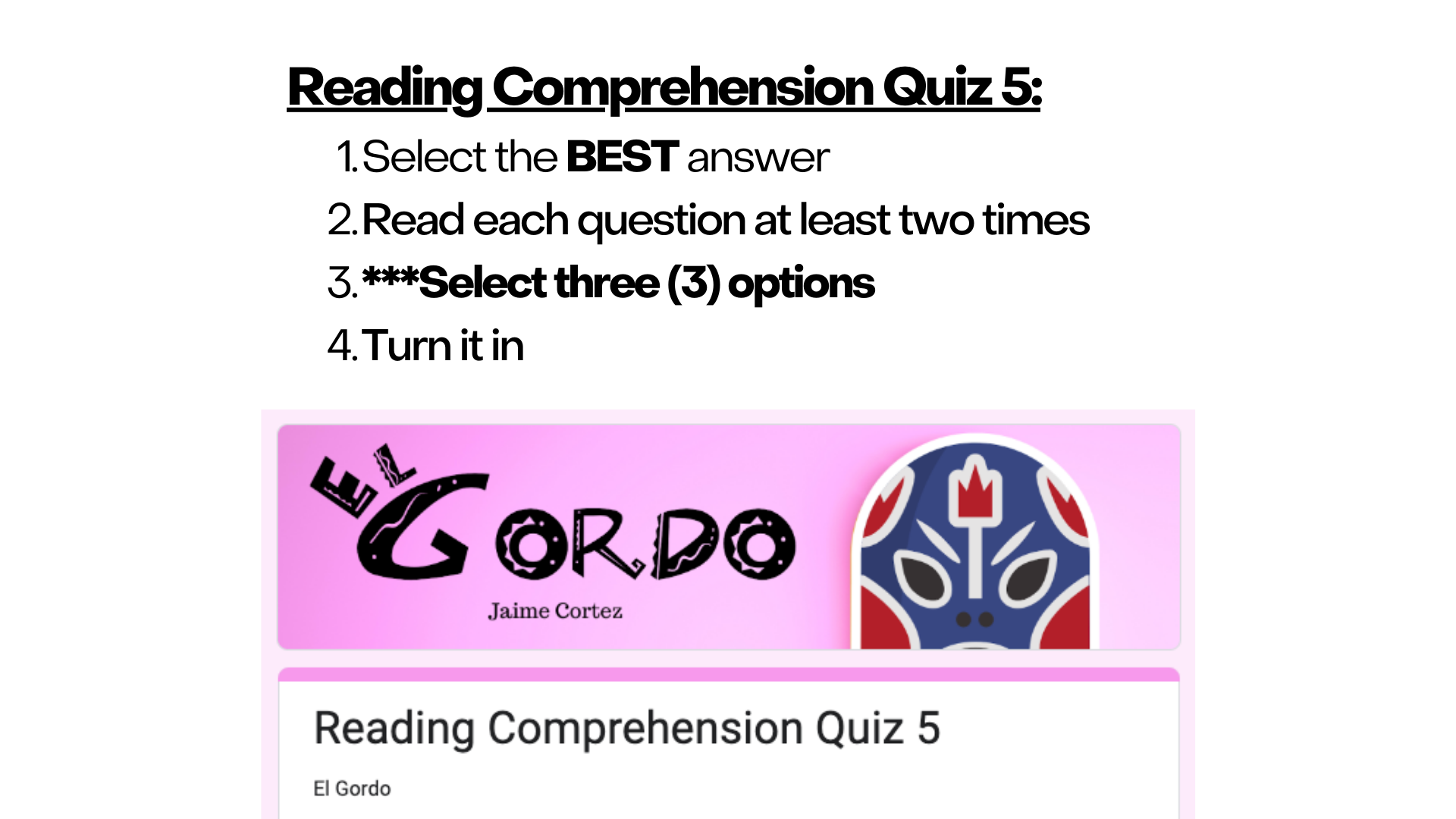
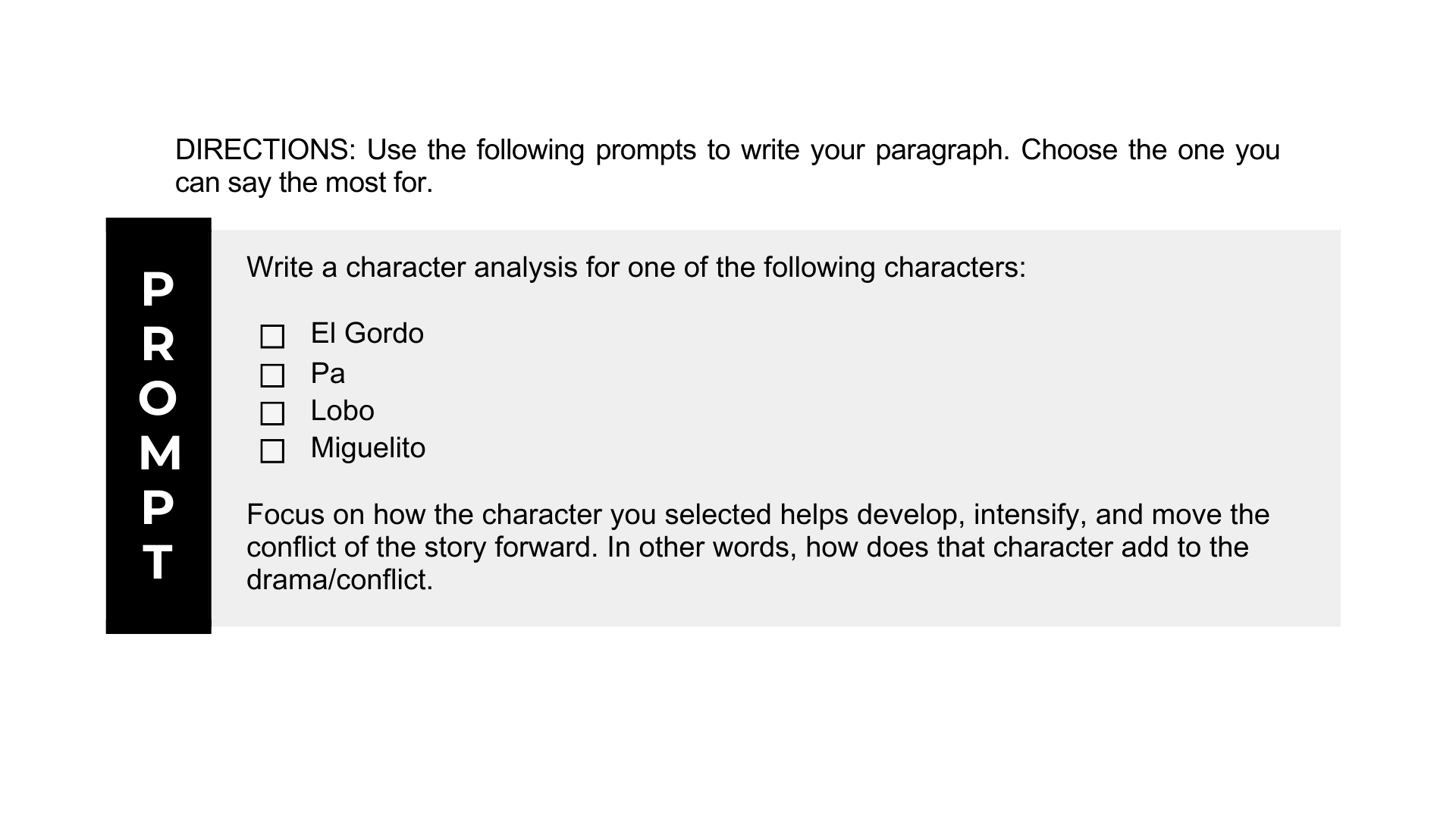
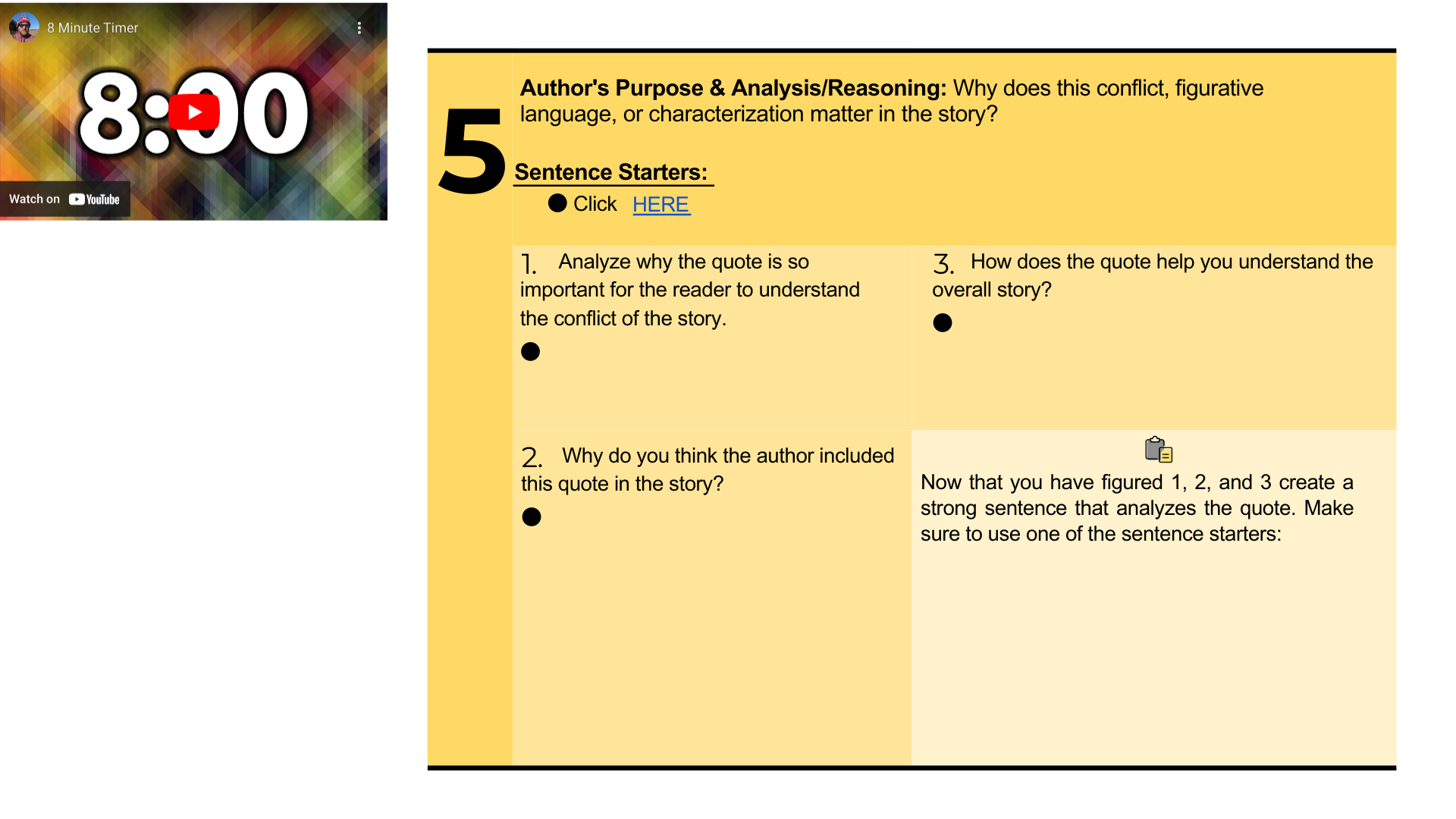
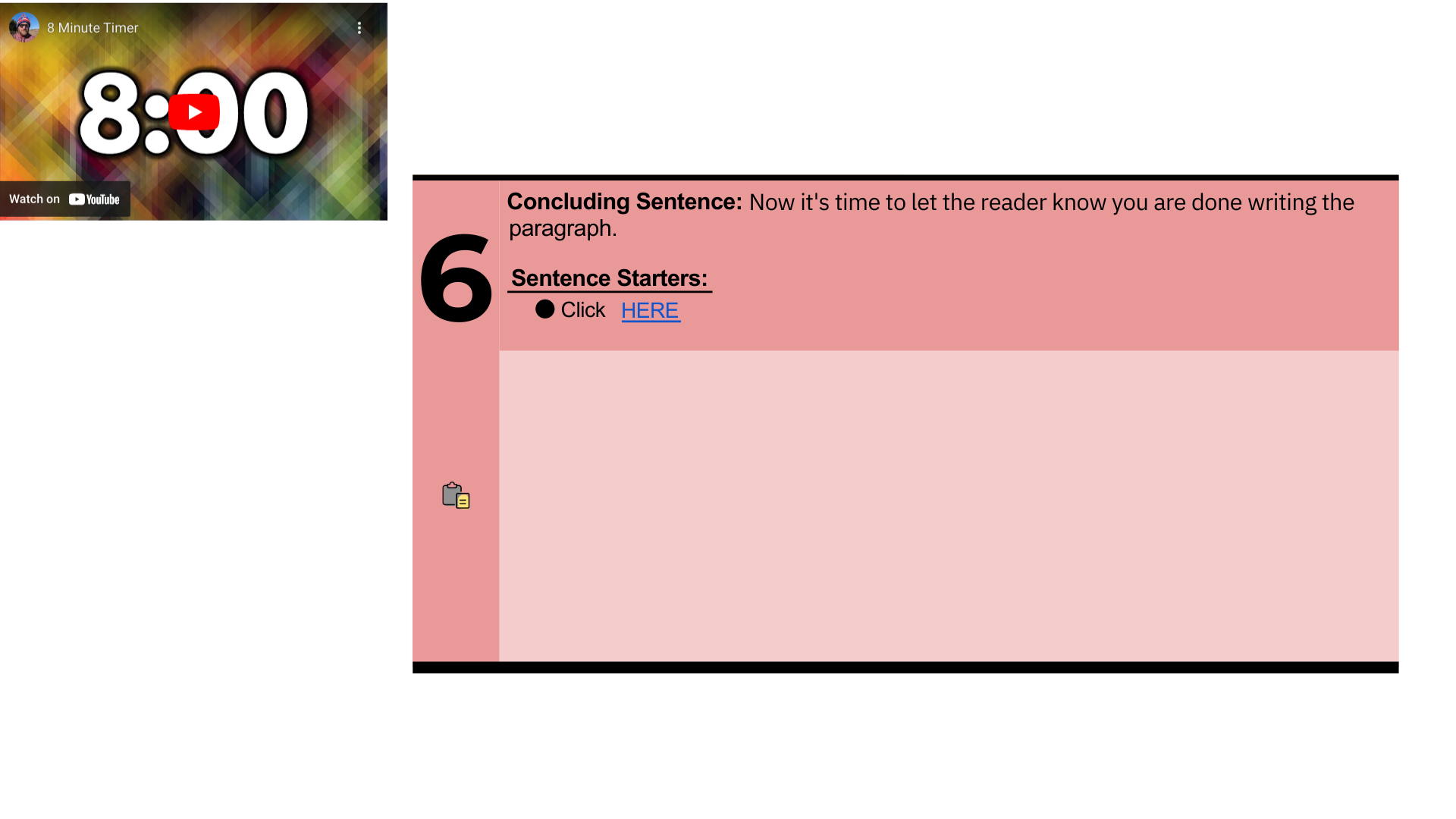
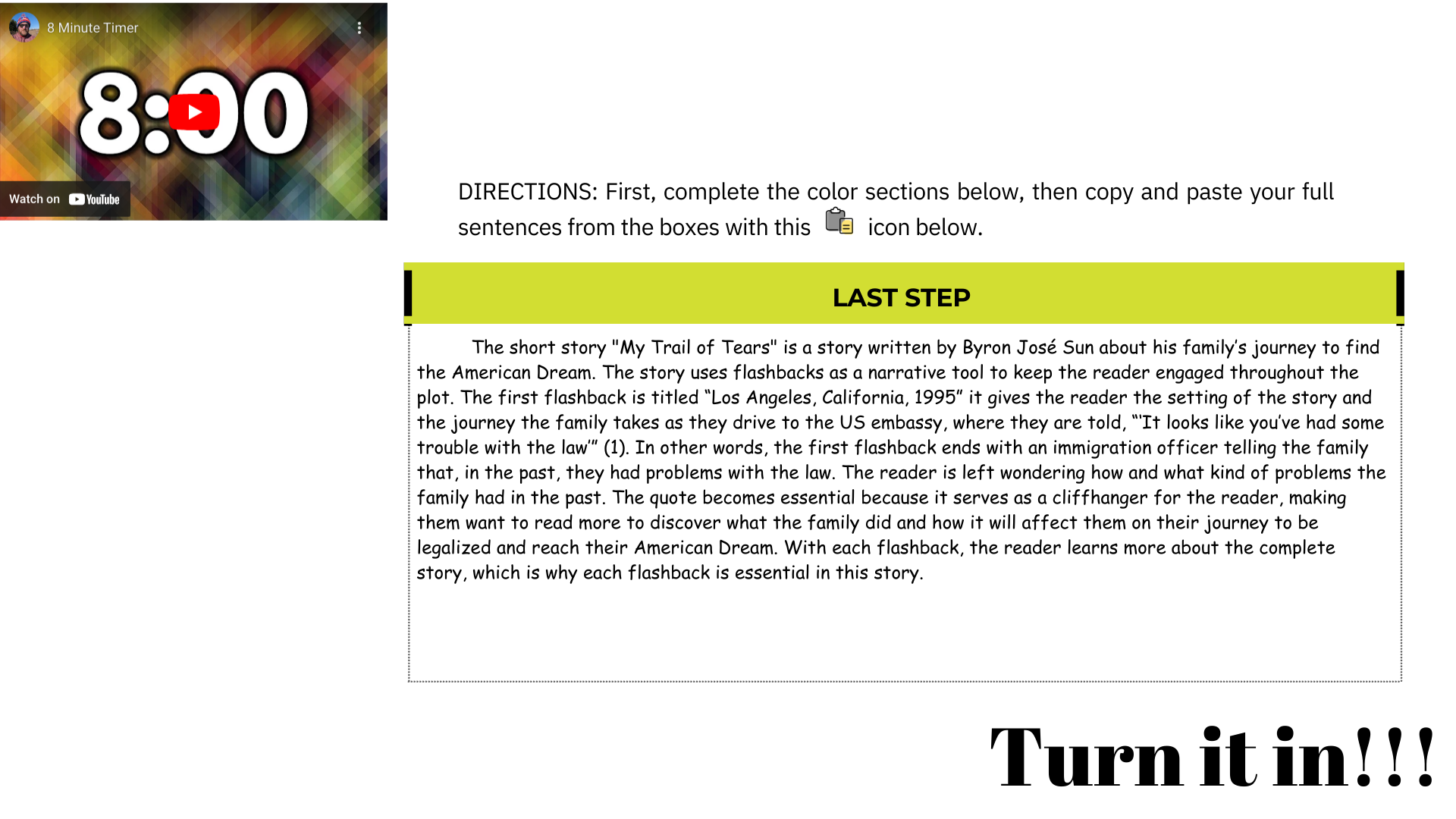
Presentations & Visuals
Data Collection
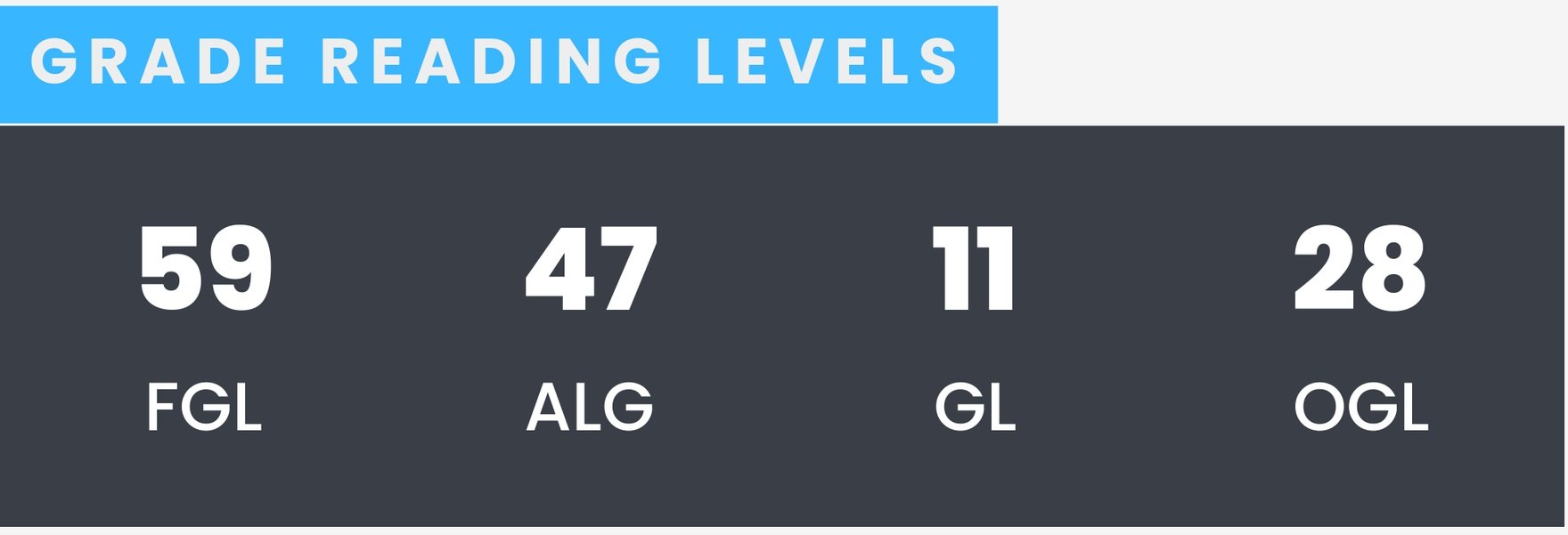
The following is the data I have been collecting from my English 1 class now that I have implemented the curriculum from Unit 1. The State Standard Performance assessment is a unit one tool I created to measure growth for RL.2 (central idea and citing sources) and RL.3 (author's purpose) with questions that are structured in a similar way to the SBAC state assessment. I have also included my schools demographics and my students reading levels at the beginning of the school year.

State Standard Tracking
NW - No Work FP - Far from Proficient AP - Almost Proficient P - Proficient
Full English 9 Data